/pic1411446.jpg)
/pic1411447.jpg)
/pic6620642.jpg)
/pic6875957.jpg)
/pic1411446.jpg)
/pic8215036.jpg)




























Space Hulk Deep Dive
What the Community Thinks About Space Hulk
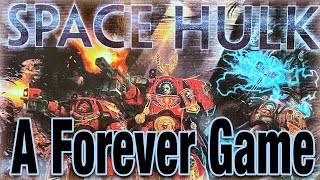
Space Hulk remains one of the most beloved miniatures experiences in tabletop gaming, despite its limited availability since the 2014 reprint. Reviewers consistently describe it as a gateway game that introduces players to the hobby, a sentiment rooted in decades of genuine enthusiast experiences. The community values it not just for mechanical innovation, but for the complete sensory experience it delivers: the heft of the components, the quality of the miniatures, and the claustrophobic tension of scenarios where Space Marines must survive against overwhelming odds.
Core Mechanics That Define Space Hulk
Command Point Economy Under Pressure
The signature mechanic of Space Hulk is the hidden command point token system. At the start of each Space Marine turn, the Marine player draws one of six tokens (numbered 1-6) from a face-down pool without revealing it to the Genestealer player. This token represents bonus actions that can be spent throughout the turn and even during the Genestealer phase. The tension comes from not knowing how many actions you'll have. A sergeant can redraw once if dissatisfied, but the second draw is binding. This creates decision-making pressure that mirrors the thematic desperation of the scenario: Marines operate under constant threat with incomplete information, while Genestealers can plan with perfect knowledge but must share the physical space of the board.
The Three-Minute Timer as Asymmetric Pressure
Space Marines must complete all their actions within a three-minute timer. Genestealers have unlimited time. This asymmetry is not merely mechanical pacing; it thematically embodies why the Marines are vulnerable despite their powerful armor. The time pressure transforms the game into a real-time puzzle: players must balance exploration, positioning, and firepower expenditure knowing they cannot deliberate forever. This drives the game's tension forward and prevents Genestealer players from ever feeling safe, even with numerical advantage, because the Marines are racing toward objectives with desperate urgency.
The Space Hulk Experience
Overwhelming Numerical Disadvantage Creates Heroic Tension
Most scenarios pit a handful of Space Marines (4-5 models) against dozens of Genestealers that arrive via hidden blips. The drama emerges from watching the Marines make hard choices about firepower. Every shot matters. Heavy flamer ammunition is rationed to exactly six shots. Storm bolter attacks succeed only on a six or, if sustained against the same target, on a five or six. Close assault is catastrophic: Genestealers roll three dice while Marines roll one. This creates moments where players feel they're scraping by on luck and skill, dependent on whether they roll that critical six. Box of Delights highlighted that "there is a lot of luck with the dice rolling, but that's what adds the fun factor," capturing the community's appreciation for how chance creates drama rather than frustration.
Claustrophobic Corridor Combat
The modular board creates tight, claustrophobic environments where positioning becomes everything. Corridors restrict movement to single-file lines, making every Marine's facing and position critical. A single Genestealer breaking through a choke point can cascade into disaster. The thick, embossed tiles with doors, corridors, and junctions can be arranged in infinite configurations, and each scenario places the board differently. This forces players to learn the map layout through play, creating genuine tactical depth because a corridor bottleneck that favors the numerically outnumbered Marines in one scenario becomes a Genestealer spawning ground in another.
What Makes Space Hulk Stand Out
Production Quality That Feels Luxurious
Reviewers consistently highlight the physical excellence of Space Hulk. The Dungeon Dive described it as "the best produced board game I own," noting it "feels like a luxury item." The cardboard thickness exceeds that of contemporary games by a significant margin. Tiles are embossed and textured, giving them weight and presence. Miniatures are exquisitely detailed and come ready to paint (though painting is entirely optional). The documentation is precisely written with clear scenarios, objectives, and playthrough examples. Space Hulk is positioned as a product that justified its price point through sheer manufacturing quality.
Blip System Creates Perfect Information Asymmetry
Genestealers begin as face-down blip tokens, with hidden numbers on the back indicating how many aliens each represents. The Space Marine player knows blips are moving but cannot see the actual count. When a blip enters a Marine's line of sight involuntarily, the Marine player places the models; when the Genestealer player reveals voluntarily, they choose placement. This mechanic creates narrative moments where unknown threats suddenly materialize, forcing Marines to adapt. Tabletop Minions emphasized that this two-player asymmetric knowledge is what makes Space Hulk's experience superior to its solo variants, as the hidden information creates genuine surprise and forces tactical adaptation rather than puzzle-solving.
Potential Drawbacks
Two-Player Dependency Limits Accessibility
Space Hulk is fundamentally designed for two players. Solo rules exist, but reviewers note these cannot capture the drama of rolling against an opponent or facing hidden threats you cannot predict. The game's tension depends on asymmetric knowledge: one player holds secrets and responds tactically. Playing solo removes this element entirely. For solo-focused hobbyists, Space Hulk becomes a showpiece rather than a regular rotation game, beautiful to own but dependent on finding a willing opponent to experience its full potential.
Limited Availability and Scenario Ceiling
The game comes with a fixed number of scenarios, each with a specific map layout and victory condition. While scenarios can be replayed and house rules can modify them, the core experience becomes familiar after multiple plays. More critically, Games Workshop's sporadic reprinting means that finding a copy at reasonable prices proves difficult. Tabletop Minions noted that "it's been eight years since we've had a new Space Hulk," expressing frustration at the game's inconsistent availability given its importance to the hobby. Players interested in Space Hulk often face either paying premium secondary market prices or waiting for an uncertain reprint.
If You Enjoy Space Hulk
Players drawn to Space Hulk typically enjoy Descent and Arkham Horror, which share the cooperative dungeon crawl tension against overwhelming odds. Space Hulk: Death Angel, the card game spinoff, scratches a similar itch in a compact, solo-friendly format. Warcry: Catacombs offers tight corridor combat within the Warhammer universe. HeroQuest provides a more accessible dungeon crawl with similar miniatures appeal. For those drawn to the asymmetric two-player experience, Star Wars: Imperial Assault delivers comparable tension between an outnumbered hero squad and a powerful overlord.
What Reviewers Are Saying
"Space Hulk is probably the first big box hobby game I purchased with my own money when I was in high school. It felt amazing owning something like this. This is still the best produced board game I own. It feels like a luxury item. Everything is so well made."
— The Dungeon Dive
"You can analyze it if you wish and maximize each turn, or you can just pick it up casually and play through it using your instinct. There is a lot of luck with the dice rolling, but that's what adds the fun factor. I'm glad it's left me feeling I want to have another crack at it."
— Box of Delights
"Space Hulk is one of the greatest gateway games to get people into the hobby. The fact that they don't have it available all the time is always weird. It's been eight years since we've had a new Space Hulk, and it's a game that would deserve constant availability given how central it is to introducing new players."
— Tabletop Minions