/pic8172361.png)
Game Info
Year
2025
Collection
Your Tier
Loading…
Mechanic profile
Percentile rank vs. all games
Vibe profile
Not enough video data yet
Description
Square One is a fast-paced, engine-building strategy game for 1-4 players. Just like its predecessor, its easy-to-learn yet hard-to-master mechanics offer high replayability for the whole family. Complete sequences with beautifully designed tactile pieces and unleash satisfying combos in a game that's more than just a sequel — it's a whole new challenge.
—description from the publisher
Featured Videos

Ask a Rules Question
All mentions
Browse transcript mentions, sentiments, pros/cons, mechanics, topics, quotes, and references.
Total mentions: 3
This page: 3
Sentiment:
pos 2 ·
mix 1 ·
neu 0 ·
neg 0
Showing 1–3 of 3
Video mhgFkcX7-kw
Jamie, Tabletoptiktok Review at 0:00 sentiment: positive
video_pk 86272 · mention_pk 293867

Click to watch at 0:00 · YouTube ↗
Overall sentiment (raw)
positive
Pros
- High production quality and well-organized components
- Puzzly, thinky gameplay with rewarding combo mechanics
- Solo mode feels smoother with scalable AI difficulty
- Beautiful, dual-layer tiles that stay in place during play
- Strong potential for planning, anticipation, and strategic sequencing
Cons
none
Thematic elements
- Pattern completion and progression via token and card fulfillment
- Tabletop puzzle setting, abstract tile placement
- Abstract puzzle with progression and combo-based scoring
Comparison games
- Project L
Mechanics (from transcript analysis)
- Action economy — Players have three actions per turn to spend on various options (gain tokens, draw from market, place pieces, etc.).
- Action Points — Players have three actions per turn to spend on various options (gain tokens, draw from market, place pieces, etc.).
- Card completion bonuses — Completing cards yields bonuses; completing multiple cards at once boosts scoring with incremental rewards.
- Drafting — On a turn you can take a sequence from the market (black or white) to fuel future placements.
- Drafting from market — On a turn you can take a sequence from the market (black or white) to fuel future placements.
- master action — When you have multiple tiles, you may fill the top row available with a master action; limited to once per turn per tile pile.
- Melding and Splaying — Players can merge two tiles into a larger value or split a tile into components, enabling flexible planning.
- Merging and splitting — Players can merge two tiles into a larger value or split a tile into components, enabling flexible planning.
- Solo mode with adjustable AI — A solo play option with multiple AI difficulty levels to tailor challenge as you improve.
- Tile Placement — Tiles come in levels; placing a level consumes one move and requires cards to be filled top-to-bottom.
- Tile placement / level placement — Tiles come in levels; placing a level consumes one move and requires cards to be filled top-to-bottom.
- Tile supply flow and replacement — When a card is completed, tiles slide back into your supply, affecting future availability and planning.
- Tile/Map Shifting — When a card is completed, tiles slide back into your supply, affecting future availability and planning.
Video topics + discussion points
No key topics recorded for this video.
Quotes (from this video)
- I absolutely love all of those little Tetris pieces fitting together
- production quality is great
- I adore this game it's great it's puzzly it's thinky
- tiles are beautiful and really satisfying to work with
- I would love to know what do you think of this
- the solo mode runs a little smoother than it did in Project L
- it's fantastic
References (from this video)
No references stored for this video.
Video Q9BxlOq_uZs
Brains On Games Review at 8:23 sentiment: mixed
video_pk 37628 · mention_pk 295539
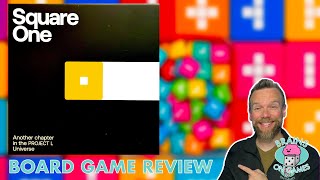
Click to watch at 8:23 · YouTube ↗
Overall sentiment (raw)
mixed
Pros
- Bright, colorful components that are visually clear and satisfying to manipulate
- Satisfying engine-building feel as you unlock more powerful master builds
- Accessible to families and younger players while offering depth through timing and combos
- Strong, satisfying sense of progress when you complete multiple tiles in one action
Cons
- Early game can feel slow while players accumulate pieces
- Market draws are limited; some setups can feel a bit constrained until pieces align
- Puzzle/engine focus may not appeal to players who dislike heavy planning or abstract systems
Thematic elements
- Resource management, planning, efficiency
- Abstract puzzle/engine-building environment; no specific setting
- None
Comparison games
- Project L
Mechanics (from transcript analysis)
- Action Drafting — Each player gets three actions per turn to draft, draw, or place tiles.
- Action economy — Each player gets three actions per turn to draft, draw, or place tiles.
- Card Drafting — On your turn you draft up to four cards and manage a hand of active cards.
- endgame trigger — The game ends when the last piece from the marketplace stack is placed.
- Master build — Once per turn you can execute a master build to complete an entire row of tiles at once, potentially triggering multiple point rewards.
- Resource Management — Pieces of different colors and values are gathered to fulfill card requirements and unlock points.
- Tile Placement — Tiles with four squares and various shapes are drafted and placed; you can merge or split pieces to fit goals.
- Tile placement and shaping — Tiles with four squares and various shapes are drafted and placed; you can merge or split pieces to fit goals.
Video topics + discussion points
No key topics recorded for this video.
Quotes (from this video)
- the meat of the strategy in this game is creating those combos, lining up the right cards so that you can finish them all at once to get those bonus points.
- it's the timing and the combo elements that make this game evolve in a bit of a different direction from Project L.
- the combos are satisfying when you're able to finish four of those cards all at once with one action.
- it's very basic engine building though, so it's maybe an introduction to that engine building thing.
- the timing and the combo elements that make this game evolve in a bit of a different direction from Project L.
References (from this video)
No references stored for this video.
Video hqbSq1IDMyM
Good Time Society Review sentiment: positive
video_pk 13188 · mention_pk 38599

Overall sentiment (raw)
positive
Pros
- Complex mechanics
- Based on successful Project L
Cons
- Removed Tetris pieces
Thematic elements
- Tile manipulation
- Puzzle game
Comparison games
none
Mechanics (from transcript analysis)
- Auction / Bidding — Bid on house plants
- bidding — Bid on house plants
- cooperative storytelling — Players make multi-layered decisions
- Hand Management — Manage collection of plant tiles
- Set Collection — Collect tiles of different types and colors
- Storytelling — Players make multi-layered decisions
- Tile Placement — More complex version of Project L
- Worker Placement — Players act as detectives or Booth's accomplices
Video topics + discussion points
No key topics recorded for this video.
Quotes (from this video)
- Where strategy meets shenanigans
- I love putting things into nice orders and patterns
References (from this video)
No references stored for this video.
Transcript Navigation
Showing 1–3 of 3