



Star Trek Panic Deep Dive
What the Community Thinks About Star Trek Panic
Reviewers consistently present Star Trek Panic as a clear step up from the cooperative design it descends from. Getting Games describes the original Castle Panic as a simplistic co-op with a semi-cooperative twist that never quite landed, and argues that Star Trek Panic keeps the same defensive core while adding enough layers to make each session engaging. The Secret Cabal Gaming Podcast reaches a similar verdict and calls it one of the most thematic Star Trek board games in its collection. The main disagreement concerns length. The Secret Cabal Gaming Podcast warns that the game can overstay its welcome, particularly when a loss becomes clear long before the final mission resolves. Watch It Played mentions Star Trek Panic only in passing, noting that its hosts had already played it and had no plans to return to it, so that channel offers no detailed verdict.
Core Mechanics That Define Star Trek Panic
Mission Cards and the Endless Threat Bag
The most distinctive system, as Getting Games explains it, is how the game ends. In Castle Panic, victory comes once the entire bag of monster chits has been worked through. Star Trek Panic keeps the bag running but requires the crew to complete five separate missions. Those missions place special markers on the board that behave in unusual ways until a specific condition is met, sometimes by discarding certain numbers of cards and other times by clearing enemies in a particular order. Getting Games recalls an event that forbade destroying any Klingon for five rounds, which made the session unusually tense. A rules overview confirms the core loop: each turn a new threat is drawn from the bag and placed by rolling dice, and the crew can lower the mission requirement to three for an easier game or use the included tokens that run up to ten to expand the challenge.
Shields, Damage Tokens, and the Enterprise Track
The second core system governs how threats wear down the ship. Enemies fire on the Enterprise every turn after moving one space closer. The first hits are absorbed by blue shield damage tokens, and when a shield section fills, the next hit causes hull damage. A second hull hit destroys that section, and the destroyed piece is placed on the ship. Once three of the six sections are gone, the Enterprise can no longer maneuver. Each player's turn follows a fixed sequence: draw cards to a starting hand size, reveal a new mission when one has been completed, optionally trade a card with a crewmate, play cards to attack threats, repair damage, or advance missions, and move the ship one time. The publisher is USAopoly, which sent the review copy to Getting Games.
The Star Trek Panic Experience
Thematic Immersion
The Secret Cabal Gaming Podcast argues that the theme is the game's greatest strength. Jamie highlights the character powers, noting that Kirk, Scotty, and Spock each bring abilities that feel natural for the people being played, so the crew's actions read like moments from the series. The missions carry the same spirit, with each one changing the Enterprise in a way that echoes the events of the show. Jamie describes the experience as one of satisfaction in flying the ship, engaging Klingon and Romulan vessels, and playing cards to blast them from space while carrying out a mission. Getting Games, a reviewer who describes being a fan of Star Trek but not an aficionado, found the game's table energy infectious enough that other players asked for a second game the same day.
Table Presence
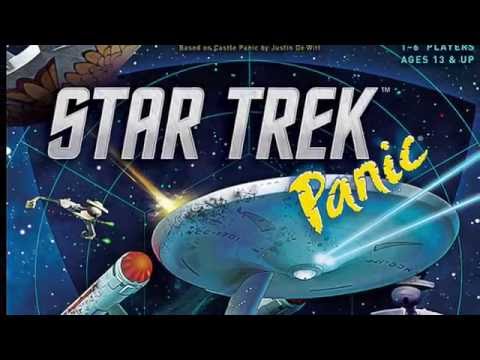
Reviewers also highlight the visual spectacle of the set. Getting Games praises the component quality, describing a large cardboard Enterprise at the center of the table, surrounded by plastic blue shield tokens that are removed as the ship takes fire. Once the hull begins to fail, overlay pieces show the ship losing sections, and the final overlay for a destroyed ship shows flames and falling debris. The reviewer's group lost one session in a fiery finish and still described the evening as fun. The Secret Cabal Gaming Podcast enjoys the same effect, saying the ship looks fantastic as it blows up.
What Makes Star Trek Panic Stand Out
Mission Variety That Changes the Plan
Getting Games repeatedly returns to the mission structure when explaining why the game is an improvement on its predecessor. Because the bag keeps moving and mission markers impose shifting restrictions, players cannot simply clear the board and wait for a finish line. The reviewer found that the requirements forced the crew to rethink priorities in the middle of a round, which kept the game from settling into a routine.
Cooperative Play for Mixed Groups
The Secret Cabal Gaming Podcast praises the game's accessibility as much as its theme. The rules are light enough that the podcast suggests the game works equally well with children and adults, and the crew's shared goal keeps everyone involved even when one player is struggling. Watch It Played's brief mention is consistent with this view, since its hosts treated the title as a familiar and easy-to-recall experience rather than a complicated one.
Potential Drawbacks
Games That Drag On
The most significant criticism comes from The Secret Cabal Gaming Podcast, which says the game can overstay its welcome. Certain board states make victory effectively impossible, yet the bag keeps producing threats and the crew must keep playing. The podcast notes that a player can simply call the game at that point, but this feels like an unsatisfying ending for a game that otherwise rewards careful planning. The concern is fair for players who value a tight finish, although it does not undermine the enjoyment for those who accept the grind.
Uneven Difficulty From Session to Session
Getting Games admits that the first game felt almost too easy, a worry the reviewer also had about the original Castle Panic. The second game ended in a loss, which suggested the difficulty could swing sharply depending on the mission draw and the timing of special markers. The reviewer considers this variance part of the charm, yet it means a new group may need a few sessions to find the difficulty level that suits them. Players who want predictable challenge may find the mission randomness frustrating.
If You Enjoy Star Trek Panic
Players who enjoy the defensive pressure of Star Trek Panic should start with Castle Panic, the original design that Getting Games describes as simpler and less engaging. The mission-driven structure of the later game is the feature that separates the two, so Castle Panic offers a useful comparison for players who want to see what the Star Trek version adds. The Secret Cabal Gaming Podcast also mentions Dead Panic, the zombie-themed entry in the same family, for players who enjoy the panic system's theme-swapping approach. Players who appreciate Star Trek Panic's thematic character powers will find a similar satisfaction in the way those themed systems are dressed in a different setting.
What Reviewers Are Saying
"Instead of just being a bowl of rice, it's now a bowl of rice with a bunch of yummy stuff mixed in and a bunch of good sauces. You mix it up and it's spicy, and we all had fun. In fact, this game got played twice in the same day, mostly because other people saw how much fun the first group was having and they wanted to play it again as well."
— Getting Games
"I think it definitely overstays its welcome. It just goes on and on and on, and there are certain situations that you can get into where you just have to call the game, you know you're going to lose, but the game keeps you going and going and going."
— The Secret Cabal Gaming Podcast
"Because the component quality of this game is pretty exceptional, you have this large cardboard Enterprise that's in the middle of the table and you have these awesome plastic Blue Shield tokens that you put down. And as the Enterprise itself starts taking damage, you kind of slot these damage tokens on, and then once it gets really damaged or destroyed, you overlay this piece that shows flames and pieces falling off."
— Getting Games