/pic8389733.jpg)
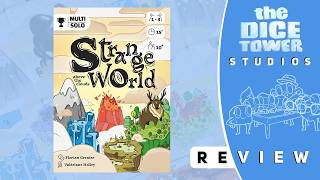
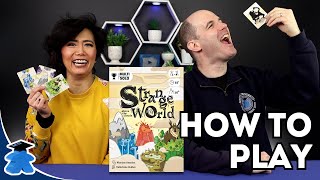
Create a strange world inhabited by puzzling creatures. At each creation restriction mistake, dangerous Tzimimes will appear.
Obtain the most Stars as you create a world made of 16 cards as you watch for the Tzimimes trying to devour your cards.
Each player has a game area in front of them. It is forbidden to play cards in any opponents area.
Each turn, draft 3 cards then play, alternatively, your cards, one by one in your world, orthogonally adjacent to a card that was previously played in your game area.
Several types of lands have playing restrictions. If they are not met, the card is played face down, Tzimimes side facing up and do not score any Star at the end of the game.
Other lands have binding play effects.
Some cards will add vertical and horizontal scoring.
In Strange World, you have to do your best with the worst. Indeed, with a tight draft of 3 cards, your opponents will certainly give you cards that are not so simple to play in your game area. But from the optimisation of these restrictions comes the gaming fun.
—description from the designer


- Lovely looking game
- Good creative ideas
- Nice flow
- Nice drafting system
- Fiddly exceptions
- Can be punishing
- Too many exceptions
- Solstice
- Castle Combo
Mechanics (from transcript analysis)
- Card Drafting — The drafting system in this game is also pretty nice where not only do you pass and draft, you can actually pass on the cards you previously draft drafted and take say two or three new ones at a time.
- Grid Building — You are building out a 4 by 4 grid of cards.
- scoring — Each card has its own like scoring category.
- Set Collection — Some of them you're trying to chain. Some of them you want to have one in each row.
Video topics + discussion points
Quotes (from this video)
- This game is called Cat Earth and it is very, very silly, but I think in a good way.
- This is the Crew Mission Deep Sea, and I'm going to tell you, I absolutely love this game.
- Wavelength, and I think this is probably one of the best party games I have played in a long time.
- It's a game about trying to read people's minds.
References (from this video)

- Really like the art
- He said it was good
- doing your best with the worst
- above the clouds
Mechanics (from transcript analysis)
- Tableau Building — Appears to be a tableau building game.
Video topics + discussion points
Quotes (from this video)
- I just don't think Planet B. I just think, uh, another Euro style game.
- Silly balancing dexterity game for kids.
- It was kind of disappointing to me that you have to go through box by box.
- This is essentially a Voltron style game where you are fighting for control of different factions, but you each have two of these gigantic robots that will show up at battles and fight.
- So, I guess I only played the original one. There's some silly fun to it, but it gets old a little quickly.
- This is a deduction adventure game in medieval Europe.
- You know he's evil because it's in the name and it's a decent lighter weight cooperative game.
- When I found you just connecting these different spots with groups of pirates, man, I didn't like this game.
- It looks bad. It's placing dice on these cards. It's just a mess.
- It's a smaller deck builder, so and I gave it a seven.
- Kings and Things. You look at this and there's a bunch of chits of different kinds of creatures on a grid-like map, a hexagonal map. It's one of the first ones to have a peaceable hexagonal map. In fact, it might be the first one.
- Silly, silly game.
- This is a a a uh very light deduction game. Maybe a little too light for me.
- Talk about trying to make a game that no one wants to buy.
- My favorite of this bunch is probably Starship Samurai.
References (from this video)
- Unique timing and placement decisions
- Strategic 4x4 grid placement
- Good interaction in 2-player (hate drafting)
Mechanics (from transcript analysis)
- Card Drafting — It is a card draft. It's a you card drafting tableau with placement type of game.
- Objective setting — There are ways to add objectives to rows.
- Tableau Building — It is a card draft. It's a you card drafting tableau with placement type of game.
- Tile Placement — You'll end up with three cards and then you'll have to play them into what will ultimately be a 4x4 grid.
Video topics + discussion points
Quotes (from this video)
- As usual, we're going to share you games that we played in June 2025, the first time we played. So, not necessarily new games.
- It's all our opinion.
- All the new to us games for June.
- So, we are going to alternatively share from the number five to number one.
- Very aggressive, very hatedraft induced, but it's really great game.
- This is a really clever market uh economic type of game.
- It's really satisfying when you upgrade things when you try to all right what do we do first?
- This is the new pandemic system game set in the Lord of the Rings universe.
- Pleasantly surprising was how was the differences between this and Pandemic and how it felt like a very different game to Pandemic.
References (from this video)

- Lightweight card game
- Puzzly tableau building
- Strategic drafting with player interaction
- Strange World
Mechanics (from transcript analysis)
- Card Drafting — Each round, players draft three cards.
- Tableau Building — Players play cards one by one, building out their play area.
- Tile Placement — Cards are played orthogonally adjacent to existing cards.
Video topics + discussion points
Quotes (from this video)
- I try to keep it to about 25 games and sometimes that slides to like 30 games, but I don't want it to be more than 30 games because I don't want this video to be crazy long.
- if you want a smaller box pretty game, then check out Parks and Potions.
- it's a really good introduction to strategy games.
- This is one that is going to be a huge hit with young kids, I imagine.
- So, if you want a lot of story in your solo games, that is a reason to play this one.
- It adds more player interaction to the worker placement game.
- I like that sort of fluctuating market aspect of the game. It makes it feel different than other worker placement games out there.
- I think a lot of gamers and just a lot of people in general really respond to this theme, right? I think it's something that's super relatable about having to charge up your social battery in order to go out into the world and do stuff.
- there's just a lot of intrigue on like, why are you moving that? What are you doing right now? How do I outsmart you?
- Vantage over the last month has been fairly divisive.
- if you like worker placement games or if you like visually interesting games, then that's, uh, for sure a reason to play T- Witches.
- It is a deck building game, but it has an interesting aspect to the deck building because every round you're going to shuffle your entire deck and then you're going to flip out cards in a 2x3 grid.
- I love Flip Tunes
- The OP is also releasing fountains.
- This plays 1 to five players in 30 to 45 minutes and it is a mediumweight game though at the lower end of medium weight.
- This is another sort of visually very interesting game.
- It is a deck building game, but it has a interesting aspect to the deck building because every round you're going to shuffle your entire deck and then you're going to flip out cards in a 2x3 grid.
- And so there is a real strategy to the deck building of the game, but there's also just these fun exciting moments where you're like, "Ah, yes, I got that where I needed it to go."
- I love Flip Tunes a lot. I really recommend it.
- I've been doing this Green Team Wins live show at the Comedy Store in Los Angeles, and it's been going super well
- Next night of that is Sunday, November 2nd.
- It's really fun. It's really interactive. It's memorable. It's different every time the show happens.
References (from this video)

- fun, tight with interesting scoring
- tableau/drafting mechanics work well
- tableau building with drafting
Mechanics (from transcript analysis)
- Drafting — drafting cards into a four-by-four grid for scoring
- End Game Bonuses — portal connections contribute to end-game scoring
- End-game scoring — portal connections contribute to end-game scoring
- Tableau placement — connectors between cards and scoring by suits; portals open open deities
Video topics + discussion points
Quotes (from this video)
- Extremely unique, very fun, interesting experience that really gets into the mind of other players with a lot of fun, aha, tense moments.
- As far as drafting games go I think that this one is a really fun tight one with some interesting scoring and tableau placing mechanics.
- I really like this marriage of Tetris style shapes with some Sudoku scoring
- I did not care for this game whatsoever.
References (from this video)
- Plays well solo
- Cool solo mechanic for drafting
- Cuddle monsters
- Temple Code
Mechanics (from transcript analysis)
- Card Drafting — The game features a drafting mechanic, particularly noted in its solo mode where limited information is available about upcoming cards.
Video topics + discussion points
Quotes (from this video)
- Strange World Above the Clouds because who doesn't love a cuddle monster?
- Temple Code because I was terrible at it and I decided I need to do something about it because I was really embarrassed to play it with other people.
- hydrate, bring a bottle of water, refill it.
- don't put a lot of pressure on yourself to try and play all of the games. It is impossible.
- It's the people, right, that make the show somehow
- this whole hobby is about the people we play the games with rather than just the games.
References (from this video)

- Engaging
- Has a lot of rules for how little it is
- Very quirky
Mechanics (from transcript analysis)
- Area Building — and you are also building a little area in front of you.
- Card Drafting — This is a small card drafting game.
Video topics + discussion points
Quotes (from this video)
- a silly little game, way overproduced, but fun like hot potato style game.
- unfortunately a two-player back and forth just a little too much going on in a small game.
- So, that's pretty much it.
- This says contemporary on it.
- Tom, what would be your advice to aspiring game designers?
- most of the advice given to me over the years has been along the lines of don't do it.
References (from this video)
- Unique and distinct feel
- Interesting scoring mechanisms
- Encapsulates many ideas
- Steps outside comfort zone for drafting games
- Can be very fiddly
- Has a bunch of little rules
- Teaching can be tricky if not played often
- Potential for illegal placements leading to face-down cards
- strange world
Mechanics (from transcript analysis)
- Area Majority — Scoring for the biggest contiguous mountain range implies an area control or majority aspect for that scoring condition.
- Card Drafting — Players draft cards, keeping one of three initially, then two of three, and passing the remaining.
- Grid Building — Players build a 4x4 grid in front of them by playing cards.
- Pattern Building — Players score points based on specific arrangements and adjacencies of cards, like two gates next to each other to summon a visitor, or two water symbols next to each other.
- Set Collection — Points are scored for various symbols and combinations within the grid, such as contiguous mountain ranges, different animals, and grass/wheat symbols.
Video topics + discussion points
Quotes (from this video)
- This is a quirky little game that I think will definitely grow on you as you play it more and more
- it has a bunch of little rules. And sometimes that can be very detrimental to a game that is supposed to be punchy, that is supposed to be easy to learn, quick to game to the table.
- However, I do like what the game does quite a bit. It's so bizarre. It feels really unique and distinct.
- There's all these weird things going on, and I like that.
- So, this is a quirky game, for sure.
- This one's going to have some moments that will make you scratch your head and go, "Okay, that's drafting, sure, but what is this thing going on?"
- I'm going to give this one a seven out of 10, everybody.
- And that's going to do it, everybody. That is Strange World Above the Clouds.
References (from this video)
Mechanics (from transcript analysis)
Video topics + discussion points
Quotes (from this video)
References (from this video)
- world-building with icons, monsters, portals and travelers
- Above the clouds
- instructional/tutorial
Mechanics (from transcript analysis)
- Card Drafting — Round by round, players draft cards and pass them to neighbors; players choose which to keep and end up with a final hand of three cards.
- end-of-game scoring — Score mountains, waters, greenery, animals, moons, dark cities, and travelers according to specific rules.
- grid placement — Place drafted cards orthogonally adjacent to at least one previously placed card to build a 4x4 grid.
- Portal and traveler summoning — Form portals to summon travelers; travelers score points and interact with two rows for objective-based scoring.
- Volcano and fummeral — Place a volcano by covering an orthogonally adjacent card with a fummeral; the covered card is destroyed and may trigger dark city placement if two fummerals are adjacent.
- World leaders and world eaters — Illegal placements can flip cards to world eaters, which remove their icons from scoring.
Video topics + discussion points
Quotes (from this video)
References (from this video)
- insanely tight set of restrictions that amplify tough choices
- unique closed-hand drafting approach improves control over future rounds
- strong 4x4 grid puzzle feel with high replay variety
- print run was small; difficult to obtain
- some players may find the drafting very punishing
- castle/kingdom-building with constrained choices
- a compact, tight drafting grid in a fantasy world
- tight, punishing, highly strategic
- Seven Wonders
- Sushi Go
Mechanics (from transcript analysis)
- closed-hand drafting — players keep cards secret after draft and must fit them into the grid with remaining options, enforcing planning ahead.
- deck drafting into a small grid (4x4) — draw three cards, draft and place them into a 4x4 grid; limited placement rules create strategic tension.
- tile-placement with strong interaction constraints — cards interact with each other through adjacency and placement restrictions, shaping final layouts.
Video topics + discussion points
Quotes (from this video)
- This Flip Town is designer Steve Aramini's masterpiece. This is so good and it's so simple and so clean and so elegant.
- The core idea is so simple and elegant and fun.
- This game is a blast and I fell in love with it the first time we played it.
- Paul Denin's masterpiece.
- This game is phenomenal; it's one of the greatest tile-laying experiences I've ever had.
References (from this video)

- fast play (roughly 10-15 minutes per session) with high interaction via drafting
- tight, clever puzzle that rewards layout optimization
- great presentation and variability between plays
- high replayability with different card interactions
- efficient use of downtime due to simultaneous drafting
- post-draft placement sequencing can cause confusion if players linger
- some cards and interactions may feel punishing or opaque at first
- the Zimmy mechanic can feel underwhelming if not triggered by a meaningful setup
- territory drafting with environment-based scoring and destruction
- Abstract grid-world with lakes, swamps, volcanoes, and dark cities
- abstract puzzle with world-building flavor
- Castle Combo
- Sushi Go
- Seven Wonders
Mechanics (from transcript analysis)
- Card Drafting — players draft cards from a shared pool (Sushi Go/Seven Wonders style) and then place them on a 4x4 grid.
- grid placement — place three drafted cards onto a 4x4 grid with restrictive placement rules (no lakes adjacent, at most one swamp per row, volcanoes must be adjacent to destroyable cards, etc.).
- restricted scoring / evolving board — scores are driven by creating dark cities via card destruction (volcano interactions) and by other bonuses tied to card interactions and turn order.
- simultaneous drafting — all players draft cards in a round simultaneously, reducing downtime.
- Tile Placement — place three drafted cards onto a 4x4 grid with restrictive placement rules (no lakes adjacent, at most one swamp per row, volcanoes must be adjacent to destroyable cards, etc.).
- Zimmy face-down card mechanic — the last card drafted may be unplaceable and is placed face-down as a Zimmy with limited scoring potential.
Video topics + discussion points
Quotes (from this video)
- This game is so freaking good.
- This is like a 10-15 minute game.
- The speed is amazing, the presentation is wonderful, and the variability, the you know, the the experience you get from game to game.
- There is a lot of replayability built into my number one game of the month, Strange Planet Above the Clouds.
- It has now pushed its way into my top 10 game for 2020 full. Uh it is absolutely phenomenal.
References (from this video)
- brilliant placement puzzle
- extremely fast (10-15 minutes)
- excellent replayability
- simultaneous play keeps pace quick
- elegant restriction system
- amazing presentation
- plays 2-4 with no player count issues
- in reviewer's top 10 games of 2025
- grid building
- landscape building
- abstract spatial puzzle
- Sushi Go
- 7 Wonders
- Castles Combo
Mechanics (from transcript analysis)
Video topics + discussion points
Quotes (from this video)
- After hearing the pitch on this one, this has got to be my most anticipated game for the rest of the year. - regarding Bohemians
- I am not at home. I am actually at the UK Games Expo
- This is a communal area building game... the most Care Bear friendly version of this style of Tableau building game I've ever seen. - about Treetopia
- The puzzle of how to get these things laid out is brilliant. - about Strange World: Above the Clouds
- If you were to put this and azul in front of me, I would play this 10 ways to Sunday. - about Ofrenda