/pic7017158.jpg)














Tesseract Deep Dive
What the Community Thinks About Tesseract
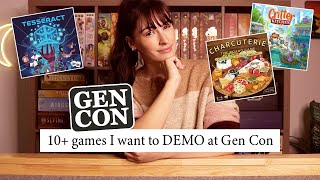
Tesseract, a cooperative dice game from Smirk & Dagger Games, drew mostly warm reactions from the channels that got hands-on time with it before release. Good Time Society ran a full two-player session and came away calling it a satisfying, constantly shifting puzzle that stayed engaging from setup to the final breach check. Board Game Garden covered the game twice, first as a Gen Con most-anticipated pick built around its dice mechanism, then again months later on a monthly top-five list after actually playing a full match with friends and winning. Board Games UnLocked broke from that pattern, placing Tesseract on a disappointing-games countdown and describing a table presence that looked far better than the game played, especially at the four-player count they tried against a stated best of two to three players.
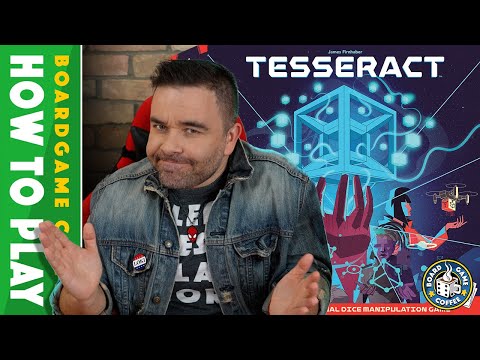
Several channels made clear their footage came from pre-release copies. Board Game Coffee's rules walkthrough opened with a note that its components were from a prototype and might not match the final product, and Good Time Society's session used stickered dice rather than printed ones, played while Tesseract's Kickstarter campaign was live. Board Game Coffee's video is a straight teach-through rather than a review, so it is used here mainly for how the mechanics were explained rather than for opinions.
Core Mechanics That Define Tesseract
A Shrinking Central Cube of Dice
The centerpiece of Tesseract is a tower of dice, called the Tesseract, built inside a sleeve on a raised Lazy Susan platform at the table's center. Board Game Coffee's teach-through explains that a die can only be taken once it has three or more visible faces exposed, and that removing one keeps its rolled value intact when it moves into a player's lab. From there, players can adjust a die's value up or down by one, or transfer a die from their own lab into another player's lab with that player's permission. Board Game Garden's Jenna described the appeal directly: players are drafting dice off a shared cube and solving a personal puzzle with them, and Jenna called it one of the most interesting uses of dice seen on the channel.
Sets, Runs, and Containment
Turning collected dice into progress requires building a set of three or more dice sharing a value, or a run of three or more consecutive values, with every die in the group either all the same color or all different colors. Contained dice go onto a matching space on the containment board, and Good Time Society's session showed the reward layer on top of that: containing a die lets a player re-roll the rest of that set or run for a bonus research card, and each player's researcher grants a distinct unique action, from a logistics manager who can contain and then adjust a cube to a computer programmer who cashes in a full set of four colors for a high-level card. Meanwhile, a threat phase primes the lowest die on the tower each round, and matching values gathering there push the breach track toward the loss condition.
The Tesseract Experience
Confidence Early, Tension Late
Reviewers who played full games described a session that starts calm and tightens as it goes. Good Time Society's Becca Scott and Jake Michaels noted feeling confident early before things got dicier near the end, which they said kept the tension present right up to the final turns. That same session called the underlying loop a satisfying puzzle precisely because failing to manage the lowest die forces a cascade that is hard to mitigate once it starts, turning the shared cube into a countdown as much as a resource.
Group Size Changes the Read
Not every table came away with the same read on how that tension plays out. Board Game Garden's Jenna played a full match with two friends and called the result very challenging and very puzzly, ending in a win and a game described as a huge hit with that group. Board Games UnLocked took the opposite view after playing with four, noting that the box lists a best count of two to three, and that the larger group they tried it with may have flattened the interaction they were hoping for.
What Makes Tesseract Stand Out
The Central Dice Cube Itself
Both of Board Game Garden's videos singled out the shared cube as the game's hook before anything else about it was explained. Jenna admitted the space theme was not usually a draw, but said the mechanisms were exciting anyway, calling the dice usage very interesting and unlike the games the channel typically goes for. That same shrinking-tower gimmick, visibly built down as dice are drawn off it, is what Board Game Coffee's teach-through and Good Time Society's live session both use as the visual anchor for every turn.
Distinct Researcher Abilities
Good Time Society's playthrough spent real time appreciating how different each researcher's ability felt in practice. Players singled out the logistics manager as super fun for containing and then adjusting a cube, the magnetic physicist for inverting dice on adjustment, and the exo-geologist for turning a contain-and-reroll into an extra research card, calling that combination of options nuts in a good way.
Potential Drawbacks
Still Prototype at Review Time
Every played impression in this coverage came from a pre-release copy. Board Game Coffee's teach-through flagged upfront that its components were from a prototype and might not represent the final product, and Good Time Society's dice were still stickered rather than printed during its session, played around Tesseract's Kickstarter launch. Neither channel treated this as a serious flaw, but both wanted viewers to know the copy in front of them was not final.
A Look That Can Outshine the Play
Board Games UnLocked's criticism centered on a gap between presentation and payoff: the group agreed the cube looked genuinely cool on the table, but said the gameplay itself fell flat for them and never closed that gap. They also pointed to the box's own two-to-three player recommendation as a possible reason their four-player game did not click the way the concept had promised.
If You Enjoy Tesseract
None of the reviewers compared Tesseract directly to another title. What unites their coverage is the central dice cube: players who enjoy drafting from a shared, shrinking pool of dice and turning each pick into a personal puzzle are the audience Board Game Garden and Good Time Society describe, while Board Games UnLocked is a reminder that the striking table presence does not win everyone over.
What Reviewers Are Saying
"This is a satisfying puzzle because it cascades itself by forcing the lowest level one to go unless you can mitigate it, which is hard to do."
— Good Time Society
"I played it with my friends, Aiden and Tyler. We did end up winning, which was awesome, but it's very challenging. It is very puzzly, and I absolutely love games that use dice in really cool ways."
— Jenna, Board Game Garden
"It looks cool on the table, but the game play falls flat. It's just kind of a one of those things."
— Board Games UnLocked