/pic1683747.jpg)
/pic544780.jpg)
/pic837358.jpg)
/pic1196537.jpg)
Game description from the publisher:
The ancient evil known as Doom has decided to make a change. In this new world of Numenera, Doom has manifested as an intelligent virus that controls its hosts. The infected are known as "Doomladen" and they know each other regardless of a host's external form. They are lead by powerful beings with strange relics – the Thunderstones – and once again you must defeat them to save the world.
In the deck-building game Thunderstone Advance: Numenera, which can be played on its own or combined with other Thunderstone sets, you build a party of heroes to defeat the Thunderstone Bearers. The "Doomladen" mechanism introduced in this game unites various monster groups against you, and new Setting cards take you into the environment of Monte Cook's Numenera RPG.
Part of the Thunderstone family — see Thunderstone for the combined view.
/pic1647385.jpg)
/pic1683747.jpg)
/pic1888624.jpg)
/pic3941484.jpg)

Thunderstone Advance: EP06
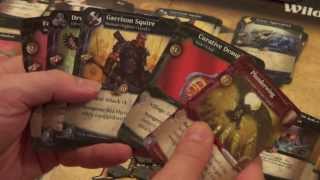
- Tight, tense deck-building with meaningful early-to-late game progression
- Rich thematic flavor through a variety of monsters and dungeon encounters
- Clear path to character development via XP and level-ups
- High difficulty with punishing monsters and raid/ambush interactions
- Some edge-case interactions (e.g., immune monsters, raid hand destruction) can slow momentum
- Rule depth around raid/ambush may require reference during play
- Heroic dungeon exploration, deck-building character progression and monster combat.
- Fantasy dungeon crawl in a grim, monster-infested world with village progression and expedition-style dungeon delves.
- Play-by-play, emergent storytelling through tactical decision-making and random dungeon draws.
Mechanics (from transcript analysis)
- combat resolution — Resolve attacks using a combination of physical, magic, and light resources; certain weapons may be immune to specific attack types.
- Deck Building — Build and upgrade a hero's personal deck from purchased cards to fight monsters and gain XP.
- deck-building — Build and upgrade a hero's personal deck from purchased cards to fight monsters and gain XP.
- Dungeon Crawl — Enter dungeon rooms, encounter monsters, and manage heroes and equipment as you progress.
- dungeon exploration — Enter dungeon rooms, encounter monsters, and manage heroes and equipment as you progress.
- Equipment management — Equip weapons and items to boost attack and grant dungeon-related abilities.
- leveling and advancement — Spend XP to level up heroes and unlock stronger abilities and keywords.
- raid and ambush effects — Raid effects destroy cards in the current hand; ambushes influence the hall and can modify play dynamics.
- Resource Management — Equip weapons and items to boost attack and grant dungeon-related abilities.
- Track Advancement — Spend XP to level up heroes and unlock stronger abilities and keywords.
Video topics + discussion points
Quotes (from this video)
- it's tough to stop these monsters are really tough
- we've smashed him
- it's touch and go isn't it
- we're reaching the climax now
- this is the thunderstone bearer our guardian
References (from this video)
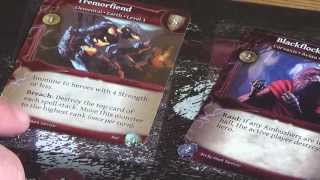
- Engaging deck-building with meaningful progression
- Village phase creates strategic purchasing decisions
- Clear rules explanations and live playthrough flow
- Light/darkness mechanic adds strategic depth
- Solo mode can feel punishing due to constant dungeon progression
- Some rules are complex and require careful tracking of penalties and ambushes
- Top-card purchase restriction in the village can limit choices
- heroic fantasy, dungeon delving, monster combat
- fantasy dungeon crawl with village phases and dungeon exploration
- explanatory playthrough with live commentary
Mechanics (from transcript analysis)
- attack and combat resolution — attack values must meet or exceed monster requirements, with special cases for weapon types and defensive text.
- breach/ambush — special monster abilities can trigger when entering ranks and affect cards on stacks.
- Combat: Damage Based — attack values must meet or exceed monster requirements, with special cases for weapon types and defensive text.
- Deck Building — players build a personal deck from purchased cards and use it to generate actions and combat power.
- deck-building — players build a personal deck from purchased cards and use it to generate actions and combat power.
- Dungeon Crawl — monsters emerge from a dungeon track, with ranks increasing an escalating challenge.
- dungeon crawl progression — monsters emerge from a dungeon track, with ranks increasing an escalating challenge.
- experience and leveling — defeated monsters grant experience that can be spent to level up heroes.
- Hidden Victory Points — monsters grant VP; if raiding monsters reach the village they reduce final score.
- light/darkness and light tokens — torches provide light to reduce a darkness penalty that reduces attack power.
- prepare — players may prep by moving cards to the top of the deck, then drawing six cards next turn.
- resting/destroy (deck thinning) — players can destroy cards to thin their deck and improve efficiency.
- victory points and raiding — monsters grant VP; if raiding monsters reach the village they reduce final score.
- village shopping phase — players spend gold to buy new cards from a village display; typically only one item may be bought per turn.
Video topics + discussion points
Quotes (from this video)
- End of every turn you reveal the top card from the dungeon deck and populate the dungeon hall.
- To defeat Tremor Fiend you need enough attack, taking into account darkness penalties.
- Light the torch to reduce the darkness and increase your effective attack.
- Raiders at rank one raid the village and reduce your final score.