



























Thunderstone Deep Dive
What the Community Thinks About Thunderstone
Almost every discussion of Thunderstone eventually turns into a conversation about Dominion. Board to Death TV treats the two as close relatives, praising Thunderstone as a pretty fun game and adding that if you enjoy Dominion you might enjoy this one as well. Adam in Wales places Thunderstone in the history of the genre, describing it as one of the early games that tried to put more theme into deck building after Dominion, and noting that the fantasy layer works fairly well even though it makes the game longer. The Tabletop Turtle discussion is the most skeptical of the group. Its hosts say they own everything for Thunderstone yet are willing to let it go, and they argue that pure deck building alone no longer holds their interest.
The debate over whether Thunderstone earns its place next to Dominion is the central tension. The strongest argument in its favor is the theme. The BoardGameWarriors discussion calls Dominion weak in theme by comparison and says the monsters can be neat. The same discussion is just as direct about the cost, arguing that Thunderstone does not run as smoothly as Dominion and feels slower and clunkier to anyone used to Dominion's pace. Foster the Meeple mentions Thunderstone only briefly during a list episode, noting that the channel recently acquired a copy but has not yet played it.
Core Mechanics That Define Thunderstone
Deck Building With a Village and a Dungeon
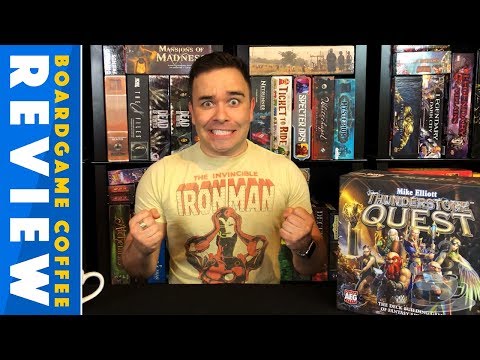
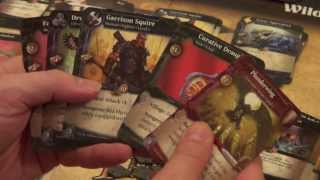
Reviewers describe deck building as a familiar starting point that quickly branches into something else. Each player begins with a small deck of militia, daggers, iron rations, and torches, and each turn a player can visit the village to hire heroes and buy equipment, enter the dungeon to fight, or rest to thin out their hand. Board to Death TV explains that defeated monsters are added to the deck where they count as victory points and can be spent as money, so the dungeon and the village feed the same engine. Adam in Wales describes the general loop of deck building as cards piling up over time, noting that the discard pile keeps getting shuffled in so the deck gets bigger and bigger. Thunderstone keeps that loop but swaps the purchased cards for heroes, weapons, and spells that are used to fight.
The Dungeon and the Monster Row
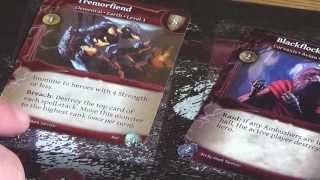
The combat is what separates Thunderstone from its inspiration, and reviewers spend the most time on it. Three monsters sit in a row, and each sits at a darkness rank that imposes a penalty on the attacker. Light from torches and wizards cancels that penalty out. A party must also have enough attack from heroes, weapons, and spells to beat the monster's hit points. A monster that is not defeated goes to the bottom of the deck and a new one takes its place. Tabletop Turtle describes the same core idea in simpler terms, saying that you put out the strength on your characters and try to beat the monsters in the row.
The Thunderstone Experience
The Race for the Dungeon
Reviewers consistently describe a sense of urgency that drives each turn. The BoardGameWarriors discussion notes that players want to go to the dungeon every time so they can gain experience points and level up their characters, and that defeated monsters count as gold, so buying a card that counts as gold can feel like a waste when a monster offers the same reward. Once the Thunderstone starts to appear, the pressure rises, and the end game becomes a scramble to grab what you can before someone else ends it.
Stalling, Downtime, and Dead Turns
The flip side of that urgency is frustration. BoardGameWarriors describes a recurring problem in which a player has no cards worth buying, no monster they want to fight, and nothing to do but throw a card away from their hand. The discussion observes that people feel like their turn is just being wasted, which contrasts sharply with Dominion, where almost every turn offers something to do. Reviewers say games can stall for long stretches when nobody can safely enter the dungeon, and that the wait between turns makes Thunderstone feel more tedious than Dominion.
What Makes Thunderstone Stand Out
A Theme That Gives the Purchases a Purpose
Where Dominion's action cards are abstract, Thunderstone asks players to think of their cards as characters, weapons, and monsters. The BoardGameWarriors discussion says it likes the theme a lot more than Dominion's and that the monsters can be neat, which reinforces the sense that the world of the dungeon is a big part of the appeal. Adam in Wales frames the fantasy presentation as the reason the mechanism works at all, since the cards represent the weapons and little armies that players send out to fight monsters.
Variety, Components, and Replay Value
Board to Death TV values that the game is different every time, since the randomly drawn heroes, monsters, and village cards create a fresh mix on each table. The BoardGameWarriors discussion praises the production, describing the card stock as sturdy and the art as consistent throughout. That contrasts with Dominion's cards, which the discussion describes as frail and more like a greeting card in finish. Reviewers see this as a set that looks and feels like it will last.
Potential Drawbacks
Length and Pacing
The most common complaint is that Thunderstone takes longer than its rulebook suggests. The BoardGameWarriors discussion says it certainly seems a lot longer than Dominion, and recalls a game that ran for an hour and a half because nobody could do anything and the monsters were too strong for anyone to beat. Adam in Wales makes a similar point, arguing that the fantasy layer makes the game a lot longer and clogs it up. For groups that want quick rounds between other games, that added length is the main obstacle.
Interaction and Clarity
Board to Death TV calls out the lack of player interaction, saying the game feels like playing solitaire but in a group. The same review finds the card layout confusing, noting that the stats are colored circles with no symbols and that most of them are purple, which makes it hard for new players to read. The BoardGameWarriors discussion adds a related concern: a player who feels they are winning can attack the monster in front of the Thunderstone with no penalty, which can end the game abruptly. Tabletop Turtle reports that the game is really tough to explain to new players and feels a little old now, so teaching it well matters as much as the rules themselves.
If You Enjoy Thunderstone
- Dominion is the yardstick every channel reaches for. It offers the same buy-and-build loop with a faster pace and less downtime, which is exactly what reviewers miss when they compare the two.
- Arctic Scavengers is named by Tabletop Turtle as a deck builder that adds a combat step at the end of the round, turning cards held for that moment into fighting strength. It shares Thunderstone's interest in giving deck building a more active goal than simple point scoring.
- Ascension keeps a deck-building core while adding monsters to defeat for victory points, giving players a different way to use the cards they buy.
- Nightfall is a fantasy-themed deck builder for players who want theme layered onto the buy-and-build loop.
What Reviewers Are Saying
first of all there is a lack of interaction between players it feels like playing solitaire but in a group
— Board to Death TV - Board Game Reviews
there's so much stuff now because it's a pure deck builder out loud like a Dominion just does it I don't I don't know for me now deck building isn't enough there has to be some other game elements
— Tabletop Turtle
it makes the game a lot longer and clogs it up a lot
— Adam in Wales - Board Game Design