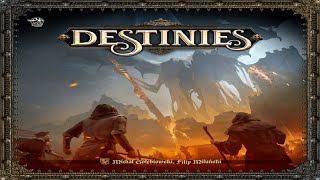
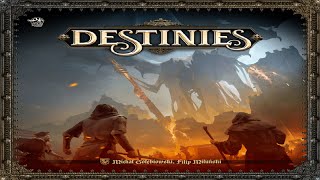







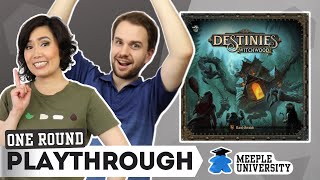
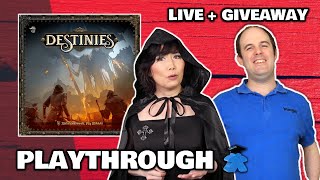
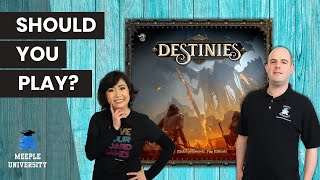
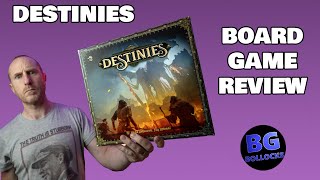
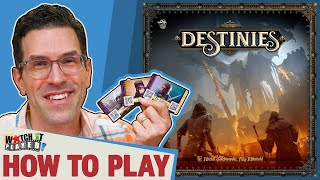




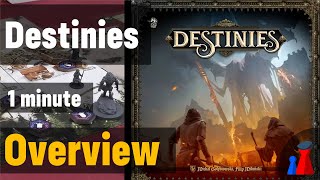


Destinies is a competitive, story-driven, game of adventure and exploration, mixing an app and a board game.
The first in a series of games using a brand-new system called Destinies. This game is set in a dark medieval-fantasy universe.
The Destinies system offers a fully story-driven, app-supported, RPG-like board game experience, without the need for a game master. Each scenario depicts a part of a vivid world, full of dark stories, epic NPCs and mysteries to solve. Each player takes the role of a hero on a quest to fulfill their destiny. Each destiny is a final goal of the character and has at least two, completely different paths to victory, composed of branching series of quests. Players compete with each other to push the world towards their own destiny.
The game uses an app and the Scan&Play technology to offer players a unique story-driven experience full of dynamic events, epic adventures, and an ever-changing game world. Each turn players discover new parts of the world presented on tiles, explore them and pick one point of interest to visit. There they learn more about the story and make crucial choices of how they want to interact with people, creatures or situations faced there. The consequences of each choice are meaningful and often change the state of the world forever.
—description from the designer
Destinies - How To Play
Images
- Fun way to use mobile phones or apps in a board game form
- Story-based progression and combat using a phone app
- Story-based
- Boss Monster QR
Mechanics (from transcript analysis)
- app integration — Uses a phone to scan QR codes for progression and combat.
- Storytelling — A more story-based game.
Video topics + discussion points
Quotes (from this video)
- This is the most prestigious board game award in the world.
- We're going to talk about the two big categories of the awards. Number one is Spiel des Jahres, and then we're going to talk about the gamers or Kennerspiel des Jahres, the gamer's game.
- If I would have these three candidates, which one would win? There's no doubt. I think this is the most original board game that I have played this year.
- It should have been Spiel des Jahres. No, I mean don't get me wrong. It's a great game.
- So, what would be our pick if we would have these three nominations? Well, we agreed on drum roll, please, Blood Moon Colony.
- We'll need to financially recover from buying all of these games.
References (from this video)
- immersive fantasy theme
- app integration and modular story
- miniatures and production quality referenced
- adventure, exploration, destiny
- fantasy world with fate-driven quests
- story-driven with an app and scannable cards
Mechanics (from transcript analysis)
- App Assisted — uses an app to enhance encounters and quests.
- app_integration — uses an app to enhance encounters and quests.
- private_destinies — each player has private destinies to fulfill.
- scannable_cards — scannable cards used to augment core gameplay.
Video topics + discussion points
Quotes (from this video)
- i'm looking forward to the weather machine's arrival
- it's a giant mess
- i love the command and color system
- this is the first in a planned series of games using a brand new system also called destinies
- you discover each clue fragment one at a time from a collection of face down cards on the table
References (from this video)
Mechanics (from transcript analysis)
- app-assisted — The app is integral to playing the game and guides the players.
Video topics + discussion points
Quotes (from this video)
- does board game media podcasts youtube and blogs really matter
- it matters because it can act as asking a friend online if they liked a game to an extent if z garcia from the dice tower likes a card game i'm probably going to like that card game
- for me board game media matters and i'm trying to think of me the consumer rather than me the board game media person
- it's such a valid and important form for me specifically it's form of entertainment i watch a lot of board game reviews and i watch a lot of them as entertainment
- yeah it does because board game media sells copies of games so in that regard undoubtedly board game media matters
- it's funny when you compare those lists to the previous years what was i looking forward to but often you kind of don't even know for starters what's coming out in 2022
- i find these what are we looking forward to lists very interesting when compared to the previous what did we enjoy of that year
- and i'd really love to know what games you're looking forward to so below in the comments i'd love to start a conversation about what games are we excited for in 2022.
- it really felt like going off doing loads of side quests in skyrim and you had the main mission and like things going on but really you could just go into another side quest
- federation seems to be the star trek game that i've always wanted though it's not star trek theme
- i always go for a board game resolution and i tell ya i don't follow through on them pretty much ever
- i would like to be a better ambassador for the board game hobby than i am at the moment
- looking for recommendations on games to show people who have little patience for lots of rules
- the rules to so clover for instance are so short and quick and simple but the game itself is incredibly fun
- strike the game of gladiators fighting to death in a tournament bowl of doom fantastic fun brilliant
- p for pizza the one of the most underrated party games of all time
- because of the the the wall that of wall of text can really provide
- game itself is incredibly fun strike the game of gladiators fighting to death in a tournament bowl of doom fantastic fun brilliant
- p for pizza the one of the most underrated party games of all time where you are drawing cards trying to make a pizza but really it's just a word to guess word association game absolutely love pizza pizza by big potato it's great
- if you have any answers to the questions that we have what games do you think have a small rule set that are just really good games to get people into the hobby who are a bit hesitant because of the the the wall that of wall of text can really provide let me know in the comments i'd love to know
References (from this video)
- Really enjoyed their Chronicles of Crime series
- Cool little mechanic with the player boards and pegs
- The way the game mechanics interact with moving pegs is really neat
- Mechanics wise I thought it was really cool
- I think the system's really cool
- Quests are very samey
- Third and fourth games were a bit over it
- No linking of characters across the campaign
- App technology felt underutilized
- Formula is a little too apparent
- Don't pay too much for it
- Detective/Mystery, Questing
- Medieval France, during the time of Joan of Arc
- QR code driven app that drives the mystery and puzzle solving.
- Chronicles of Crime
- Sherlock Holmes Consulting Detective
- Tainted Grail: The Fall of Avalon
- The 7th Continent
Mechanics (from transcript analysis)
- App Driven — Uses a phone app with QR codes to drive the story and gameplay.
- cooperative play — Players work together through quests.
- Modular Board — Uses tiles similar to Tainted Grail or The 7th Continent.
- Skill checks — Character stats (agility, strength, mind) with pegs used for skill checks.
Video topics + discussion points
Quotes (from this video)
- It seems like whenever I do these where I kind of collect some reviews there's always one or two games where I'm like I think I'm wrong because everybody else seems to like it
- It's just a really simplistic area control game and it's not it's balanced it's it's polished for what it is but it's also very very very very very very mediocre
- Holy cow I really do not like this game
- It takes longer to set this game up than it does to play it
- This is one I think it could be good for me just not polished and developed enough
References (from this video)
- App-driven
Mechanics (from transcript analysis)
- Digital Hybrid — A traditional tabletop board game coupled with an app that enhances the experience.
Video topics + discussion points
Quotes (from this video)
- we do not make board games here
- we make memories
- Chronicles of crime has sold over a million units in the last five years
- we've gone from 30 to 60 plus employees which is just extremely fast
- the name may be different depending on what region you're in but you have direct to Consumer sales you have direct to retailer sales you have distribution sales and then you have online sales
- I think the industry has a lot of opportunity and how we take advantage of that will determine if we're growing or if we're not
- people are starting to spend their money more on experiences rather than things
- I think the average consumer is looking to buy an event or buy an experience
- the worst that I can ever remember seeing inflation in my time in North America was about 12 percent
- the last thing I want to be responsible for is like pushing a manufacturer to make board games at the risk of someone's Health in someone's life
- I think the majority of people are in two camps they're either people who have been part of this industry and they want to get back to going to shows and being part of the community again and then there is this large group of people that I think is absolutely amazing and special and super awesome that they've come into the industry over the course of the last two to three years with the pandemic
References (from this video)
- Excellent prose and flavor
- Readability makes it appealing as both reading material and a play aid
- Some players may prefer more traditional OSR-style tables
- Weird fiction, mythic creature lore
- Field-guide style bestiary within the Mor BORG universe
- Array
- Mörk Borg
Mechanics (from transcript analysis)
Video topics + discussion points
Quotes (from this video)
- Beware that's such a fantastic opening to a bestiary
- I can highly highly recommend bestiary
- this deck of cards is awesome I love this
- you shuffle up and draw a monster and then that is the monster you will fight
References (from this video)
- story-driven
Mechanics (from transcript analysis)
Video topics + discussion points
Quotes (from this video)
- a zombie side I really like that game
- would be wingspan and so it said like love birds
- Dice Throne is perfect because you literally can throw in like any characters
- final girl because horror cannot be bound to a single holiday
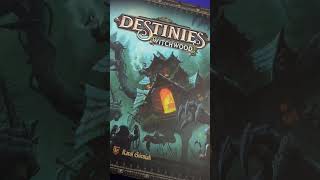
- Destinies and Witchwood are mentioned in context of story-driven games
- Race for the Galaxy is one of my favorite games
- Magic: The Gathering (Magic) is his favorite
- the font on this card is weird
- pandemic
- I texted you during church
- I would play this for Valentine's Day
References (from this video)
- engaging theme and exploration
- Witchwood expansion enhances replayability
- app-driven choose-your-own-adventure
- interactive storytelling
Mechanics (from transcript analysis)
- app-driven questing — story-driven decisions drive the path of the quest
- app-driven storytelling — narrative choices drive game flow
- character-based destiny paths — select paths and quests for different outcomes
- Exploration and questing — characters explore and pursue destiny paths
- Narrative Choice — story-driven decisions drive the path of the quest
Video topics + discussion points
Quotes (from this video)
- this game is such a great worker placement game
- I love talking about our top 100
- Kim is not going anywhere
- this game is a 10 out of 10 in my mind
- we love Zombie Side
References (from this video)
- really love Destinies
Mechanics (from transcript analysis)
Video topics + discussion points
Quotes (from this video)
- I don't feel any pressure to create content.
- This is my full-time job, right? I don't have another job to go to.
- I'm producing all of this content and honestly, if I could produce more, I would because I love what I do.
- The category here or the criteria here is massively popular, really well-respected, solid Euro games that have been around for a while and stood the test of time and are known as just really, really good games.
- No games do. It doesn't need all of the bling and everything else.
- I think most people in life are affected by what's called seasonally adjusted disorder.
- Entering is absolutely free. It doesn't cost you anything whatsoever.
- The secret word this month is haggis.
- All of my advertising revenue from all of my videos goes to charity.
- I don't make any money out of the videos themselves on YouTube. People call me crazy. They would be right.
- It's only 70 to go.
- I have not. No. Not Not even heard of that one.
- I would strongly recommend you just do it because you want to do it. Don't go out and spend £4,000 on a fancy camera, lights, and everything else and think 'Right, I'm going to be the next big channel and I'm going to get 50,000 subscribers in 6 months.'
- One thing that really annoys me is when the games come out at retail like the same time or even before and they're cheaper.
- I personally believe it is fundamentally, morally, and ethically wrong for me to sell a pre-production prototype copy of a game.
- It's International Unplayed Games Day. And the date that I've chosen... is the 1st of July.
- I have already got two of them on my channel, if not three, and I'm doing another one next Wednesday.
References (from this video)
- Good at three players
- Really cool
- Never took it to the level that I thought it could be at
- Exploring stories
- Story-driven exploration
Mechanics (from transcript analysis)
- app-driven — Implied by 'exploring the stories' and the publisher Lucky Duck known for app integration.
- exploration — Going through and exploring the stories.
- Storytelling — You're going through and exploring the stories.
Video topics + discussion points
Quotes (from this video)
- Hey everybody, I'm Tom Vasel and welcome to look back, a series where I go through and take a look at the reviews that I did last year this time and 5 years ago and 10 years ago and 20 years ago and tell you what I think about them now.
- So those are the reviews I did 1, 5, 10, and 20 years ago.
- Thanks for watching. I'm Tom Vasel. We'll see you next time.
- Hey. Uh thanks for watching another video here on The Dice Tower. Uh we really appreciate you stopping by and checking our things out.
- And hey, if you really like what we're doing here at The Dice Tower, then there are different ways to support The Dice Tower. One of those ways is through Patreon.
References (from this video)
- really like it
- amazing combat system
- fun sense of exploration
- could have been even greater
- stories
Mechanics (from transcript analysis)
Video topics + discussion points
Quotes (from this video)
- Hey everybody, I'm Tom Vasel and welcome to look back where I take a look at reviews that I did last year, 5 years ago, 10 years ago, and 20 years ago during this same time frame. And I tell you what I think about those games now if I think about them at all.
- Wasn't reviewing a lot of great games 10 years ago.
- It blows my mind this game's 10 years old now and everyone has forgotten it ever existed.
- This might have been the first game that I really like noticed who he was.
- Destinies could have been even greater, um, but it was very good for its time.
- And those are the games that I reviewed 1, 5, 10, and 20 years ago. Thanks for watching. I'm Tom Vasel and this is look back on the Dice Tower.
References (from this video)
- Strong storytelling in mythological scenarios
- Engaging narrative elements
- Thematic depth with expansions like 'Myth and Folklore'
- Historical scenarios are considered boring by comparison
- Mythology, folklore, supernatural deities, angels
- Mythological or historical scenarios
- Scenario-based storytelling
Mechanics (from transcript analysis)
- scenario-based gameplay — The game is played through various scenarios, which can be either historical or mythological.
- Storytelling — The narrative and storytelling aspects are central to the game experience, with mythological themes being particularly engaging.
Video topics + discussion points
Quotes (from this video)
- This is heavy metal as a board game.
- Almost no space of the board is more than two steps away from another space. So pressure is always on.
- push your luck worker placement in a co-op game. Bizarre, but it works really well.
- I think the mythological part is much stronger.
- a really solid auction game. One of the best auction games there is.
References (from this video)
- Story-driven, app-guided tasks
- Expands Destiny's with Witchwood content
- Interactive exploration and evolving board
- Can be complex; expansion adds more rules
- Not cooperative by default (competitive play)
- destiny fulfillment in a fantasy world with villages and forests
- story-driven, app-guided, quest-based
Mechanics (from transcript analysis)
- App Assisted — the app provides tasks and guides checks, shaping play
- board progression and upgrades — board is modular and evolves; players upgrade their boards to improve outcomes
- destinies — each character has two destinies (light and dark) and choices influence play
- Dice pool and successes — roll dice; count pips to determine successes; purple dice provide instant successes
- exploration paths — explore tiles; choose paths and interact with environment
- inventory interaction — using items from inventory to interact with the world
- maze/travel mechanics — travel to explore tiles and navigate a maze-like structure
- Skill checks — three attributes (intelligence, dexterity, strength); dice (white and purple) used to determine success; app sets the target
- story prompts via app — the app provides tasks and guides checks, shaping play
- Tile/Map Shifting — travel to explore tiles and navigate a maze-like structure
Video topics + discussion points
Quotes (from this video)
- it's competitive it's not Cooperative
- we're racing to finish our destiny first
- this is prototype as well this is the third expansion which is Destiny's Witchwood
- the app will tell you a task maybe like pickpocket then there or something
References (from this video)
Mechanics (from transcript analysis)
Video topics + discussion points
Quotes (from this video)
- Welcome to our play true life or not I'm Stella hi I'm Tyron
- You know it's my game I wouldn't say it's hard I mean like it's hot because we're busy doing stuff anyways
- The walls the walls once a guarantee of safety become a cage when the city is beset by the plague
- This feels so familiar doesn't say that it's just it feels like the last two years
- This is going to be a very quick summary because I think a lot of the things will more unfold as the app tells us how to set up the scenario but ultimately we are each going to be a character
References (from this video)
Mechanics (from transcript analysis)
Video topics + discussion points
Quotes (from this video)
- This is probably my favorite part well i like the adventuring part but this is my favorite part where um you actually complete challenges so you still raw dye so you have your two main dies and the extra effort dice which you get to put back at the start of your round and there's ways to put back and exhaust if you fail something.
- This is actually more my type of game than terence yeah this sort of narrative adventure style of game i'm more of a eurogamer this is not really my sort of thing.
- Unlike chronicles of crime that plays cooperatively this is competitive which is unusual it's unusual for this sort of game to be sometimes it's semi-cooperative or a crossroads sort of thing where there's a common and a personal but yeah for it to be fully competitive but still adventure is it's different.
References (from this video)
- Intuitive system for upgrading skills, even when failing tasks.
- Ability to mitigate dice rolls effectively.
- Thematic alignment of character skills.
- Smart destiny goals.
- Engaging narrative adventure style.
- App integration is well-done.
- Easy to learn with simple core rules.
- Stella is a eurogamer and prefers euro-style games, finding this not really her type.
- Tyrone suggests the game could be hard to have a try again to be successful.
- Adventuring to find your own destiny
- Old century, dark age, fantasy
- Chronicles of Crime
Mechanics (from transcript analysis)
- app-driven — The game is controlled by an app, which is used to scan items and resolve areas of interest.
- Character progression — Players build up their character and can earn experience points from tasks, even failures, to upgrade skills.
- Competitive gameplay — The game is played competitively, with 1-3 players aiming to complete their own destinies.
- Dice Rolling — Players roll dice for challenges, with a success number based on dots rolled and the challenge type.
- Tile exploration — Players move to areas, and tiles are flipped to reveal areas of interest.
Video topics + discussion points
Quotes (from this video)
- This is probably my favorite part well i like the adventuring part but this is my favorite part where um you actually complete challenges so you still raw dye so you have your two main dies and the extra effort dice which you get to put back at the start of your round and there's ways to put back and exhaust if you fail something.
- This is actually more my type of game than terence yeah this sort of narrative adventure style of game i'm more of a eurogamer this is not really my sort of thing.
- Unlike chronicles of crime that plays cooperatively this is competitive which is unusual it's unusual for this sort of game to be sometimes it's semi-cooperative or a crossroads sort of thing where there's a common and a personal but yeah for it to be fully competitive but still adventure is it's different.
References (from this video)
- Clever dice resolution system
- Engaging story-driven experience
- Challenging gameplay
- Players are characters trying to fulfill their destinies amidst a plague
- A city plagued by a mysterious illness
- App-driven storytelling with branching choices
- Seven Continent
- Forgotten Waters
Mechanics (from transcript analysis)
- app integration — The game uses an app to guide setup and reveal scenarios.
- Character progression — Players upgrade their skills by shifting discs up or down.
- dice manipulation — Players can modify dice rolls using items or character abilities.
- Set Collection — Players collect items like tarot cards and weapons to aid their progress.
- Skill Tests — Players resolve challenges by rolling dice and adding successes based on skills and discs.
Video topics + discussion points
Quotes (from this video)
- Welcome to our play true life or not I'm Stella hi I'm Tyron
- You know it's my game I wouldn't say it's hard I mean like it's hot because we're busy doing stuff anyways
- The walls the walls once a guarantee of safety become a cage when the city is beset by the plague
- This feels so familiar doesn't say that it's just it feels like the last two years
- This is going to be a very quick summary because I think a lot of the things will more unfold as the app tells us how to set up the scenario but ultimately we are each going to be a character
References (from this video)
- Well-designed app that is clear and concise.
- Visceral story with risks taken in content, including gore and medieval religious death.
- Effort dice add a nice touch of push-your-luck and strategic choice.
- The app handles many game elements, reducing player burden.
- Minis are too small and hard to tell apart.
- Blindly revealing locations can inadvertently help other players.
- App is not intelligent enough to distinguish whose turn it is for reveals.
- Some scenarios are frustratingly long, obscure, and can lead to boredom.
- Lack of content in the base game with only five scenarios, which are one-shot affairs.
- Board is arguably pointless.
- Concerns that it might be a video game in disguise rather than a board game.
- Fulfilling your destiny
- The Seventh Continent
Mechanics (from transcript analysis)
- app integration — The game utilizes an app to manage scenarios, encounters, and outcomes, described as well-designed and concise.
- Dice Rolling — Players roll two normal dice and can choose to roll additional effort dice to boost their chances of success in skill checks.
- Hand Management — Players manage item cards in their hand, which can be scanned into the app.
- map movement — Players move around a map, interacting with locations to advance the story and fulfill their destinies.
- Set Collection — Players pick up items, which might be used to fulfill objectives or scanned into the app.
- Skill checks — Gameplay revolves around skill checks where players roll dice and add results based on their character's stats and effort dice.
- Worker Placement — Players place figures on a board to interact with locations and progress.
Video topics + discussion points
Quotes (from this video)
- Destinies is an admirable attempt and what it calls an RPG in a box
- the app takes care of all of the [ __ ] that you don't care about
- the board is arguably pointless
- this isn't actually a board game after all and is actually a video game in drag
References (from this video)
- Rich story and destiny mechanics
- App integration adds narrative depth
- High production quality of components and box design
- Replayability via multiple scenarios and endings
- App updates may alter the experience over time
- Solo mode difficulty can be challenging in challenger mode
- Destiny and personal goals; choices shape the world and outcomes
- World explored via map tiles with an accompanying app; scenarios unfold day by day
- App-driven storytelling with read-aloud text and branching outcomes
Mechanics (from transcript analysis)
- App-driven events and destiny scanning — The app triggers events, allows scanning items by QR, and public narration of on-screen information related to destinies.
- Destiny and finale — Each player has two destinies; completing one leads to a finale; the finale is a sequence of events that replaces normal turns.
- Dice Rolling — Players roll two main dice plus optional effort dice; successes are allocated to skill tracks; some successes are automatic when scanning items.
- dice-based skill tests — Players roll two main dice plus optional effort dice; successes are allocated to skill tracks; some successes are automatic when scanning items.
- End-of-day progression — Days progress; new developments in the world may occur each day.
- Experience tokens and skill upgrades — Experience tokens can be spent to upgrade skills; moving markers affects chances in future tests.
- Influence Points — Visiting points of interest yields options to resolve, including skill tests, scanning items, trading, and interacting with NPCs.
- Inventory management — Hold up to five items; items have always/discard effects; discard effects remove the item from inventory; excess items can be abandoned.
- Points of interest and interactions — Visiting points of interest yields options to resolve, including skill tests, scanning items, trading, and interacting with NPCs.
- Test resolution and skill markers — Tests use skill markers; successes/losses move markers; experience can be spent to upgrade skills.
- tile-based exploration — Move up to two spaces orthogonally; unexplored tiles flip to explored as directed by the app, with new tiles added around revealed tiles.
- Tile/Map Shifting — Move up to two spaces orthogonally; unexplored tiles flip to explored as directed by the app, with new tiles added around revealed tiles.
- Track Advancement — Days progress; new developments in the world may occur each day.
- Trading — Trade stacks and a blacksmith, buy/sell items with gold; items on tiles can become available to other players via stacks.
- Trading and economy — Trade stacks and a blacksmith, buy/sell items with gold; items on tiles can become available to other players via stacks.
Video topics + discussion points
Quotes (from this video)
- the world in this game remembers your choices and changes how it interacts with you
- it's day one of the scenario
- two personal destinies
- you'll never really know how difficult the test is
- the game also comes with two solo modes
- finale will be a series of events and final tests
References (from this video)
Mechanics (from transcript analysis)
Video topics + discussion points
Quotes (from this video)
- we have the new expansion of Destinies
- including the first scenario I believe
- watch out for the video
References (from this video)
- Array
- Array
- Destiny, fate, and the interplay of punishment and salvation across interconnected scenarios.
- Array
- A dark fantasy world centered on village exploration and destiny-driven quests, played with an app.
- Array
- Array
- Array
- positive
Mechanics (from transcript analysis)
Video topics + discussion points
Quotes (from this video)
- Destinies is a competitive story-driven game of adventure and exploration mixing an app and a board game
- we had a fantastic time
- the miniatures are absolutely worthless in the game
- if you're looking for a fun competitive story based app game with some neat mechanisms some neat ways to use cards and an interesting way to use the app that tells a pretty good story that you can have a lot of fun with i do recommend destinies
- ditch the plastic guys it's not needed
- it's a sandbox style game in which you can create your own fun
- i had a fantastic time
References (from this video)
- innovative use of digital guidance to shape tabletop play
- engaging thematic integration with quest-based play
- requires device compatibility and setup
- potential for long play sessions
- discovering fate through exploration, quests, and outcomes influenced by an app
- fantasy world guided by an app-driven narrative
- choose-your-path storytelling with evolving map and events
- Thunderstone Quest
- Destinies (itself as a reference point)
Mechanics (from transcript analysis)
- app-driven narrative — an accompanying app guides story events and world state.
- cooperative exploration with varied outcomes — players cooperate to explore and resolve scenarios with branching outcomes.
- Deck Building — players manage resources, upgrade actions, and undertake quests.
- deck-building and action economy — players manage resources, upgrade actions, and undertake quests.
Video topics + discussion points
Quotes (from this video)
- I'm Ro from the Road.com and these are my top 10 anime plus how I would rethe them into a current modern board game.
- All spoilerfree, of course.
- Let me know your favorite anime. If there's any anime you're watching at the moment you think would be good, let me know so I can add it to my watch later list.
- Destiny's. It's a fantasy app-driven game where you build the map out as you play and the app will tell you where things go.
References (from this video)
- interesting take on coop storytelling turned competitive
- unique app-driven mechanic
- prototype quality varied
- hard to balance for multiple players
- cooperative storytelling vs competitive
- story-driven adventure
- story-driven with app integration
Mechanics (from transcript analysis)
- App Assisted — integration with an app/gamebook
- app-driven — integration with an app/gamebook
- Narrative Choice — narrative choices drive outcomes
- story-driven choices — narrative choices drive outcomes
Video topics + discussion points
Quotes (from this video)
- it's whimsical it's really a classical fantasy tale
- a speed game that I think is a fund
- it's a dropping game where you try to drop treasures you're drafting
- it's a great game to play at the end of a game weekend
- I would never play with any other account because it doesn't I don't care anything about what happened when we play four players
References (from this video)
- Polished app integration that drives most of the experience and can streamline gameplay
- Strong, thematically fitting artwork and small minis that stay affordable
- Rewarding leveling system tied to tests, giving a sense of progression
- Flexibility with two-quest paths adds strategic options
- Campaign structure provides narrative continuity and a sense of progression
- Heavy reliance on the app can reduce the feel of a traditional board game and diminish table presence
- Competitive framing can undermine cooperative enjoyment and shared accomplishment
- Clue tracking and memory for quest steps can be confusing or memorization-heavy
- Some scenarios feel less engaging than others, leading to uneven pacing and excitement
- Replayability can be limited after finishing five scenarios, especially with fewer players
- Destinies and personal fate drive character goals, with an overarching story that evolves through a campaign
- Dark fantasy, fate-driven quests in a perilous, gothic world with a narrative arc across multiple locations
- App-driven storytelling where the app guides events, reveals information, and directs player interactions
- Arkham Horror
Mechanics (from transcript analysis)
- App Assisted — An accompanying app governs events, maps, and dialogue, reducing bookkeeping and shaping the story in real time.
- app-driven narrative — An accompanying app governs events, maps, and dialogue, reducing bookkeeping and shaping the story in real time.
- Campaign — Four scenarios form a campaign with an overarching storyline and evolving stakes.
- campaign with scenarios — Four scenarios form a campaign with an overarching storyline and evolving stakes.
- competitive vs. cooperative tension — Although framed as an adventure, players race to fulfill their own destinies, creating competitive tension within a shared world.
- Dice Rolling — Two baseline dice, plus situational dice that can be refreshed to adjust success chances depending on the task difficulty.
- dice-based skill tests — Two baseline dice, plus situational dice that can be refreshed to adjust success chances depending on the task difficulty.
- hidden destinies — Each player carries a secret destiny card that guides their personal objective and influences decision-making.
- two-quest option — Players can pursue one of two quest paths, offering flexibility and strategic planning.
Video topics + discussion points
Quotes (from this video)
- the app is extremely important
- the app work splendidly
- this game is app-driven, competitive storytelling
- the leveling up system in this game ... feels really rewarding and great
- the biggest biggest thing in this game which is what they have made which makes this game very different from other games in this genre is that it is competitive instead of being cooperative
- you have two quests you can go for
- the app-driven narrative ... it's like Chronicles of Crime with map elements on the app
References (from this video)
- on rails narrative gameplay
- minimal branching paths
- solo story very bland
- luck-based when played competitively
- narrative-driven
- Dune: House Secrets
- Tainted Grail
Mechanics (from transcript analysis)
Video topics + discussion points
Quotes (from this video)
- it's not even a game it's just like a story
- why is it there this is the game about inventions and this is basically telling me to make cutesy patterns with tiles
- the bane of my freaking life this horrible game
- I just want to feel like right I can do this I can do this
- just design one good game one good game one good mode
- why can't I tell you
- they just made them a lot worse
- it's a red flag to the game is going to suck
References (from this video)
- Interesting app-driven narrative concept
- Engaging subquests and destiny race
- Speaker’s stated personal preference is mixed
- epilogue can vanish if another player achieves destiny
Mechanics (from transcript analysis)
- app-driven storytelling — narrative progression guided by a companion app with subquests and destiny goals
- dice checks / skill resolution — dice-based checks to advance actions and unlock outcomes
- Dice Rolling — dice-based checks to advance actions and unlock outcomes
Video topics + discussion points
Quotes (from this video)
- it's a treasure trove of puzzling riches and i love it
- this box is the campaign that takes the form of a delightful comic
- a gorgeous game unlike any i've played this year or most other years
- it's an app-driven competitive storytelling game which just boggles my mind a little
- it's all about family
References (from this video)
- Engaging narrative
- Smooth app integration
- Replayable fate paths
- Can be expensive
- Complex for players new to the system
- Narrative-driven adventures guided by an app
- Gothic, fate-driven fantasy with destiny paths
- Story-forward with dice-based checks
Mechanics (from transcript analysis)
- dice-based skill checks — Dice determine outcomes and drive narrative events.
- Story-driven progression — Players pursue unique destinies through app-assisted choices.
Video topics + discussion points
Quotes (from this video)
- horrified is the best co-op intro game that has been made with a Halloween theme
- it's easy to learn and play and hard to win
- it's a silent RPG
- one of my favorite games of all time
References (from this video)
- Interesting dynamic when paired players collaborate within a competitive framework
- story-driven exploration
- mythic fate-driven adventures
Mechanics (from transcript analysis)
- story-driven dice/action selection — Players collaborate and compete to influence their paths through a modular, fate-driven system.
Video topics + discussion points
Quotes (from this video)
- remove cards that add a take that element to an otherwise not take that kind of game.
- It is. And I use the word empowering.
- don't be afraid to remove that card
- pairing people up because when you think about it
- the 3D printing community is very open and sharing
References (from this video)
- Story-driven scenarios that unfold in a dynamic, changing game world
- Multiple Destinies provide potential replayability and varied outcomes
- Item collection and combat add tangible progression and action
- App-assisted framework supports narrative pacing and world state awareness
- Clear objective tied to personal destinies fosters focused play
- Transcript provides limited formal detail on core mechanics, risking ambiguity about depth
- App integration is mentioned but not elaborated in the transcript, leaving implementation questions
- Potential complexity from narrative branching may challenge new players
- Two fated paths intersect through personal destinies; players pursue narrative-driven quests within a modular, story-first framework.
- A fantasy adventure world with a living, evolving landscape where players explore sites of interest and face changing challenges.
- Story-driven, app-assisted branching narrative that adapts to player choices and dynamic world events.
Mechanics (from transcript analysis)
- Combat: Damage Based — Acquiring valuable gear and engaging in combat encounters to influence survivability and quest success.
- Destiny-driven win condition — A player wins by fulfilling their Destiny, with multiple Destiny options creating divergent pathways.
- Dynamic events — A living game world where events unfold based on progress, encounters, and potentially external inputs from the app system.
- Events — A living game world where events unfold based on progress, encounters, and potentially external inputs from the app system.
- Experience and advancement — Gaining experience to improve core abilities over time, enabling access to stronger actions or outcomes.
- Items and combat — Acquiring valuable gear and engaging in combat encounters to influence survivability and quest success.
- Narrative Choice — Narrative modules that present players with choices, consequences, and evolving story beats that shape progression.
- points of interest — Locations or cues on the board/world that drive exploration, questing, and encounter resolution.
- Skill checks — Players test attributes such as intelligence, dexterity, and strength to overcome challenges and advance narratives.
- story-driven scenarios — Narrative modules that present players with choices, consequences, and evolving story beats that shape progression.
- Track Advancement — Gaining experience to improve core abilities over time, enabling access to stronger actions or outcomes.
Video topics + discussion points
Quotes (from this video)
- The game offers a variety of story-driven scenarios supported by a world sophisticated application in this ever-changing game world full of dynamic events
- They will use their wits to hinder their enemies or assist friendly non-player characters
- They will gain experience that will help them improve these skills during the game
- Two identical paths or destinies lead to distinct outcomes depending on player choices
References (from this video)
- Interesting dual-destiny mechanic
- App-driven narration
- Some repetitive elements
- Destiny and exploration
- App-driven narrative adventure
- Narrative-driven with app support
- Forgotten Waters
Mechanics (from transcript analysis)
- Adventure progression — Story advances as players act
- app integration — Two destinies to fulfill via app
Video topics + discussion points
Quotes (from this video)
- it's the story that matters in these games; mechanisms complement stories
- this is the best scavenging system
- we're going to present one game that the other person hasn't played
- Pirates of the Caribbean the board game
References (from this video)
- App provides guided setup and dynamic storytelling
- Varied story-driven scenarios with base game and expansions
- Two destinies per character add replayability
- Multiple play modes including solo options and larger party formats
- App-guided prompts help pace and maintain tension
- Requires a smartphone/tablet app to play
- Setup and rules can be complex, with a notable learning curve
- Longer play sessions (2–3 hours) and significant table space requirements
- Managing cards and resources can feel fiddly for new players
- destiny, choice, consequence
- A fantasy universe where heroes pursue personal destinies through episodic quests in a dynamic, app-driven world
- branching narrative guided by an app
Mechanics (from transcript analysis)
- app-guided setup and narrative progression — An accompanying application guides setup, quest selection, and ongoing story progression, dynamically adapting to play
- combat options — Combat interactions can be resolved with bare hands or weapons, often tested via QR-code guided prompts
- destinies and finale — Each character has two destinies; fulfilling one leads toward a finale sequence where the winner is determined
- Dice Rolling — Players roll a set of main dice and additional effort dice to attempt skill tests
- experience tokens and skill progression — Experience tokens can be spent to adjust skill tracks, providing strategic bursts of advancement
- Items and equipment — Character item cards grant effects; inventory is limited and managed with in-game economy mechanics
- map exploration — Players reveal and explore map squares, often triggered by movement and app prompts
- points of interest — Interactive locations offering actions, items, or narrative prompts when engaged via the app
- QR code destiny hints — QR codes provide destiny-related hints from NPCs or app prompts to influence choices
- Skill Tests — Tests in intelligence, dexterity and strength determine progress, with potential automatic successes on certain faces
- trade tokens and economy — Trade interactions with points of interest control access to specific items or exchanges
Video topics + discussion points
Quotes (from this video)
- Destinies is a story driven board game designed by these two great people
- the application will guide you through the entire setup process
- the game is played over a series of rounds
- Guided by the application we should place a disk on Space 4 7 11 and 12 in the intelligence skill track
- the main aspect of this game is that during the game players will be testing their skills
- the application will guide you as to which miniature you should use for your character
References (from this video)
- Immersive, story-first experience with a strong thematic throughline.
- Mechanics are light and elegant, especially the skill checks using wooden pucks.
- App-assisted storytelling enhances immersion without overburdening players with rules.
- Supports 3 players well and remains engaging as each player’s destinies unfold.
- Clear sense of progression and meaningful consequences from choices.
- Limited replayability due to finite scenarios; once completed, fresh play can feel stale unless expansions are present.
- Save system does not remember items, status of skills, or exact board state across sessions, which can be frustrating.
- Narrative inconsistencies or glitches (e.g., missing animals) can disrupt immersion.
- Minis can be small and indistinguishable between players and NPCs, causing confusion during play.
- Longer scenarios (2–3 hours) can be a time sink; can be hard to split across multiple sessions.
- Some players may feel disadvantaged by prior playthroughs; the game can create perceived fomo.
- Destiny, personal journeys, branching narrative through dialogue and exploration.
- A shared story-driven fantasy world accessible via an app, with a large world and personal destinies.
- Story-first, app-assisted branching narrative with secret destinies and NPC interactions.
- The Seventh Continent
Mechanics (from transcript analysis)
- app-assisted storytelling — An accompanying app guides dialogue, encounters, and state memory, shaping the progression.
- character boards and skill tracking — Three skills per character are tracked on a personal board, with wooden pucks representing progress and upgrades.
- destiny-based objectives — Each character has two destinies; the first to complete any destiny ends the scenario.
- dialogue and choice memory — Choices affect future interactions; the app remembers past decisions and can influence later outcomes.
- dice-based skill checks — On tests, players roll two dice, sum results, and compare against required successes using wooden pucks to track successes.
- exploration and interaction — Movement around territories to discover NPCs or items, with interactions driven by dialogue or item use.
Video topics + discussion points
Quotes (from this video)
- Destinies is a story-driven app assisted you need an app to play this game so you are one of the characters in this huge world
- the skill checks are unique, and there are these wooden pucks for each skill
- it's so simple that it helps the story not stops it
- this is my favorite mechanism for this type of story game
- it's a step away from fantastic but I did enjoy it way more than I thought I would
- Destinies is accessible and easy to get into
References (from this video)
- strong thematic flavor
- innovative take on destiny-based storytelling
- potentially imbalanced for certain groups
- depends on player tolerance for competition within cooperation
- destiny, cooperative storytelling with competitive tension
- fantasy-fate driven adventure with branching outcomes
- story-driven, evolving narrative experiences
- Turf Mars
Mechanics (from transcript analysis)
- cooperative play with competitive win condition — players work together but only one achieves the destiny, introducing tension
- Narrative Choice — narrative choices shape subsequent game state and outcomes
- Story-driven progression — narrative choices shape subsequent game state and outcomes
Video topics + discussion points
Quotes (from this video)
- Destinies could be cool it's kind of Cooperative but only one of you will fulfill his Destiny so it's a race game
- Time stories Revolution is something I'd say the smaller boxes the new ones yeah time series Revolution it will apply fine with two it's perfect with two I enjoy time stories more most with less people because you each individual can do more things
- there's a game called mysterium Park which they say is better than mysterium because it's shorter
- one person hides his treasures somewhere on the map just draws an X there and then he has to from time to time give Clues to other people to search and you actually can draw huge circles on the map from the information you have
- draft desire is an amazing quick simple drafting game
References (from this video)
- engaging story integration
- narrative consistency
- beautiful production
- requires app for full experience
- learning curve for some players
- fantasy adventure and decision consequences
- Narrative-driven app-assisted destiny exploration
- campaign-like storytelling
- Chronicles of Crime
- The Initiative
Mechanics (from transcript analysis)
- app-driven narrative — story arcs guided by an app with decisions and outcomes
- dice/role resolution — dice-driven actions tied to narrative choices
Video topics + discussion points
Quotes (from this video)
- patchwork is a great game for couples
- it's a great first date game
- the app, the narration is pretty good on the app
- silver bullet obviously... it is literally the best game
- villainous is in my opinion one of the most perfect games for couples