/pic3189350.jpg)
/pic3430893.jpg)
/pic3979852.jpg)
/pic4628176.jpg)
/pic3189350.jpg)
/pic5182494.jpg)
/pic5976100.jpg)





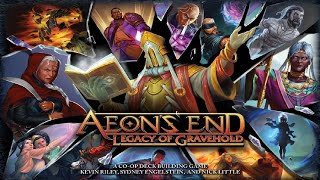


















Aeon's End Deep Dive
What the Community Thinks About Aeon's End
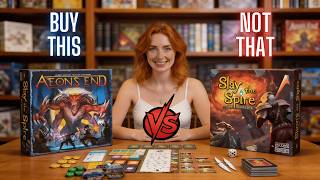
Cooperative deck-building channels keep landing on the same word for Aeon's End: distinctive. All You Can Board called it a game they had "had a lot of fun with over the years" and kept comparing favorably to Marvel Champions, while 3 Minute Board Games flatly described it as "an incredibly tightly designed cooperative deck building game." Josiah, counting down an all-time top ten with co-host Danielle, put it at the top of an all-time list, saying there was "nothing" Josiah didn't like about it. Board Game Critique ran a head-to-head against Slay the Spire and told viewers to buy Aeon's End first, and Watch It Played recommended it specifically to fans of that same video game.
Not everyone found the magic. Totally Tabled came to the game late, after it already had dozens of expansions, and admitted the high expectations worked against it: the world felt generic, the art did not land, and the boss battling was not engaging, though the reviewer stopped short of calling it a bad game. All You Can Board eventually parted with a copy despite years of enjoyment, pointing to how much weaker the experience gets once three or four players are at the table.
Core Mechanics That Define Aeon's End
A Deck That Never Shuffles
Every reviewer who explained the rules singled out the same twist: the deck is never reshuffled. All You Can Board described it plainly, saying that once a deck empties into the discard pile, players "just flip the discard pile over and start drawing again," and that the order cards are played in determines what comes up next. Board Game Critique framed this as a deterministic system: after the first cycle through the deck, a player knows exactly what is coming and can stack a strong card at the bottom of the discard pile to guarantee it as the next draw. 3 Minute Board Games called this "the best thing about this game," arguing it lets players build combos more reliably than a game that depends on the luck of a shuffled draw.
Breaches, Aether, and the Variable Turn Order
Instead of a hand of gold or energy, players generate aether from gem cards and spend it on the market, on opening breaches, or on charging a mage's special ability. Board Game Critique explained the breach system in detail: each mage has four double-sided breaches that start open or closed, spells get prepped to a breach on one turn and cast on a later one, and a breach that closes again before its spell is cast forces that spell to resolve on the next turn instead of staying banked. Turn order compounds the tension. All You Can Board noted that every round is built from six turns regardless of player count, with two of them always belonging to the Nemesis and the rest shuffled among the players, so nobody knows in what sequence the round will actually play out.
The Aeon's End Experience
Engineering the Perfect Turn
Because the deck cycle is knowable, reviewers described the game as a planning puzzle rather than a game of chance. Board Game Critique contrasted it directly with a shuffle-based deck builder, framing Aeon's End as a puzzle about sequencing actions and discard order to create optimal turns, where a rival design is a puzzle about building a deck that survives any draw. That same reviewer said the mechanic "clicked faster" with a casual group specifically because the payoff of controlling discard order became clear once people understood it.
Collective Tension, Not Isolated Play
The cooperative element reads as more than a shared scoreboard. 3 Minute Board Games pointed out that player powers are "focused on helping allies," which makes the game "feel really collegial," and praised how the escalating Nemesis makes the pacing dramatic, with damage output climbing from small hits early on to much larger swings later. Board Game Critique described the unpredictable turn order producing shared moments of dread: when the Nemesis acts twice in a row, the whole table watches the board state collapse together, and when a mage becomes exhausted but keeps fighting, the tension is felt collectively rather than by one player alone.
What Makes Aeon's End Stand Out
A Mechanic Nobody Else Uses
The never-shuffle system keeps coming up as the game's calling card. Board Game Critique called it "genuinely unique in board gaming," and 3 Minute Board Games credited it with letting players build combos far more effectively than a randomized draw would allow. The theming reinforces it: Board Game Critique noted that the mechanic is meant to represent breach mages who have mastered their craft over ages, so the system and the story are not separate layers.
A Market Built to Be Remixed
Reviewers highlighted how much variety comes from the shared market rather than from new rules. Board Games UnLocked pointed out the "ton of stand-alone expansions" and noted there is an order to follow for players who care about the ongoing story, while jumping straight into any stand-alone box works fine for those who do not. Board Game Critique added up the possibilities directly, describing thousands of market combinations from the pool of gems, relics, and spells, plus a roster of Nemesis fights each rated for difficulty and built around its own unique mechanics.
Potential Drawbacks
Turn Order and Downtime at Higher Player Counts
The variable turn order that creates tension at low player counts becomes a liability at higher ones. All You Can Board explained that in a four-player game each person only gets one turn out of six per round instead of two, cutting personal playing time roughly in half and leaving everyone weaker without shortening the game. That same reviewer described the three-player wild-card turn as a recurring source of table arguments over who should take the bonus turn. 3 Minute Board Games agreed almost point for point, saying the game "drags" at four players and that the three-player wild-card system "is just an awkward system," recommending the game only for solo or two-player play.
Setup Time and Component Concerns
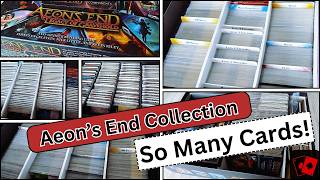
Multiple reviewers flagged the overhead of getting to the table. All You Can Board described building the Nemesis deck, laying out the market, and sorting dividers as a real time investment before play even starts. 3 Minute Board Games reported component problems on their copy, with warped Nemesis and player boards and loose, wobbly dials that were frustrating enough to prompt third-party replacements. Board Games UnLocked separately flagged a production issue with card sleeves fraying.
If You Enjoy Aeon's End
All You Can Board compared it most directly to Marvel Champions, framing the key difference as deck construction before the fight versus buying cards into a growing deck during play. Board Game Critique and Watch It Played both pointed cooperative deck-builder fans toward Slay the Spire, with Board Game Critique running an extended comparison of the two before recommending Aeon's End as the more affordable and accessible pick for most groups. Josiah named Aeon's End alongside Freelancers, Gloomhaven, and Clank as games that share the same RPG-flavored, cooperative, deck-building appeal. For a different kind of cooperative card game, 3 Minute Board Games suggested Sentinels of the Multiverse, and for a different theme entirely, the same reviewer pointed to Legendary Encounters: Alien.
What Reviewers Are Saying
"The variable turn order deck creates chaos. Sometimes the Nemesis acts twice in a row and obliterates you. Sometimes you get three player turns before the nemesis moves."
— Board Game Critique
"In this game anything that goes into your discard pile when your deck is empty you just flip the discard pile over and start drawing again. And at the end of your turn when you have your cards that you've played you choose what order they go into the discard pile."
— All You Can Board
"I don't think Aeon's End is a bad game. I think it's a good game. I've enjoyed playing it the few times that I have."
— Totally Tabled