


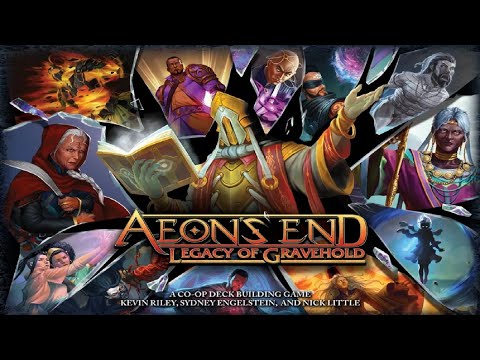


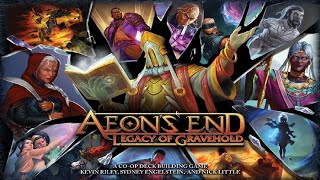
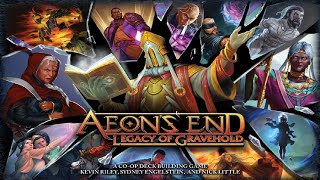
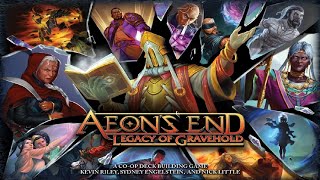
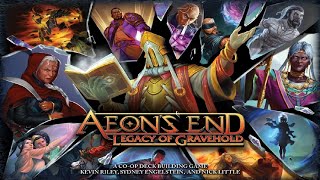
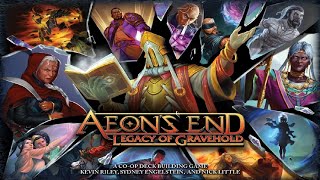
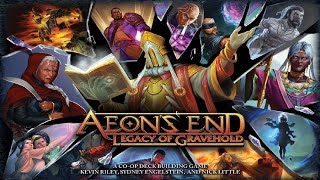
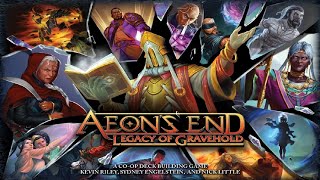
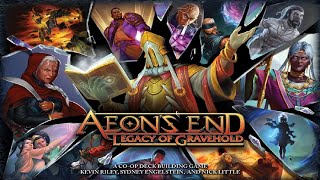

Aeon's End: Legacy of Gravehold Deep Dive
What the Community Thinks About Aeon's End: Legacy of Gravehold
Board Games UnLocked brings a strong consensus: Aeon's End: Legacy of Gravehold represents a meaningful step forward in the Aeon's End universe. The game improves significantly on its predecessor through richer storytelling and more strategic character interactions, while maintaining the deck-building depth that defines the core system. Reviewers praise how the campaign weaves narrative progression into mechanical advancement, though they acknowledge the story's tone leans campy and the learning curve remains steep. The takeaway is clear: this is a legacy game that respects both narrative ambition and tactical gameplay, making it a compelling choice for players who enjoy deckbuilders with campaign structure.
Core Mechanics That Define Aeon's End: Legacy of Gravehold
Legacy Mechanics with Stickers and Experience
The game's core innovation is its sticker-based progression system. Players apply experience-earned stickers to upgrade character abilities, spells, and breaches, creating permanent character growth across the campaign. This feels more meaningful than simple card unlocks because upgrades become visual on the mage mats themselves. The system respects player agency by offering multiple enhancement paths, allowing groups to customize their playstyle within the established legacy structure. Unlike the first Legacy's character creation system, which could feel time-consuming and inconsequential, this upgrade path feels purposeful because it directly strengthens abilities players already care about using.
The Storm Token and Boost Systems
New to this entry are two interconnected mechanics that add tactical layers. Storm tokens accumulate on prepared spells, increasing their damage output each turn they remain prepped. Boosts work similarly, allowing cards to grow more powerful as they build charge. These systems create decisions around timing: do you cast that growing spell now for immediate value, or hold it one more turn for a larger payoff? The storm mechanic particularly shines because it rewards patient spell management and creates moments where carefully stacked spells deliver satisfying burst damage. Combined with the traditional casting system, these mechanics give players multiple engines to build around rather than forcing a single viable strategy.
The Aeon's End: Legacy of Gravehold Experience
A Narrative That Evolves Your Tactics
The campaign's storyline directly impacts how nemesis encounters play out. As players progress through branching story paths, they encounter varying nemesis configurations and face tough choices about which enemy to confront first. The narrative doesn't feel tacked on; it genuinely alters the difficulty curve and forces tactical reconsideration. Characters appear at different campaign points, and relationship upgrades between party members have mechanical weight. This creates ownership over the narrative arc because your decisions about who to recruit and which stories to pursue reshape both combat and character progression. Playing through the campaign feels less like working through predetermined content and more like steering an unfolding story toward your chosen ending.
Strategic Depth Through Meaningful Disadvantage
Aeon's End: Legacy of Gravehold embraces the pressure of escalating difficulty. Nemesis encounters grow increasingly complex, with multi-part bosses like the Paradox of Myth and Bone requiring simultaneous resource management against two distinct health pools. Fire tokens accumulate, threatening to destroy cards if they exceed thresholds. Minion swarms, parasite decks, and supply pile restrictions force continuous adaptation. This isn't punitive difficulty; it's a constant puzzle where players must recalibrate strategies based on what the nemesis throws at them. Reviewers found the challenge exhilarating rather than frustrating, especially when careful planning and cooperation finally cracked a grueling encounter.
What Makes Aeon's End: Legacy of Gravehold Stand Out
Narrative Depth That Rivals the Mechanics
The story's quality surprised reviewers accustomed to hollow legacy narratives. Writer Sydney Englestein's involvement elevated the prose and character voice. The central tension between tradition (Brahma's rigid leadership) and progress (Zanna's radical reforms) carries genuine weight, creating moral ambiguity rather than simple good-versus-evil framing. Character personalities shine through in brief narrative vignettes, giving mages memorable voice and motivation. While reviewers noted the writing occasionally turns campy and the pacing drags in places, the fact that a board game campaign generated this much discussion about narrative quality speaks to its effectiveness. The story doesn't overshadow gameplay; instead, it enriches context and raises emotional stakes beyond dice rolls.
Varied Nemesis Designs That Keep Each Fight Fresh
Of the roughly ten unique nemesis encounters, most feature innovative mechanics that distinguish them from one another. The Bishop of Scrolls forces players to name unnamed minions, personalizing the opposition. The Paradox of Myth and Bone separates into two entities with separate health tracks and linked mechanics. The Grief Weaver wipes supply piles to restrict buying options. The Rust Amalgam deploys a parasite deck that reshuffles and attacks players. This variety means players can't rely on a single build; each encounter demands fresh tactical thinking. Even nemesis repeats late in the campaign feel different because upgraded player power creates new win conditions and pressure points. Reviewers consistently praised the creativity of nemesis design, noting that very few felt like simple stat-bloated sponges.
Potential Drawbacks
Narrative Clarity and Pacing Issues
The campaign assumes familiarity with Outcasts and New Age. Without that context, the sprawling cast of characters and political factions blur together, and pivotal emotional beats lose resonance. Reviewers found themselves skimming long story passages between turns, and the sheer volume of reading slows play. Some sections feel redundant, with exposition about the void and the mages' internal conflicts repeating without adding weight. While not a dealbreaker, the lack of a cohesive "previously on" recap within the box hurts accessibility. Players jumping in at Legacy of Gravehold without prior Aeon's End experience will struggle to care deeply about the world, even though the mechanical experience remains solid.
Setup Complexity and Component Organization
The game's enormous box contains dozens of small cards, decks, sticker sheets, and miniature tokens. Setup for each nemesis takes 10-15 minutes, and the rulebook requires careful reading to avoid missteps. The dual narrative books (Gravehold and Azer campaigns) and separate card decks per book create organizational friction; storing components between sessions is cumbersome. Fire tokens, breach tracking, and sticker placement add layer upon layer of state management. Reviewers acknowledged this overhead as the cost of the game's ambition, not a fatal flaw, but noted that groups with lower patience for setup and component wrangling might tire of the logistics. An optional foreteller app that narrates story passages (already available for other legacy games) would alleviate some friction, though its absence doesn't break the experience.
If You Enjoy Aeon's End: Legacy of Gravehold
Players drawn to this game typically love Gloomhaven and Jaws of the Lion for their campaign progression and persistent character growth, and they'll find similar satisfaction in Legacy of Gravehold's sticker upgrades. The deck-building focus also appeals to fans of Marvel Champions, particularly its Specialist expansion, which layers strategic building onto a core cooperative engine. Sleeping Gods offers comparable narrative ambition paired with gameplay, though it trades deckbuilding for exploration. For those seeking pure deckbuilding without legacy elements, Aeon's End (the base game) and Aeon's End: New Age deliver identical mechanical depth. Players who relish challenging cooperative experiences against escalating nemeses should explore Pandemic's harder difficulty levels and custom variants that mirror the pressure Aeon's End creates.
What Reviewers Are Saying
"The story is so much better. Yeah the story writing is significantly better, um, still not amazing it's not like the most amazing writing I've ever read but um they have given the characters a lot more personality um like and kind of a reason on why people are doing stuff instead of legacy was just oh no big bad nameless over and over and over."
— Board Games UnLocked
"This is definitely a step in the right direction over the last Legacy, their last Legacy was it was it was very very bad, but they brought on another writing as Sydney Engelstein was in this, okay that is why the writing probably improved a little bit."
— Board Games UnLocked
"All the extra content is great uh the story was definitely better you know I'm curious to see where they go from here but it's still it's this is always going to be this is a top 50 game you know anyway just hang on Zen in general yeah aeon's end and all in the gameplay itself like with like everything is a nine uh ANS and legacy of great like I'd probably give like aeons and regular Legacy a six."
— Board Games UnLocked