/pic6624445.png)
/pic3752850.jpg)
/pic6459659.jpg)
/pic6624445.png)








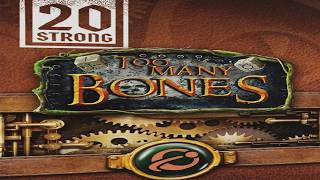

















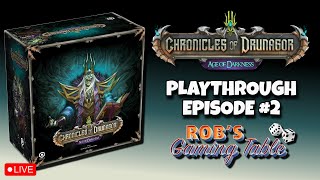





Too Many Bones Deep Dive
What the Community Thinks About Too Many Bones
Too Many Bones inspires a passionate, unified following. Reviewers consistently praise the game as a landmark design that combines deep strategic gameplay with premium production that justifies its price point. The consensus across multiple channels is strong: this is not just a beautiful collector's item, but a mechanically sophisticated experience that rewards extensive play. Some reviewers place it in their top 10 games of all time, while others describe it as a lifestyle game that demands and deserves hundreds of hours of engagement. The primary debate centers not on whether the game is excellent, but on nuances of execution and which aspects shine brightest depending on player preference.
Core Mechanics That Define Too Many Bones
Dice Building and Management
Too Many Bones puts dice at the heart of everything. Players begin with a pool of dice representing different statistics and abilities. As they progress through encounters and battles, they acquire new dice through leveling up, discovering items, and training new skills. The genius lies in the constant tension between using dice immediately for their power and hoarding them for synergistic combinations. Misses, called "bones," function as a unique resource that fuels each character's backup plan, a special ability that turns apparent failure into tactical advantage. This system creates a risk-reward calculus where even unlucky rolls open new strategic paths.
Character Progression Through Skill Dice
Each gearloc (player character) develops through acquiring skill dice that are fundamentally unique to their archetype. A warrior gathers different dice than a mage; a rogue's advancement path diverges entirely from a defender's. This is not just cosmetic variation. The skill dice each character can train determine their available actions, damage output, and defensive options. Over the course of a campaign, players craft a personalized arsenal of abilities and tools, making no two playthroughs with the same character identical. The game encourages deep specialization, meaning mastery comes through repeated play and deliberate build choices.
The Too Many Bones Experience
Epic Production Quality and Tactile Satisfaction
Opening a box of Too Many Bones feels luxurious. Rather than cardstock boards and paper components, players find neoprene mats (the material used in high-end mousepads), plastic-coated cards, and weighted poker chips. Every element has been upgraded to feel premium and to withstand the physical wear of extensive play. The weight of the box, the heft of the components, the sheen of the custom dice all communicate that this is a serious, long-term investment. Setting up the game becomes a ritual of laying out beautiful, substantial pieces. Reviewers consistently note that Chip Theory Games has invested care not just in how the game looks, but in how every element feels in hand.
Challenging, Rewarding Battles
Combat in Too Many Bones is not casual. Enemy encounters scale with player progression, ensuring that battles never become routine even after dozens of plays. Each baddie has unique abilities that force tactical reconsideration; the board state constantly shifts as enemies fall and reinforcements arrive. Players must decide whether to fight defensively, build resources for later, scout ahead, or rest to recover. The difficulty curve respects player investment: veterans who master the dice economy can push themselves toward harder modes, while newer players have a gentler difficulty option to learn the systems. This balance keeps the game challenging across the entire lifespan of play.
What Makes Too Many Bones Stand Out
Asymmetrical Character Design That Enables Diverse Playstyles
Unlike games where all players command essentially the same mechanics with cosmetic flavor, each gearloc in Too Many Bones is genuinely different to play. One character might rely on heavy armor and counterattacks; another builds combo chains through careful skill selection. A third leverages mobility and hit-and-run tactics. Reviewers highlight that this asymmetry is not window dressing but the core draw of replayability. After learning the base game, the real fun begins: discovering which gearloc matches your playstyle, then mastering their unique toolkit. The variable development paths within each character add another layer, ensuring that two players running the same gearloc can create utterly different builds.
Genuine Sense of Character Growth and Progression
Most dice-rolling games leave players feeling at the mercy of chance. Too Many Bones gives players ownership of their power curve. Every level gained, every skill unlocked, every item equipped feels like a meaningful step forward. Reviewers describe the satisfaction of entering a late-game fight with a character they have invested in and recognizing how much stronger they have become. The game delivers the fantasy of character advancement that draws players to video game RPGs. This progression feels earned rather than handed out; players who fight poorly or make weak build choices will find themselves underpowered, creating natural incentive to engage deeply with the mechanics.
Potential Drawbacks
Steep Entry Price and Physical Footprint
Too Many Bones is expensive. A base game costs around 130 dollars before shipping, placing it well outside casual board game budgets. The box is large and heavy, demanding dedicated shelf space. For players accustomed to games at the 50-dollar price point, this represents a significant commitment. Additionally, the production quality, while beautiful, means repair or replacement of damaged components can be difficult. Some reviewers note that the premium price tag, while justified by the quality and mechanical depth, remains a barrier to entry for many players who might otherwise fall in love with the game.
Solo Play Scaling and Solo Difficulty Inconsistency
While the game supports solo play, some reviewers find that solo mode can feel brutally unfair compared to cooperative play. The system for adjusting difficulty exists, but tuning it correctly to match a given player's skill level requires iteration and experimentation. New players attempting solo runs report encountering enemy swarms that feel overwhelming before they have acquired the tools to manage them. The game's design is unquestionably more forgiving at higher player counts, where threat is distributed and players can specialize. Solo players must be more generalists, and bad luck early in a campaign can create a runaway difficulty problem that leaves recovery impossible.
If You Enjoy Too Many Bones
Players who enjoy Too Many Bones's deep character building and asymmetrical gameplay will find similar satisfaction in Cloudspire, another Chip Theory Games title that emphasizes unique faction abilities and tower construction. Those who appreciate the heavy dice system and boss battles should explore Hoplomachus Victorum, Chip Theory's gladiatorial arena game, which delivers similar mechanical depth through a different thematic lens. Fans of the progression and skill-tree structure can look to Arkham Horror: The Card Game, which similarly rewards deck building and character customization across extended campaigns. Terraforming Mars offers comparable resource management and engine-building satisfaction for players less interested in combat but seeking that same meticulous optimization loop.
What Reviewers Are Saying
"Chip Theory Games might have the mightiest production values of any company making board games. Everything feels so lush and amazing. The core of the game is a unique dice system and it's interesting characters, and this is where Too Many Bones shines. You each have a role and different strengths and weaknesses, but you also have variable development paths and options within your class, and it's this exploration and discovery of your character that makes Too Many Bones engaging."
— 3 Minute Board Games
"Too Many Bones is the perfect amalgamation of my love for RPG video games into board games. Think of any game that does the RPG like upgrading of your character tech tree type situation where you're getting different abilities and getting more defense and getting more attack, like Too Many Bones does it the best with the way they use the dice. It's super challenging, every time you play it is somewhat different, and all the gear locks play completely differently."
— Foster the Meeple
"I love Too Many Bones. In fact, you see my Trove chest behind me. I have absolutely everything, so I would say I'm a Chip Theory fanboy."
— Neon Gorilla