








Too Many Bones: Undertow Deep Dive
What the Community Thinks About Too Many Bones: Undertow
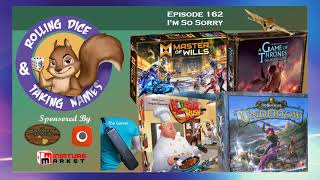
Reviewers describe Too Many Bones: Undertow as a demanding cooperative dungeon crawl that rewards players who commit to its learning curve. Published by Chip Theory Games, it is a standalone expansion to the original Too Many Bones that can also be played on its own. It supports one to two players and asks them to manage companions, shifting terrain, and a growing set of rules. Reviewers agree that it is not an easy first step into the series, but consistently say that players who push through find a game that is both tense and rewarding.
Core Mechanics That Define Too Many Bones: Undertow
Double-Sided Land and Water Maps
The adventure map is the most visible change. Box of Delights describes a double-sided battle mat with land-based and water-based encounters, and the reverse side includes a raft that players float down a river on. The raft takes damage as the journey continues, and players can repair it during the phase between encounters. AzureDeath | Solo Board Gaming shows the water and land mats being flipped during a solo campaign.
The Battle Queue
Monsters enter the fight through the battle queue, a running total that grows as the days pass. Monster chips carry point values of one, three, five, or twenty, and the total in the queue determines which monsters appear. Rolling Dice & Taking Names says that mastering the battle queue is the key to enjoying the game, because the later days bring tougher foes.
Back-Up Plan and Dice Pools
Attack and defense dice are pooled, and a roll that misses is not entirely wasted. Rolling Dice & Taking Names explains that dice which do not produce a hit can be assigned to a back-up plan meter, and filling that meter unlocks further abilities. Dexterity sets how far a character can move, and whatever remains becomes the dice pool for actions. Focus dice power spells and abilities in a similar way.
Dodge, Counter, and Exhaustion
Combat ties attacks to defensive responses. Dodge tokens and counters can be spent during enemy turns, and some abilities become exhausted after use. No Pun Included describes Dart as a ranged character who can strike several targets with one attack die apiece. Board Games Online spends a long stretch of its session working through how exhausted abilities recover, including errata that changed the wording.
The Too Many Bones: Undertow Experience
Tense and Epic
Gaming Rules! calls the game tense and epic, describing a run in which fortunes swing from good to bad and back again, ending with a final fight the reviewer says was close. The reviewer avoids spoiling the ending, which suggests that the story is part of the appeal.
Collaborative Storytelling
Rolling Dice & Taking Names describes encounters that open with flavor text, where the group chooses how to respond and those choices shape the rewards and loot they receive. The hosts say the story keeps the table invested, and they mention a campaign mode in which characters can carry over between games.
Solo Play and Tactical Depth
AzureDeath | Solo Board Gaming plays a full solo campaign with the Duster character, which shows that the game scales down to a single player. The campaign rewards careful planning, and the reviewer returns to the same mats and characters across several encounters.
What Makes Too Many Bones: Undertow Stand Out
Chip-Based Health Tracking
Rolling Dice & Taking Names praises the way health is shown with small chips stacked beneath a character's main chip. Players remove chips as damage is taken, so the state of every fight is visible at a glance. Monsters use the same approach.
Premium Components
Components are a consistent highlight. Rolling Dice & Taking Names describes clay chips rather than cheap plastic, along with neoprene mats whose cutouts hold dice that modify character stats. Box of Delights praises the stitched maps and the sharper artwork on the new battle mat.
Distinct New Characters
Box of Delights previews Duster, Stanza, and Gasket, each with its own dice progression and upgrade paths. Stanza is a song-based bard whose songs either deal damage or buff allies, while Gasket is a robotic character built around high defense.
Potential Drawbacks
A Difficult Starting Point
Gaming Rules! argues that Undertow is not a good place to start, because it adds rules complexity on top of a game that is already hard to learn. The reviewer also notes that the game includes two characters, one of which they still struggle to play. The lower price is real, but the base game's starting characters are easier to learn.
Companion Management
No Pun Included says the Gearlock companions feel like babysitting. The reviewer describes a tag-team system that requires four mini playmats and a convoluted way of spending training points, which makes the system the hardest part to learn.
Rules Ambiguity and Setup
Several reviewers ran into rules that were unclear or changed between printings. AzureDeath | Solo Board Gaming reports that some encounter setups were unclear and needed an FAQ check. Board Games Online works through conflicting errata during its session and complains that re-roll options should not depend on a particular build. Rolling Dice & Taking Names notes that setting up the encounter deck took a while, partly because the players were reading every card.
If You Enjoy Too Many Bones: Undertow
Readers who like its campaign structure and tactical combat may also look at Gloomhaven, Oathsworn, and Sleeping Gods. Each offers a campaign with character growth and tactical encounters, and each is a natural next step for players who want more of the same style of play.
What Reviewers Are Saying
"it was tense it was epic there was roller coasters of emotion and everything"
— Gaming Rules!
"it really does feel like babysitting i once had to look after two overactive puppies simultaneously and it is a day i will never forget"
— No Pun Included
"there's definitely finickiness that I will not argue"
— Board Games Online