




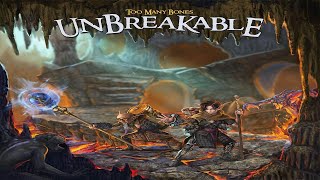




Too Many Bones: Unbreakable Deep Dive
What the Community Thinks About Too Many Bones: Unbreakable
Too Many Bones: Unbreakable is a standalone release in Chip Theory Games' Too Many Bones line, a cooperative dice and deck-driven action RPG for one to four players. Reviewers agree on its core identity: a puzzle-like tactical game built around memorable characters and a strong sense of progression. Board Game Hangover calls it a fantastic game for co-op play and places it alongside Spirit Island and Frostpunk, praising how each hero's backup plan can swing a fight. Neon Gorilla approaches the game as a solo challenge and finds it demanding enough that the reviewer usually plays two-handed. Board Games UnLocked notes that the game is often jokingly called "Too Many Bones 2.0" when people discuss Elder Scrolls, a comparison that reflects how strongly the Chip Theory design has influenced the wider genre.
Core Mechanics That Define Too Many Bones: Unbreakable
The Backup Plan Bone System
Each character in Too Many Bones: Unbreakable carries a unique backup plan that turns rolled bones into a second layer of strategy. Neon Gorilla treats this system as the game's central payoff. In that solo session, a well-timed backup plan turned a losing position around, and the reviewer used that moment to explain why the series earns its name. Board Game Hangover reaches a similar conclusion, noting that backup plan powers sometimes provide exactly what a player needs to win. Because each backup plan belongs to a specific character, the mechanic reinforces the sense that every hero plays differently. The system was designed by the Chip Theory team, and it rewards players who plan around failure as much as success.
Gear Lock Upgrade Boards
Long-term progression runs through upgrade points. Board Game Hangover explains that upgrade points are earned by winning battles, and that a player must decide where to spend them. The choice is meaningful: improving Dexterity adds dice to a roll, while investments in Health, Attack, Defense, or Training shape how a character survives and deals damage. Because each gear lock uses a different set of boards and abilities, the upgrade path changes from character to character. Meeple University frames the appeal as the satisfaction of unlocking new options over very long campaigns, a theme that carries through the gear lock system as a whole.
The Too Many Bones: Unbreakable Experience
Tense, Punishing Solo Play
Solo play is where the game's pressure is most visible. Neon Gorilla describes the solo version as demanding enough that the reviewer usually plays two-handed, and their session shows how quickly a fight can turn when the bones fall badly. Failure is common, but the recovery options and backup plans keep the outcome from feeling arbitrary. That mix of tension and comeback potential is what gives the solo experience its distinctive edge.
Cooperative Momentum and Campaign Satisfaction
In cooperative play, the mood shifts toward shared problem-solving and steady advancement. Board Game Hangover describes the game as a fantastic experience for co-op groups, and its reviewer returns to the idea that the campaign structure rewards consistent play. Meeple University highlights how the unlocking of new gear, characters, and options gives long sessions a clear sense of forward motion. The result feels closer to a tabletop RPG campaign than a traditional dice game, with each session adding something concrete to carry forward.
What Makes Too Many Bones: Unbreakable Stand Out
Gear Locks With Distinct Identities
Board Games UnLocked praises the way each gear lock feels different without feeling disconnected from the rest of the system. Every new character brings its own rhythm, and the reviewer notes that the variation never becomes random or arbitrary. Meeple University's solo Static playthrough illustrates this well, showing how Static's Inner Peace, Perseverance, and Transcendence paths reshape the way a player approaches each fight. Figment, Carcass, and the other gear locks follow the same principle, offering clearly separate playstyles that still share the core rules.
Tyrant Encounters With Personality
Watch Review singles out Rock and Roll as a tyrant encounter that is both fun and unique. Rather than repeating the same threat with a new coat of paint, the tyrant designs change how the group has to fight, positioning, and manage risk. This variety is one reason the game earns praise for replayability, since each tyrant asks a different question of the party.
Potential Drawbacks
Uneven Tyrant Designs
Not every tyrant lands with reviewers. Watch Review finds some tyrant designs less enjoyable to face, and the sharpest criticism falls on Cinder and Domino. These encounters are described as frustrating to play against, which can make the difficulty feel more like a hurdle than a challenge. Reviewers who value the game's tactical puzzles tend to be more forgiving, but the uneven quality of some tyrants is a recurring concern.
Lava Visibility and Terrain Pressure
The lava mechanic adds spatial tension, but it is not without complaints. Watch Review argues that the lava chips are difficult to read at a glance, especially along the rims of the tiles, which makes it harder to track which spaces are safe. Neon Gorilla's session shows how lava can spread to adjacent tiles and force a character into a damaging position. Players who prefer clear information may find the terrain system frustrating, even when the underlying idea is strong.
If You Enjoy Too Many Bones: Unbreakable
Players who enjoy Too Many Bones: Unbreakable's backup plan system and character-driven progression will find similar satisfaction in Spirit Island, where each powerful role asks players to combine abilities in new ways, and in Frostpunk, where cooperative survival pressure drives every decision. Readers who want the Chip Theory experience in a sibling title can look to Undertow, which shares the studio's emphasis on dense, tactile systems. Players who prefer a more puzzle-focused experience may enjoy Too Many Bones: Unbreakable's blend of planning and dice risk, especially in cooperative groups that enjoy long-term character growth.
What Reviewers Are Saying
"Beautiful, this turned in my favor with that backup plan. That's why you play too many bones, frankly."
— Neon Gorilla
"Yeah they are again unique you know all the gear locks that are out every single one of them plays differently and they're they're balanced neatly yeah and stuff and they they're really of all the gear locks in the whole deal there isn't any of them are really close to each other they all are very unique yeah"
— Board Games UnLocked
"It's a fantastic game for me as a co-op game."
— Board Game Hangover