/pic3601388.jpg)
/pic1447198.jpg)
/pic54514.jpg)
/pic348981.jpg)
Warhammer 40k is played in a space populated with various bits of terrain. Two players control an army of miniatures each and take turns to move their armies across the board, shooting their opponent’s figures or mashing them up in close combat as appropriate. The game is played across five battle rounds, with each player taking a turn in each battle round. Each turn consists of seven phases; the command phase, the movement phase, the psychic phase, the shooting phase, the charge phase, the combat phase and the morale phase.
The 8th edition is a total revision and simplification of the rules and army structure, introducing the Three Ways to Play concept. It is not compatible with 7th edition and earlier Warhammer 40K books/materials.
The Core Rules explain everything you need to play to play Warhammer 40,000. Moving, shooting, using psychic powers, charging, fighting and morale tests are covered, giving you the basic framework to play with. You can play a game using only these pages, bolting on more advanced and complex rules when you and your opponent are ready.
Open Play – pick some models, put them on the table and begin a game. This is the most flexible approach, designed with near-limitless possibilities; all you need is some models, their datasheets and the core rules. Included are some themes and ideas you can use or build upon to add atmosphere to your games, and 3 example missions.
Narrative Play – Warhammer 40,000 has a vast, rich history with countless epic battles. Narrative Play is designed to let you and your friends re-enact those battles at your leisure. There are special rules to help you do this, such as Concealed Deployment and unpredictable, random battle lengths, and the book includes several missions * 6 Crucible of War missions and 1 Echoes of War mission, each showing you how to play in this style.
Matched Play – for many players, Warhammer 40,000 is an opportunity to prove their mettle with tactics and strategy, an exercise in out-thinking and out-gunning their opponent with balanced, equal armies: Matched Play is for them. There are several ways to ensure that your forces are balanced against each other – a points limit is the typical way, but the system is flexible enough to allow armies based on unit numbers, Power Ratings, Wounds; as long as your limits are agreed, the possibilities are manifold. This book provides details on choosing your armies, and provides missions as examples of the tactical challenges available: 6 Eternal War and 6 Maelstrom of War missions, with explanations covering the use of Tactical Objectives.
Advanced Rules
While the Core Rules provide with you with everything needed to play, the Advanced Rules are a selection of rules and expansions that can be used to play with your miniatures the way that you want to. With these rules, there are always new challenges to face, new battles to fight, and new ways to play.
This page includes videos and mentions from the whole Warhammer 40 family. Drill into a specific game below.
/pic3601388.jpg)
/pic2079275.jpg)


- Tactical card combat.
- Area influence and control mechanics.
- Interesting objective based on collecting icons.
- Features diverse factions from Warhammer 40K lore.
- Out of print LCG.
- Warhammer 40K lore and factions
- Warhammer 40K universe
- Call of Cthulhu: The Living Card Game
Mechanics (from transcript analysis)
- Area Control — Players compete for influence in seven different areas.
- Deck Building — Players build decks for their chosen factions.
- living card game (LCG) — An out-of-print LCG with Warhammer 40K theme.
- Set Collection — Winning areas grants cards, and the goal is to collect three of specific color-coded icons.
- Tactical Card Combat — Players play cards that battle opponent's cards, dealing damage.
Video topics + discussion points
Quotes (from this video)
- The endgame trigger is either running through that deck or each of the players being knocked out because they sustained more damage than their current health or hit points.
- The varying Victory conditions makes this game so easy to teach, introduce and present to other people.
- I found it to be too too mean.
- I like the Cooperative or in my case solo experience of going through these different adventures and trying to accomplish it.
- it's a very difficult game this is like a tower defense Village defense game
- this game Call of Cthulhu living card game is my cthulu Mythos choice of game for the lcg style game
- it's like time travel that's the theme of the game
- this is a dice version of Magic the Gathering
- it's a great game because even if you're not the greatest at body language
- my number 41 board game of all time deception murder in Hong Kong
References (from this video)

- Difficulty understanding the mechanics and lore.
- War between factions.
- Warhammer 40,000 universe
Mechanics (from transcript analysis)
Video topics + discussion points
Quotes (from this video)
- Viewer discretion is advised forget the promise of progress and understanding for there is no peace amongst the stars only an eternity of carnage and slaughter and the laughter of thirsting Gods
- This plan is too small for this Factory
- I hate when you're trying to like get into a new series and all they're doing is throwing around names you don't know
- The rules are clunky
- The movement is really see the movement the voids
- I don't think the combat's fun
- The void limit rule is [censored]
- I do not like this game
- I'm going to get second place
- This game is definitely going quicker
- I don't think I've ever won a single combat round
- It's just luck of the die
- This is the best game I've ever played I don't care if I lose
- I feel like you always go right for my base
- I don't know what to do
- I have a plan trust me my plan is to get second place
- We're supposed to collect objectives first
- I don't remember anything about that game
- This is a perfect game or Cosmic
- I don't really have a lot of ground units
- I don't really like the way it
- The rules are weird
- The warp storms I like a lot
- This game is going a little better than last time
References (from this video)
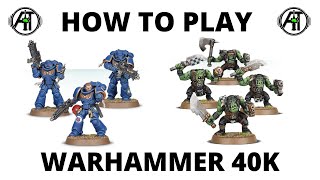
- Streamlined core rules compared to previous editions
- Simplified complexity for new players
- Focus on clear rules for accessibility
- Still a very complicated game for new players
- Some rules can lead to silly situations (e.g., line of sight)
- Heroic intervention wording can be exploited
Mechanics (from transcript analysis)
Video topics + discussion points
Quotes (from this video)
References (from this video)
- Nice wide aisles
Mechanics (from transcript analysis)
Video topics + discussion points
Quotes (from this video)
- This thing is massive.
- Oh god. Oh god, too.
- So, I wonder if there's some unofficial Warhammer 40K stores. I'd like to find those.
- If it sucks, I'm not going to do it.
- Like I'm not covering this one. That magic place the way. Not a chance.
References (from this video)

- Number one selling non-collectible miniature game
- Games Workshop is killing it
Mechanics (from transcript analysis)
Video topics + discussion points
Quotes (from this video)
- my name is Marty these are my musings
- I love looking at empirical cells data whether it be for movies or comic books or albums it doesn't matter I like seeing what the top sellers are
- those four games have been around for quite a while which goes to show that either one people in this hobby are still buying those games or hopefully hopefully people are coming into the hobby and those are those gateway games that everybody recommends for people to check out
- evergreen as' I just made that term up
- it doesn't matter how often they refresh that game it's always a fantastic seller thing is though I bet it drops out of the top ten in the next quarter
- so to have this game that is a hundred bucks still continue to sell well quarter after quarter year after year is just a testament to how popular that game is
- exploding kicking kicking exploding chickens now that would be funny
- now when I first saw Dominion on this list I thought wait a minute that should be a board game but I guess when you really think about it it's nothing but cards 100% card game
- I love Arkham Horror LCG I have been into LCG games since they first came out
- with Arkham Horror LCG every time I play that game I am totally sucked into the story
- sweet sweet game if you have not tried it I highly recommend checking it out
- Seven Wonders is considered a card game come on it's got player boards it's got a lot of different tokens I think personally that should belong in the board game category and not the cards and dice Hey but maybe I'm wrong
- Games Workshop is killing it right now
- Dungeons & Dragons since the release of the fifth edition has just skyrocketed in popularity it has taken over everything
- it's yugioh TCG key Forge and Dragon Ball super
- it's really cool to see ki Forge up in there
- While it's not a CCG in the sense of you buy blind booster packs you don't know what's gonna be in there instead you're buying a blind deck and not sure what's gonna be in there I guess it still has a collectible aspect to it
- since that game just came out also fourth quarter of last year it was hot it was hard to find
- you were you surprised by any on this list or did you think there would be someone this list that weren't on there
- smash that like button and flip that subscribe button
References (from this video)
- Can play a full game in just 30 minutes.
- Warhammer 40k
- Netrunner
Mechanics (from transcript analysis)
Video topics + discussion points
Quotes (from this video)
- I prefer to play multiple games as opposed to one long game
- I could scratch that euro itch without a huge time investment
- with the right game you can get that de hora experience and leave time for other games to fit in your three or four-hour window
- streamlined
- it's as if it was a match made in heaven
- it's all about getting more games in the same amount of time
- typically the phrase quantity versus quality comes up
- there's some brilliant designers able to come up with some high quality deep games that can be played in their reasonable amount of time
- I want to maximize my time as much as possible
- it's very easy for me to find games that give me the play experience i want in a shorter amount of time
References (from this video)

- Eighth edition streamlined rules
- More popular than War Machine after eighth edition
- Seventh edition rules were complicated
- War Machine
Mechanics (from transcript analysis)
- ruleset — The seventh edition rules were considered complicated, but the eighth edition streamlined them.
Video topics + discussion points
Quotes (from this video)
- Games Workshop was viewed as a faceless company that was having slow or declining sales and stores closing all over the world but since then he's made a lot of changes trying to make Games Workshop more customer friendly.
- The seventh edition and how complicated the rules were and people were falling away from that product and in fact jumping to other games such as well at war machine which actually for a little while was doing better in sales than what Warhammer 40k was but since eighth edition the rules have been streamlined people have come back in droves to this game and now at this point it's actually more popular than what war machine was.
- Diamond Comic Distributors are going to allow wholesalers to sell comics in retail stores this will be done by giving retailers the opportunity to purchase a 44 pocket comic spinner rack.
- Chainsaws were invented for the aid in childbirth.
References (from this video)
- Great for father-son bonding.
- Enjoyable assembly process with well-fitting parts.
- Streamlined for easier entry.
- Attractive models and universe.
- Sci-fi miniatures universe
- Warhammer Conquest (LCG)
- StarCraft (video game)
- War Machine
Mechanics (from transcript analysis)
- miniatures wargame — The game involves assembling and playing with miniatures.
- Sprues — Models come on sprues, requiring clipping and assembly.
Video topics + discussion points
Quotes (from this video)
- I cannot wait one day when they can will you let me not name these stupid things anymore
- We met at our Caroline tabletop game store in Pineville North Carolina plug
- My goodness Tony you and I used to play a war machine right we used to you always play a lot of war machine and it was a it was a lifestyle game
- So I stepped my toe into Warhammer 40k and you and I can play we could talk about it later on
- It's just the little things like that I enjoy I wish some of more of the board games had those little neat mechanics to it you know
- This is the exact same thing and Tony I think this is one that your group would really like except except you said interaction is to take that type of element no it only plays five players
- So my pitch is that I have a seamless soulless cube pushing euro game where you're just treating cubes for other cubes to trade cubes for victory points
- I'll go on record and say I do enjoy playing splendor so I think it's a fine game
- I think this is a solid euro game I think everybody that said to this table said this is really really good
- I'm really digging these games that the when you read the rules it's like oh that's pretty simple that's probably just a really simple quick little game but there's enough meat behind it to where you enjoy it but it doesn't overstay its welcome and it's played in under an hour
References (from this video)
- Fighting each other's forces while battling over territories and locations for points and resources.
- Warhammer 40,000 Universe
Mechanics (from transcript analysis)
- Deck construction — Players construct their deck of cards from various factions.
Video topics + discussion points
Quotes (from this video)
- learning games I enjoy reading rule books but at the end of the day it is it's the work part of it it's fun work but uh it was certainly much much more enjoyable because of their assistance
- I have to say it was really it was just really enjoyable and sweet and nice
- I don't know what it is I'm going to get Luke down here he's going to help me open up this box
- William thank you so much for the kind comments and just know the feeling is entirely Mutual
- I cannot believe this is what you chose to send me William thank you so much
- what can I say that was really nice yes thank you I will definitely say thank you thank you so much
- Luke to Rodney and Luke may all your Loop be epic
- thanks for the awesome vids keep on gaming guys
- that is really awesome isn't it thank you so much Michael that's really really super nice
References (from this video)
- Sci-fi/Future
Mechanics (from transcript analysis)
Video topics + discussion points
Quotes (from this video)
- we need like a little intro fade in thing that would be good
- we've got a game on the table I had no idea that we were going to be doing
- we finished our near and far right our near and far playthrough
- we plan to have a near for our promo
- I feel like I'm I'm falling back in the group I'm coming down I'm losing some of my like Panic which is good
- it's a push your luck game because you're going to be constantly removing your equipment
- the biggest challenge honestly would have been early on realizing I really want to do this
- that's why I say frequently I always feel like a great deal of gratitude that I've been able to keep working on this show
- the games in my opinion are getting better all the time
- Streamlining does not equate to dumbing down; it's about efficiency and elegance
References (from this video)
Mechanics (from transcript analysis)
Video topics + discussion points
Quotes (from this video)
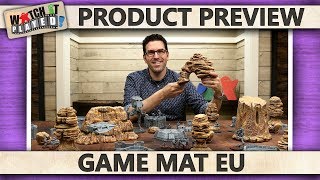
- all of this comes exactly as is pre-painted preassembled you just pop it on the table and play
- this is really really good
- what you see is what you get
- this is certainly a luxury item but I'm confident for some of you this will be exactly what you're looking for in a quick easy to use high-quality terrain solution for your gaming table
References (from this video)
- Third edition had streamlined rules
- Initial enjoyment of winning games easily with effective lists
- Second edition was terrible
- Player skill felt like a small factor compared to list building
- Systemic flaws in mechanics
- Lack of new rules for specific factions
- Space Hulk
- Sisters of Battle
Mechanics (from transcript analysis)
- 1d6 system — Disdain for the 1d6 system, which contributes to the game's lack of seriousness.
- List building — Dominating tournaments through optimized army lists.
- Shooting mechanics — Criticism of the shooting system where difficulty was the same regardless of range.
Video topics + discussion points
Quotes (from this video)
- can you play a game too often well I would say yes you damn well can
- this is all about the stories it's not just a list of games
- BattleTech was my jam
- then in 1990 battle tech changed they had been seizing a major plot twist for a while on the story and when it came out it was one of the worst things for the game imaginable
- I honestly don't see myself playing the tabletop version of Blood Bowl
- player skill is a small factor list building is not
- I think the final turning point was when I thought about how bad a game system must be we're shooting attack right in front of you is the same difficulty as shooting a small model on the other side of the board
- Arkham Horror will always hold a special place for me as the game that was there when I was at my lowest point
- every time I have installed a board game app on my tablet and played a lot it has utterly killed my interest in playing that board game
- solo gaming has always been part of that coping mechanism
- she told me to do stuff that mattered to me and do it well
References (from this video)
- Sci-fi
- Alien Planet/Moon
Mechanics (from transcript analysis)
Video topics + discussion points
Quotes (from this video)
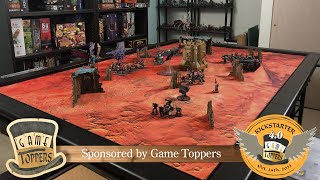
- honestly these are the best mats that I've seen
- these are barn on the best game mats I've seen for a variety of kind of situations
- it's easy to break down and and put back together and take and travel and all that kind of stuff
- the main seller of the game Toppers that it's easy to Quick quickly break down and build back up and store or transport
- you can kind of get ease into getting to this really fancy thing over a lot of time
- all of these are edged with this pad to keep everything from slipping as well
References (from this video)
- Comes with its own base paint.
- There is an audience for watching Warhammer painting.
- Potential to explore the Warhammer world.
- Host has not painted Warhammer miniatures before.
- The Grim Darkness of the Far Future
Mechanics (from transcript analysis)
- miniature painting — The host has the opportunity to paint Warhammer miniatures for the first time.
- Model Building — The host can build the miniatures that come with the set.
Video topics + discussion points
Quotes (from this video)
- Hello welcome to Qulo thank you for being here today we are talking about miniature painting for a very particular reason.
- My Hope as I redefine what quackalope is and start making it more the channel That well I want it to be I hope to have a miniature painting or a hobby style and hobby focused video every Sunday.
- The first things that I paint are going to be taking some basic approaches I'm going to try to do it so you can learn along with me so we're going to start with dry brushing and washing putting a simple base coat on starting to do highlights and details.
- The tricky part with resin is that it's much more detailed than your you know your average models it has really good uh you know really good texture really good really high quality and and and low pixel Fidelity whatever you know I I'm describing it in camera terms uh but on top of that it is more fragile.
- I could do this whole thing and dive into Warhammer really for the first time I've played other Warhammer genre games um but I've not I've not sat down and actually painted some Warhammer Hammer Miniatures and I know there is an audience for this.
- This week for me really feels like a restart and a refocus and a dive back into the Hobby in the industry and the community that I love and adore.
- Thank you for being here thank you for watching and remember to do the important thing get out and play some games we'll see you next time bye
References (from this video)
- Best models in the tabletop wargaming space
- Well-done technologically and very well sculpted
- Prices are too high and models are often sold out
- Diminishing returns for customers
- High price for single models compared to units
- Not enough product for interested customers
- Three-year game edition cycle makes books quickly go out of use
- Frostgrave
- Star grave
- Judge Dread
- Steel Rift
- Tanks for the Apocalypse
Mechanics (from transcript analysis)
Video topics + discussion points
Quotes (from this video)
- Games Workshop makes the best models in the world but who cares if the prices are too high and they're sold out all the time
- The warning is about price and tipping points
- Games Workshop is putting their entire product line into a position of diminishing returns for their customers
- As long as people continue to buy products especially luxury products like wargaming Miniatures then the prices will continue to at least stay the same and potentially rise
- There is something known as a Tipping Point and I wonder how soon before we see it really start to take effect here
- The world seems to be pressing against Games Workshops Tipping Point more than ever before in their history
- You as the player/ buyer have all the agency you want to play one company's game with another company's models you totally can no one can stop you
References (from this video)
- starting with Combat Patrol provides a force of models and allows playing the actual 40K rules
- Combat Patrol unit stats are a bit different than regular 40K unit stats
- War Cry
- Age of Sigmar
Mechanics (from transcript analysis)
Video topics + discussion points
Quotes (from this video)
- this Channel's purpose is to help get people into the wargaming and Miniatures hobby
- the following things are what I'd be doing if I was just starting now in 2024 with the benefit of knowledge that I've gained over the last 20 years
- in my opinion my minifactory is the best Marketplace to find stls for wargaming models
- files like that are committing intellectual property theft
- as a Creator myself I'm completely against that kind of thing
- the absolutely amazing amount of choice that's available and the fact that the models even when you factor in the STL cost and like the printing resin cost and all that kind of stuff they are wildly cheaper than the models on offer from the biggest companies in the industry like Games Workshop for example
- so that's Miniatures but what about the games that you play with these Miniatures
- OnePage Rules is probably your smartest move
- they have arguably the best army building website in the entire industry
- War Cry is probably the best rule set that Game Workshop currently makes in my opinion and in other people's opinions as well
- if I was getting into wargaming today in 2024 and I decided that I had to get into Warhammer and Games Workshop related stuff what would I do
- if they don't turn those like $140 Vanguard boxes that they currently have for Age of Sigmar if they don't turn those into basically combat patrols for ages Sigmar then I think they're kind of Dum
- that covers everything doesn't it it does not actually
References (from this video)
- Combat Patrol is an accessible entry point.
- High prices and frequent price hikes.
- Models are frequently out of stock.
- Rules are disliked by some players.
- Grimdark
- Age of Sigmar
- Kill Team
- Spearhead
Mechanics (from transcript analysis)
- Combat Patrol — A game type designed to get people into 10th edition 40k, using modified smaller forces and rules that are mostly the same as regular 40k.
Video topics + discussion points
Quotes (from this video)
- two books there's Mech Borg which is a role playing game and then there's steel somm I think is what it's called which is like a miniature game based off of The Forbidden somm engine and so I was just like well I don't want the RPG but I'll I'll buy the other one so yeah I in in theory I'll see it some towards sometime towards the end of the year
- if you like eisenhorn I strongly suggest Bloodlines and the rest of the Warhammer crime line H um
- I built and painted my scaven blood bow Team this week they were a lot of fun but yeah the age shows
- the stormcast Eternal res sculpts are uninspired I mean I it's a lot more of the same really you know what I mean and the rules previewed of a weird board gamey vibe that doesn't really click
- do you think that the price hikes and the lack of availability of models by GW is hurting lgs's more than GW itself
- stores are going to have to eventually get to a point where if they just can't get too much GW stuff they're going to have to start thinking about diversifying and starting to do some uh games like you know start bringing in models from like War Games Atlantic start bringing in like Star grave models and frost grave models and things like that from Northstar
- the reason I don't like plastic cement is because sometimes I have to go back and remove an arm or take the thing off of the base or something like that and if it's plastic cement it's really almost hard to do that because it actually is melting the plastic to the plastic
- GW price hike hit the critical level for me players around here buying 3D printers even the very hardcore 40K players that frowned at me when I mentioned 3D printers are buying 3D printers
- basically the only big company out there is GW I mean everybody else is you know like they're they're sitting on I think and this is admittedly it's a lot of the retail people but they've got like five or six thousand employees but again half of those well maybe not half almost half of those I think are are are retail employees so there's that but still even if you take half of those people out you've still got 2,000 employees let's say
- GW is weird in that they are like I said before I was talking about how Distributors are like the kind of the middleman between the stores and the manufacturers and the Publishers GW is one of those companies that yeah you can buy it from Distributors and you'll pay normal distributor prices but if you buy it directly from GW then you get it for a slightly better price but you have to jump through a bunch of Hoops to become like approved to be able to buy it from their store
- you know at some point maybe down the road we'll work with like a sculptor that we like and do like maybe some stls or something like that do like a partnership but I don't see us ever really selling plastic models that's really expensive and also very very timec consuming
- the stormcast eternals had 40 just Heroes just individual heroes in that line so there were twice as many heroes in stormcast eternals than there were entire War Scrolls in the iron in the iron Jaws or whatever so yeah you know there there was way too many of those guys
- I think it's twofold I think it's partially there's been some change in not leadership per se but change in uh people working there that are some of those folks are a little bit more interested in t in in in in tournament stuff like you go back 10 years GW did not give a crap about tournaments
- when a company gets that big it's not good for the game company it may be good for the shareholders it may be good but it's not it's bad for the games and it's bad for the players just in general when the choices have to be made because somebody on a spreadsheet was able to point at it and go this will make the line go up that doesn't necessarily make a better game it makes a better product as far as bottom line it doesn't make a better game
- GW always tries to make it sound like they're doing you a favor by raising prices by the amount that they are and not a little bit more pray I do not I've I've altered the deal pray I do not alter it further indeed
- see the thing is the cards are produced separately from the it wouldn't matter if you were in Denmark or even here in the states the they're printed at two different facilities sadly uh that's one of the problems with the cards but there's nothing we can do about that
- see that's not supposed to happen we paid a lot of money to get those things shipped out and it sucks that some places that it got to then also there was another fee that's I apologize about that
References (from this video)
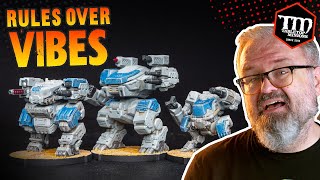
- Has free core rules available for download.
- Many players dislike the rules, finding them too crunchy or too streamlined.
- Regular rules adjustments can be frustrating for competitive players.
- Sci-fi battles
- AIA Sigmar
- Grim dark future
- Star Breach
Mechanics (from transcript analysis)
Video topics + discussion points
Quotes (from this video)
- finding the right rules instead of the right Vibes is most important in wargaming
- one person's crunchy rule set is another person's streamlined and simple rule set
- Games Workshop is very good at their intellectual property but if you're not a fan of their rules to play their games and I understand that you can still keep you know Warhammer in your heart and on your mind
- the rules are are actually important they're how you interact with the story and the models and the other stuff but that doesn't mean that they're intrinsically linked
- every game is Miniatures agnostic if you believe in yourself
- be the change that you want to see in your local gaming group and try out some rules you might like better
References (from this video)
- Strong lore and concept for some players.
- Rules can be disliked by some players.
- Constant changes to rules and model points can be frustrating.
- Onepage Rules
Mechanics (from transcript analysis)
Video topics + discussion points
Quotes (from this video)
- The people who bought it really enjoyed it were like oh this is very cool and I like this and I'm very proud of the book as well because I think it's a cool rule set and I also think that the layout on it went very well took a long time but I really enjoyed the way that it came out
- Majestic 13 did not sell all that well
- Death Wizards has been out for a month and a couple of days and it has sold more copies than Majestic 13 has which came out 13 months ago
- it's an indie game made by enemy spotted studios
- so the games are shorter
- it is a very highly tactical game
- players must rely on their widths precise positioning and equipment to win forget about special rules rules in Army building in blackout it's all about raw tactics
- we're kind of out cuz you talked about our our our game in your video recently and we are out of product now
- kill team 3.0 better be good the whole obstruction line of sight has God awful
- I would like them to change kill team drastically and make a third version and see how that works out I would kind of like them to go back to the old ways but I know I'm the only one who thinks that
- Kingdom Death is a great example of a boutique game versus any that I've named so far
- quar such a fantastic game love their minis
- Fallout is the wild west of ips for me something I really can't bring myself to care about
- it's the bombs dropped in 2077 which means that we like got to where we are now here in 2024 and then decided you know what's cool the 1950s let's go back to that and make thing and I'm like why did this happen
- it's alternate history kind of Fallout is yes it's the future you know the bombs dropped in 2077 but the reason we got to that point was because the transistor was never invented so it that's that that's why things are different is because it's alternate history which never had clicked with me the entire time I've been playing those damn games
- I am definitely interested in Fallout tactics
- it was it was too board gamey for me frankly like that was the problem
- I'm liking death Wizards a lot I'm currently working on building up some minis so I can play it nice
References (from this video)
- boring for the player whose turn it isn't
- predictable activation order that doesn't change
Mechanics (from transcript analysis)
- I go, you go activation — One player completes all their actions (move, shoot, charge, fight) before the other player takes their turn. The opponent only rolls saves or engages in combat if already in range.
Video topics + discussion points
Quotes (from this video)
- the rules are are how you play the game it's not the lore it's not the art it's not even like the models or the terrain it's the rules that Drive the experience of the game play
- I want to tell you about some things some mechanics and stuff like that that I don't personally like to see in wargaming Miniatures design
- I believe that companies want to use custom dice for their games because then it's just another thing that you have to buy from them
- War doesn't happen in an orderly fashion
- you as the player have a certain amount of agency over your own force and that's important to making them feel like your own force
- analysis paralysis when when trying to build a new list if you just give them the list up front right so that they don't have to worry about well how many of these should I take and did I take enough of those and do I have enough points and all that kind of stuff it just allows them to then focus on learning the game
References (from this video)
- Rules are not self-contained; requires purchasing multiple books
- Lack of clear explanations for game terms like 'devastating wounds'
- Infinity
- One Page Rules Army Builder
Mechanics (from transcript analysis)
- Rules presentation — The game's rule presentation is criticized for not including explanations of abilities like 'devastating wounds' directly, forcing players to consult separate books.
Video topics + discussion points
Quotes (from this video)
- I don't not every game needs to have deep lore Some people just want to play fun games Some people want to take the lore from game a and bring it into a game B where they like the rules better
- lore is interchangeable so you know one of my favorite games out there is space weirdos it has literally no lore it's fine I make up lore on the Fly
- I like the fact that they're giving you options to play with the models you already have without having to go through and go geez I don't know what are they trying to get a point like what is this again you're like well these guys are supposed to be tyranids oh well it didn't come across as tyranids or whatever I have a whole bunch of tyranids and so I should use this
- the rules are generic not the lore
- Are they officially model agnostic I mean sure yeah you can use whatever ever models you want I mean to be fair every game is officially model agnostic even if they don't say it is it is
- I just don't like moving them in a chunk I like being able to move them separately I don't like that that just here's a thing and the the type of play where it's like well this part has to wheel over and do this and then then you're attacking from a flank
- rivenstone is the game that you're talking about
- the problem is this well it's not the problem here's the most recent answer they still haven't produced the stuff yet but the most recent email I got from them which I think was in July was them saying another company is basically buying the game from us and they will do the production and the the Fulfillment
References (from this video)
Mechanics (from transcript analysis)
Video topics + discussion points
Quotes (from this video)
- the future of wargaming is going and what steps toward that future we're already seeing
- making games is hard especially Miniatures war games
- a game isn't successful if no one can get it
- 3D printing miniatures from digital STL files is kind of like printing rulebook pages on your paper printer at home from your PDF files
- most of the game companies out there especially the biggest one uh seem to kind of avoid the 3D print printing space completely
- because of the internet and Technology specifically 3D printer technology we're starting to see a new kind of war game emerging
- The difference was night and day the second batch printed a lot slower with the tiny nozzle which kind of makes sense but I mean like three to four times slower right but the detail was considerably higher
- this is doing is it is selling you a more complete package than just a wargaming rule book or just some random Miniatures to use in whatever rule set you decide on
- you will begin to see smaller Indie developers releasing more kind of complete package games like Battlefront Valkyrie
References (from this video)
Mechanics (from transcript analysis)
- Combat Patrol — newer to 40k. Never went to AdeptCon. Any recommendations for must-see, must do.
Video topics + discussion points
Quotes (from this video)
- If you see something and you want it, get it right away.
- It's kind of like when Nova used to be in the old place when it was in several years back it was in Crystal City. Technically, there was like one restaurant within three blocks of the place and that was it.
- The benefit to this being in downtown Milwaukee is that it's in the convention district and there's a lot of restaurants and bars and all kinds of places around there. So uh it's going to be real nice.
- I think that the number of people obviously that go to conventions in comparison to the number of people who are in the hobby it's a very small percentage that go to conventions and I think there's a lot of folks that are just not that are either unable to due to distance or you know cost or social anxiety or just you know they just never have the the um the you know like they they got you know, several kids and two jobs or stuff like that. You just don't have the time to take off and go to a convention or whatever. So, I think that that happens a good deal.
- The reason they moved out of the old place was because they just literally had outgrown it. um when they moved to Shamberg I think adept to con was about 5,000 people maybe six and then over the years being in Shamberg like last year they hit 10,000 people so
- I have found that you get less of that overlap with speed paints. They they maybe don't I don't feel like they dry quite as quickly or something. I don't know what it is, but they don't seem I don't have a problem. They What do they call it? tide marks, coffee stains, something like that. And it's because you've taken a transparent color that dries so quickly that when you bring the other transparent color over and you have them kind of overlap a little bit, so there's not like a space in between where you, you know, on this thing, then you get double transparency, which means it gets darker. So you get this line where you stopped and then had to go and get more and then come back.
- The benefit I think what happens is almost every single convention gets to a point where it can no longer be in a convention center and hotel combo. It gets to the point where they need a convention center and then hotels around the convention center. It's the way Gen Con does it. It's the way that, you know, Adepticon's doing it now.
- It's like you're colorizing an old black and white movie or something like that. Um, but it does make things quicker and simpler and it still looks pretty good in most situations.
- Am I doing it right? I mean, I don't know. It's up to you.
- Would love if GW re-releases Mheim, but I fear this will also cause most people to overlook unofficial fan-made Mheim content, but who knows, maybe GW will open to unofficial content.
- Horus Heresy is basically a civil war story. So, it's all about we're not even paying attention to the aliens right now.
- It's because they were spending 50% of the time working on stuff for Warhammer Fantasy, but it was only 18% of sales and they were like, 'Well, this isn't going the right direction.'
- It's been a long time since GW's made a Kill Team box where I liked everything in the box.
- I find that I have the best um luck with OSL when I'm using my airbrush.
- The difference is is if you are like, 'Well, I would rather do something a little bit different and tweak things differently that way.'
- Overall, Army Painter Speed Paint wins for me, but there's um always a couple of the contrast paints I love, like the Blood Terror Red. It's just a gorgeous deep burgundy.
References (from this video)
- Huge tournaments
- Sci-fi
Mechanics (from transcript analysis)
Video topics + discussion points
Quotes (from this video)
- And these 1490 Doom two-foot circular boards were also busy most of the convention.
- They are producing models now, uh, but they're also and they're going to have a printed book eventually soon.
- It's like a Patreon thing and then it lets you get into a uh a Discord and you also get letters every month and there's like a sticker and a book and you put your sticker in for things you're doing, all that kind of stuff.
- But the real thing about Adepticon is just meeting other kind of like-minded people who are into wargaming like you are, or maybe slightly different than you are, and maybe they teach you something.
References (from this video)
- Rules constantly change
- Too expensive
- warhammer 40k
Mechanics (from transcript analysis)
Video topics + discussion points
Quotes (from this video)
- HOAs are a blight on this country.
- My first videos were shot on a Nikon D5100, which I had to trick into shooting, well, that's not true. I didn't have to trick it into shooting video. I had to trick it into kind of giving me manual control of how I shot video.
- It's it's it's it's it's it's it's it's it's it's it's it's it's it's it's it's it's it's it's it's it's it's it's it's it's it's it's it's it's it's it's it's it's it's it's it's it's it's it's it's it's it's it's it's it's it's it's it's it's it's it's it's it's it's it's it's it's it's it's it's it's it's it's it's it's it's it's it's it's it's it's it's it's it's it's it's it's it's it's it's it's it's it's it's it's it's it's it's it's it's it's it's it's it's it's it's it's it's it's it's it's it's it's it's it's it's it's it's it's it's it's it's it's it's it's it's it's it's it's it's it's it's it's it's it's it's it's it's it's it's it's it's it's it's it's it's it's it's it's it's it's it's it's it's it's it's it's it's it's it's it's it's it's it's it's it's it's it's it's it's it's it's it's it's it's it's it's it's it's it's it's it's it's it's it's it's it's it's it's it's it's it's it's it's it's it's it's it's it's it's it's it's it's it's it's it's it's it's it's it's it's it's it's it's it's it's it's it's it's it's it's it's it's it's it's it's it's it's it's it's it's it's it's it's it's it's it's it's it's it's it's it's it's it's it's it's it's it's it's it's it's it's it's it's it's it's it's it's it's it's it's it's it's it's it's it's it's it's it's it's it's it's it's it's it's it's it's it's it's it's it's it's it's it's it's it's it's it's it's it's it's it's it's it's it's it's it's it's it's it's it's it's it's it's it's it's it's it's it's it's it's it's it's it's it's it's it's it's it's it's it's it's it's it's it's it's it's it's it's it's it's it's it's it's it's it's it's it's it's it's it's it's it's it's it's it's it's it's it's it's it's it's it's it's it's it's it's it's it's it's it's it's it's it's it's it's it's it's it's it's it's it's it's it's it's it's it's it's it's it's it's it's it's it's it's it's it's it's it's it's it's it's it's it's it's it's it's it's it's it's it's it's it's it's it's it's it's it's it's it's it's it's it's it's it's it's it's it's it's it's it's it's it's it's it's it's it's it's it's it's it's it's it's it's it's it's it's it's it's it's it's it's it's it's it's it's it's it's it's it's it's it's it's it's it's it's it's it's it's it's it's it's it's it's it's it's it's it's it's it's it's it's it's it's it's it's it's it's it's it's it's it's it's it's it's it's it's it's it's it's it's it's it's it's it's it's it's it's it's it's it's it's it's it's it's it's it's it's it's it's it's it's it's it's it's it's it's it's it's it's it's it's it's it's it's it's it's it's it's it's it's it's it's it's it's it's it's it's it's it's it's it's it's it's it's it's it's it's it's it's it's it's it's it's it's it's it's it's it's it's it's it's it's it's it's it's it's it's it's it's it's it's it's it's it's it's it's it's it's it's it's it's it's it's it's it's it's it's it's it's it's it's it's it's it's it's it's it's it's it's it's it's it's it's it's it's it's it's it's it's it's it's it's it's it's it's it's it's it's it's it's it's it's it's it's it's it's it's it's it's it's it's it's it's it's it's it's it's it's it's it's it's it's it's it's it's it's it's it's it's it's it's it's it's it's it's it's it's it's it's it's it's it's it's it's it's it's it's it's it's it's it's it's it's it's it's it's it's it's it's it's it's it's it's it's it's it's it's it's it's it's it's it's it's it's it's it's it's it's it's it's it's it's it's it's it's it's it's it's it's it's it's it's it's it's it's it's it's it's it's it's it's it's it's it's it's it's it's it's it's it's it's it's it's it's it's it's it's it's it's it's it's it's it's it's it's it's it's it's it's it's it's it's it's it's it's it's it's it's it's it's it's it's it's it's it's it's it's it's it's it's it's it's it's it's it's it's it's it's it's it's it's it's it's it's it's it's it's it's it's it's it's it's it's it's it's it's it's it's it's it's it's it's it's it's it's it's it's it's it's it's it's it's it's it's it's it's it's it's it's it's it's it's it's it's it's it's it's it's it's it's it's it's it's it's it's it's it's it's it's it's it's it's it's it's it's it's it's it's it's it's it's it's it's it's it's it's it's it's it's it's it's it's it's it's it's it's it's it's it's it's it's it's it's it's it's it's it's it's it's it's it's it's it's it's it's it's it's it's it's it's it's it's it's it's it's it's it's it's it's it's it's it's it's it's it's it's it's it's it's it's it's it's it's it's it's it's it's it's it's it's it's it's it's it's it's it's it's it's it's it's it's it's it's it's it's it's it's it's it's it's it's it's it's it's it's it's it's it's it's it's it's it's it's it's it's it's it's it's it's it's it's it's it's it's it's it's it's it's it's it's it's it's it's it's it's it's it's it's it's it's it's it's it's it's it's it's it's it's it's it's it's it's it's it's it's it's it's it's it's it's it's it's it's it's it's it's it's it's it's it's it's it's it's it's it's it's it's it's it's it's it's it's it's it's it's it's it's it's it's it's it's it's it's it's it's it's it's it's it's it's it's it's it's it's it's it's it's it's it's it's it's it's it's it's it's it's it's it's it's it's it's it's it's it's it's it's it's it's it's it's it's it's it's it's it's it's it's it's it's it's it's it's it's it's it's it's it's it's it's it's it's it's it's it's it's it's it's it's it's it's it's it's it's it's it's it's it's it's it's it's it's it's it's it's it's it's it's it's it's it's it's it's it's it's it's it's it's it's it
- This stuff looks like it came straight out of Dawn of War video game.
- I used rattle can primer on my last metal minis. It's what I did with my old 40k minis as well.
- The game itself can be very standalone. You can use whatever miniatures you want. It's very miniature agnostic.
- The games play very quickly because it's um it's not about like, oh, I've got five wounds. It's like, oop, I got shot. That guy's out.
- I'm leaving because 40k is constantly changing the rules or I'm leaving because it's too expensive.
- Don't get into 40k unless it is the first year of their three-year cycle. That's probably a good piece of advice for sure. If you're going to get into 40k, do it when a new edition comes out. That's the best time, and it's still not a great time.
- GW have been real weird about the way they've been dealing with stores lately.
- It's a multi-billion dollar market cap company and you guys can't have a like a website backend for people to put their orders in. You got to use Google Docs. Are you crazy?
- Space Station Zero is probably my second favorite if I had to choose. My first favorite probably being um Majestic 13.
- It was definitely uh was a was a thing that we did a lot uh at the uh there when we lived over there on uh that place burned down.
References (from this video)
- Grim Dark Future
- Grim Dark Future Firefight
- Age of Fantasy Skirmish
- War Machine
Mechanics (from transcript analysis)
Video topics + discussion points
Quotes (from this video)
- Onepage rules is a small company that makes rules for whatever miniatures you want to use.
- The rules are mostly free or maybe five bucks if you want like the advanced version with all kinds of like modular add-ons and customization and all that kind of stuff.
- It's not an affiliate link. I don't think that Mini My Minifactory does those, but they should, right?
- This news was released on April 14th, and it's about the Worlds Beyond Brawl.
- If you sign up to get notified of when the thing launches, then you'll also get two free STLs like right away.
References (from this video)
- I think is horrid
Mechanics (from transcript analysis)
Video topics + discussion points
Quotes (from this video)
References (from this video)
- Kill Team
Mechanics (from transcript analysis)
Video topics + discussion points
Quotes (from this video)
- So skirmish games are the future and army style games are going away, right?
- What do you think? Are skirmish games the future or actually just a really a fad?
- Skirmish style miniatures war games are at the very least not going anywhere.
- Take a look at full spectrum dominance from the lazy forger.
References (from this video)
- Can be fun if you ignore the rules complexity
- Units that are good or bad shift a lot, so focus on what you like.
- Too much depth in rules, relying on 'gotcha' situations
- Tactics cards, stratagems, and add-on garbage
- Rules change frequently
- Expensive 'mini tax'
- Combat Patrol rules change often
- Newer sculpts are generic and less detailed
- Space Marines have become too generic
- OPR Grimdark Future Firefight
- Kill Team
- OPR
- Age of Sigmar
Mechanics (from transcript analysis)
- 11th Edition — The upcoming edition raises questions about the fate of Combat Patrol and existing product lines.
- Combat Patrol — A game mode with frequent rule changes and box set updates, raising concerns about its future and accessibility.
Video topics + discussion points
Quotes (from this video)
- OPR is the GURPS of wargaming.
- 40K rules as deep, I would call it artificially deep.
- Star Wars Legion terrain is almost always the best.
- OPR skirmish is a breath of fresh air compared to Kill Team.
- The damned stuff is supposed to be out, but it's not out yet, unfortunately.
References (from this video)

- Played this game for a good 4 years and put a lot of money into it.
- If you don't like putting miniatures together and painting them, why are you even bother playing?
- I didn't like it. I just want to play the game.
- There's issues in this where one side gets to shoot first and the other side shoots back.
- There's some close combat.
- There's a lot of rules I didn't like.
- sci-fi combat
Mechanics (from transcript analysis)
- Combat: Dice — There's a lot of luck involved. I mean, you're rolling dice anyway.
- Dice combat — There's a lot of luck involved. I mean, you're rolling dice anyway.
- Mini-Games — This is the Warhammer I know best. This one came out 1998, and that is when I was playing this game.
- Miniature wargaming — This is the Warhammer I know best. This one came out 1998, and that is when I was playing this game.
Video topics + discussion points
Quotes (from this video)
- And we always end at the the last one, The Road to Canterbury.
- If you like the Harry Potter theme.
- Cupcake Empire is a game I like a lot.
- I find it unique and interesting.
- So, the Valeria series has been up and down for me, but I thought Mar Graves was pretty interesting.
- This is one I considered getting back in the day if only because it's a war game but fantasy and from a war game company.
- It's good.
- What I like about this game is you're putting a card into the series and each round you're also going to activate one of these cards.
- So, that looks interesting.
- That is a lot of tan. Very Canterbury.
- my favorite here is probably Chomp actually, that little card game from All Play.
- I find that one to be pretty nifty.
- Are there ones that I should play that I haven't played there? Ones that I like and you're like you're crazy, etc.
References (from this video)
- Sci-Fi
Mechanics (from transcript analysis)
- Army building — Discussed in the context of starting a Chaos Space Marine army and considering an Imperial Guard army.
Video topics + discussion points
Quotes (from this video)
- I have so many duplicates of the same Games Workshop models
- I learned something interesting about myself this past weekend
- I'd be lying if I said I was disappointed in this outcome and I'd also be lying if I said that this was the first time that this has happened to me
- better safe than sorry
- For me it's a nice feeling to be able to grab a model from my shelf when I want to Kit bash it and paint it rather than trying to find one at a store or God forbid on eBay
- there's no right way to participate in this hobby no matter what the people on Twitter and Reddit will tell you
References (from this video)
- Good synergy between units, especially with characters providing buffs.
- Army has a good mix of shooting and melee capabilities.
- The 'Advance and Shoot' doctrine is useful for repositioning and engaging.
- Units with 'Fights First' can be advantageous in combat.
- The 'Reactive Move' ability offers tactical flexibility.
- Some units are too melee-focused, making them vulnerable to shooting armies.
- The cost of certain units or enhancements may be too high for their effectiveness.
- Dice rolls were inconsistent, leading to missed opportunities.
- The game has complex rules that can be difficult for new players to grasp.
- The table size felt restrictive for certain maneuvers.
Mechanics (from transcript analysis)
- Advance and Charge — Units can advance and then charge in the same turn.
- Deep Strike — Units can be placed in reserve and then brought onto the board later in the game.
- Fights First — A unit's ability to strike before other units in the fight phase.
- Heroic Intervention — An ability to move and fight when an enemy makes a charge move.
- Overwatch — The ability to shoot at an enemy unit that is charging.
- Reactive Move — An ability that allows a unit to move away from an opponent if they get too close.
- Scout Move — Units have an ability to move forward at the beginning of the game.
- Strategic Reserves — Units can be placed in reserve and deployed later.
Video topics + discussion points
Quotes (from this video)
- I don't think I'm going to win here, I'm just going to try it.
- This is why I don't like having my first turn.
- You have to roll the dice straight.
- He's dead. Oh, wait. He just died.
- I forgot to get my missions.
- This is the most unorganized dogs ever.
- I forgot to charge the dogs.
- That was terrible. That was about average except for the fact that you had twos and twos.
- The dice gods were against you today.
- You're going to kill that entire unit.
References (from this video)

- High cost of models and supplies
- Constant rules updates and editions
- 41st millennium
- Age of Sigmar
Mechanics (from transcript analysis)
- Rules Updates — Frequent updates to rules, points costs, and editions are mentioned as a source of frustration.
Video topics + discussion points
Quotes (from this video)
- "Some hobbies are easier than others."
- "Now, right off the bat, this is not a doom and gloom video about tabletop wargaming."
- "However, this ain't the easiest hobby to get into."
- "Games Workshop isn't the hobby. It's a big part of the hobby, but it is not the hobby."
- "So many companies sell models cheaper than Games Workshop."
- "Comparison in the hobby... how it really is the thief of joy."
- "Tabletop wargames are all about making the game your own."
- "Strangely, some of the same things that bring people into this hobby are the exact same things that drive them away, except for the excessive cost."
References (from this video)
- Lore can be a compelling selling point and marketing tool.
- The existence of tournament play (match play) is acknowledged.
- Constant rules changes drive players away.
- Narrative players get lumped in with tournament players due to similar rule sets.
- The constant search for balance doesn't make for a fun game rule set for narrative players.
- Age of Sigmar
Mechanics (from transcript analysis)
- Rules changes — Constant rules changes are cited as a reason people are driven away from wargaming, particularly for 40K and Age of Sigmar.
- Strategrams — Mentioned as a complexity that could be reduced in a narrative version of the rules.
- tactics cards — Mentioned as a complexity that could be reduced in a narrative version of the rules.
Video topics + discussion points
Quotes (from this video)
- if you love a hobby like I love TableTop wargaming and the Miniatures hobby then you have a tendency to think about it a lot
- reasonable people can have differing opinions about wargaming it's just a game
- for me 3D terrain is kind of important I think
- tabletop wargaming is all about immersion and how things look in my mind
- nearly no lore is actually needed for a Miniatures war game
- the compelling lore is one of the main reasons that Warhammer games continue to do as well as they do
- frankly it doesn't really work for smaller Indie Games
- there should be two versions of Warhammer 40K and two versions of agis Sigmar for each game there should be a version for tournament play and then there should also be a version that's fun
- the constant search for balance doesn't really make for a fun game rule set feeling comfortable with stable rules and enjoying themselves is what they want
- round bases are better looking than Square bases but integrated bases those weirdly shaped bits of ground between the Mini's feet usually on some companies metal Miniatures but sometimes they're also on resin ones and even plastic as well um those are the worst
References (from this video)
- Detailed miniatures
- Ability to advance and shoot with doctrines
- Army rules that synergize with specific units
- Mission decks add replayability
- Challenger cards provide comeback mechanics
- Dice rolls can be very streaky and disappointing
- Some units are easily killed
- The psychic librarian could not perform well
- Tyranids losing their synapse and shadow in the warp
- Space Marines losing their captain early
- The game ended with a large point disparity
- warfare between factions
- space
Mechanics (from transcript analysis)
- Anti-Psycher — An ability that gives critical hits on psychers on a 4+.
- Army muster — Deciding battle size (Incursion, Strike Force, Onslaught), selecting factions, building army rosters, selecting attachments, selecting units, and choosing a warlord.
- Battleshock tests — Tests taken by units, influenced by synapse creatures.
- Combat Doctrines — Detachment abilities that can be activated, such as Devastator, Tactical, or Assault doctrines.
- Command Points — Used to activate stratagems and other army abilities.
- Consolidation — Moving units after combat.
- Deep Strike — Ability to place units on the table at a later part of the game, with limitations on the number of units.
- Deployment — Units are deployed on the battlefield, with some allowed in deep strike.
- Feel No Pain — An ability that allows a model to ignore a certain amount of damage.
- Hazardous weapon — Weapons that can cause mortal wounds to the user if a certain roll is made.
- mission deck — Using decks of cards for deployment (e.g., Hammer and Anvil), primary objectives (e.g., Take and Hold), twist cards (e.g., Lords of War), secondary missions, and challenger cards.
- Stratagems — Special abilities that can be activated using command points, like Fire Overwatch, Smoke Screen, Armor of Contempt, Secure Biomass, and Harbor Harbored Power.
- Turn phases — Command phase, movement phase, shooting phase, charge phase, fight phase, consolidation.
- Unit coherency — Rules about maintaining unit formation after combat.
- Unit limitations — Cannot have more than three of any type of unit unless it's a battle line or dedicated transport. Units must be within faction and points must remain.
- Warlord enhancements — Characters can be given enhancements from detachments. Epic heroes have special rules and do not get enhancements.
Video topics + discussion points
Quotes (from this video)
- Games Workshop models, of course, if you do not know about them, are fantastically detailed and are some of the best on the market.
- The dice tell a magnificent story on the battlefield.
- The Tyranids have eaten all the biomass on this planet.
References (from this video)
- Improved figure painting as an art form
- Lasting influence on hobby and gaming through model building and painting
- Not a fan of the game anymore
- Sci-fi
Mechanics (from transcript analysis)
- miniature painting — The game is associated with building models and painting armies, and Games Workshop has highlighted this aspect of the hobby.
Video topics + discussion points
Quotes (from this video)
- this list is about the games I played that fundamentally shifted the way I think about gaming and what board games can be about
- The concept of having a simple core game that was modified by variable powers was pretty revolutionary at the time
- nothing in gaming was quite like the MB game master series when it came out
- Arkham Horror along with pandemic pushed cooperative board games to the forefront of the Hobby and there are a massive john rule than the hobby today
- no game has done more to improve the idea of figure painting as an art form than Warhammer 40,000
- it also got fantasy gaming at the toy stores and on mainstream TV
- you cannot understate the influence of Magic the Gathering has had on board game paying costs to play cards tapping them keywords interactions and the countless other card mechanics
- it was the first euro game I played and while it really didn't do it for me it introduced me to a world of games
- very few things have shaken up the board game hobby like Kickstarter
- XCOM was the first app driven game I played where I thought there was no possible way to replicate the experience of that game without the app
- what makes board gaming unique is that the experiences reshaped every time it is played
- it seemed like a watershed moment of me that we can have games that are not only fun and engaging but also thought-provoking
References (from this video)
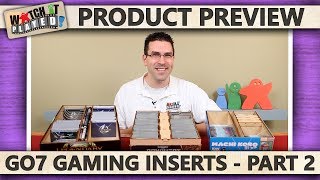
- Allows for sleeved cards.
- Accommodates the base set and all released expansions.
- Has space for future expansions.
- Dividers can be placed anywhere for custom organization.
- Dedicated slots for tokens that fit upright.
- The bit box for tokens is removable and organized.
- The box lid floats due to the insert's design.
- The box size has changed drastically, making older boxes less functional for storage.
Mechanics (from transcript analysis)
Video topics + discussion points
Quotes (from this video)
- so what was go7 gaming going to do if they wanted to have a box that you could use in a practical way well they were going to have to create an insert that did Force the Box lid to float as you see here but I think the compromise is well worth it
- I like when I can pack as many different expansions into the base game as possible and that's certainly going to be an option here
- the code word is the Twitter account for go7 gaming without the at symbol subscribe to their Twitter account you can get updates on the inserts they're releasing and projects that they're working on if that interests you
References (from this video)
- Deep tactical depth, wide unit variety, and strong thematic integration
- Structured tournament systems provide clarity and fairness
- Engages players in long-term strategic planning and list refinement
- High complexity with many rules interactions and exceptions
- Terrain and deployment rules vary by tournament, increasing prep work
- Games can be lengthy, challenging endurance and schedule management
- military conquest, space opera warfare
- grimdark sci-fi battlefield in the Warhammer 40,000 universe
- epic, grimdark, campaign-driven
Mechanics (from transcript analysis)
- deployment and terrain setup considerations — In some formats terrain is deployed by players, in others a fixed layout is used; rules vary by tournament.
- Dice-based resolution — Combat and other actions rely on dice rolls to resolve outcomes with probabilistic tension.
- Line of Sight — Terrain footprints and rules determine cover, line-of-sight, and positioning; in tournaments terrain rules can override core rules.
- Phased turns — Movement, Psychic, Shooting, Charge, Fight, and Morale phases structure each player's actions.
- Points-based army building — Armies are constructed using a points system to balance force composition and options.
- rules compilation and exceptions — Rulebooks, FAQs, and tournament packs introduce exceptions and special cases that modify core rules per event.
- terrain and line-of-sight interactions — Terrain footprints and rules determine cover, line-of-sight, and positioning; in tournaments terrain rules can override core rules.
- terrain rules and fixed layouts for tournaments — Tournaments often specify fixed terrain setups and specific terrain-related rules per event.
- time management via clocks — Chess clocks or time limits are used to pace games and prevent overly long sessions.
- Variable Phase Order — Movement, Psychic, Shooting, Charge, Fight, and Morale phases structure each player's actions.
Video topics + discussion points
Quotes (from this video)
- Warhammer 40,000 is a complicated game.
- This edition is streamlined for all intents and purposes; it's simpler than it has been.
- There are lots of rules interactions and exceptions.
- The footprint of the terrain is what counts.
- Check the terrain pack from your tournament organizer.
- We read the rulebook, FAQ, and tournament packs to learn the rules before playing.
References (from this video)
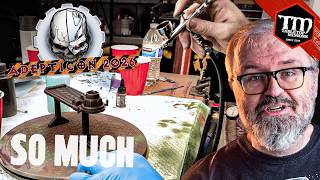
- immersive boards with thematic terrain
- robust ecosystem of official kits
- strong community support for event play
- complex rules can be daunting
- entry cost to assemble a full army and transport terrain
- massive sci-fi battles with factions vying for dominance
- grimdark sci-fi warfare across multiple theaters of war
- n/a
- Kill Team
- Age of Sigmar
- Star Wars Legion
Mechanics (from transcript analysis)
- dice-based combat resolution — outcomes determined by dice rolls and modifiers
- Mini-Games — tabletop battles with regiments of models on boards, influenced by terrain
- miniature wargame — tabletop battles with regiments of models on boards, influenced by terrain
- terrain-driven immersion — board terrain shapes movement, line of sight, and tactical decisions
Video topics + discussion points
Quotes (from this video)
- Terrain is awesome, especially when it's good.
- It's a ton of work.
- The main Adepticon printer farm is seven bamboo lab machines, mostly X1 carbon printers, but they also have a new H2D and an A1.
- Today, the main Adepticon printer farm is seven bamboo lab machines, mostly X1 carbon printers, but they also have a new H2D and also a trusty old A1 like mine.
- The stuff is sprayed in a heated tent set up next to the very large garage that the spray team works in.
- You could feel the care that goes into every piece of terrain that makes these boards memorable.
References (from this video)
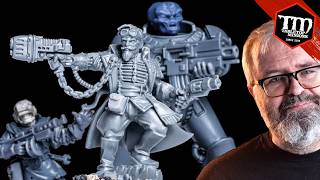
- Iconic universe with a vast range of kits
- Strong customization potential for kit bashing
- Complex rules can be intimidating for newcomers
- militaristic conquest and zeal within a sprawling universe
- grimdark sci-fi future warfare spanning a galaxy-wide empire
- episodic campaigns and narrative battles in a vast setting
- Necromunda
- Stargrave
- Frostgrave
- Warhammer 40,000
Mechanics (from transcript analysis)
- Line of Sight — Terrain and line of sight affect shooting and abilities.
- line of sight and cover interactions — Terrain and line of sight affect shooting and abilities.
- miniature skirmish/intracompany battles — Players field squads of miniatures in tactical engagements with large variety of units.
- objective-based missions — Each game includes specific objectives driving gameplay.
- Scenario / Mission / Campaign Game — Each game includes specific objectives driving gameplay.
Video topics + discussion points
Quotes (from this video)
- I love kit bashing minis. It's one of my favorite things to do.
- The story of the model completely changed.
- The head with the goggles and the mustache, that head screams space pirate when put onto that body.
- No cutting, no sculpting, just picking the right pieces and gluing them together. Kit bashing.
- The best part about kit bashing miniatures is how it allows you to be unique and express yourself even more in your hobby.
References (from this video)
- immersive universe and hobby depth
- friendly entry into large-scale tabletop play via dedicated terrain and kits
- high cost and ongoing hobby commitment
- complex rules and modeling requirements
- military battles, faction lore, tactical warfare
- grimdark science fantasy battle across a vast universe
- collectible army battles with overarching narratives
Mechanics (from transcript analysis)
- Mini-Games — tabletop skirmish/army battles using miniature models
- miniatures_wargaming — tabletop skirmish/army battles using miniature models
- objective_based_scenarios — scenarios with mission-based objectives and terrain interactions
- Scenario / Mission / Campaign Game — scenarios with mission-based objectives and terrain interactions
Video topics + discussion points
Quotes (from this video)
- we are not sponsored by any of the product that we going to show you we are not getting a dime from them
- it's not a sponsored video
- it's literally our recommendation
- these are absolutely fantastic
- this is life changing, it's a game changer
- the top gift you can make to yourself
References (from this video)
- rich, deep tactical depth and strategic variety
- growing competitive scene and helpful tournament structure
- educational experience for new players through rules packs and battle reports
- community-driven events and accessibility for newcomers
- can be intimidating for new players
- complexity and time management at events
- potential for rule misunderstandings without reading packs
- Warfare, strategy, conquest, grimdark sci-fi
- Sci-fi warfare across the war-torn universe of the 41st millennium
- flavor of epic battles with narrative flourish, yet dominated by competitive play
- Magic: The Gathering
Mechanics (from transcript analysis)
- armor saves — saving throws to resist damage
- Measurement Movement — units advance across terrain with measured distances
- melee/combat (charges) — assaults with charges using distance measurement and dice
- Movement — units advance across terrain with measured distances
- objectives and battlefield control — points and strategic control during the game
- shooting — ranged attacks with range limitations and dice-based results
- Terrain interaction — terrain affects line of sight and movement
Video topics + discussion points
Quotes (from this video)
- It's not ready, it's not a pro player; you should read the rules pack to understand the framework.
- The social contract is to have a pleasant experience, and that applies to competitive as well as casual play.
- Practice and repetition; the more you play, the better you get.
- Meta exists but for beginners it's not the focus; learn your army first.
References (from this video)
- Rich lore and highly immersive play
- Tactical depth and model customization
- High cost and space requirements
- Complex rules and lengthy setup
- Warfare, strategy, army building
- Sci-fi grimdark universe, 41st millennium
- Lore-rich, miniature-based battles
Mechanics (from transcript analysis)
- armybuilder — Assembling and customizing war armies before play.
- dice_resolution — Combat outcomes driven by dice and unit stats.
- miniature_wargaming — Players command painted miniatures on tabletop battlefields.
- Scenario / Mission / Campaign Game — Games revolve around mission objectives and tactical play.
- scenario_based_play — Games revolve around mission objectives and tactical play.
Video topics + discussion points
Quotes (from this video)
- Don't be that guy
- Be present at the table
- Downtime is a problem
- Be present for the experience
- Be an all-around nice person
References (from this video)
- Rich lore and world-building that deepens immersion
- Strong hobby aspects: painting, modeling, and customization
- Vibrant community and events enabling competitive play
- Potential for community-driven content and interviews with top players
- Extensive ongoing support via codices and campaigns
- Steep learning curve due to complex rules and edition changes
- Cost and time to assemble, paint, and maintain painted armies
- Need for consistent event organization and commitment to tournament prep
- grimdark warfare, faction warfare, epic battles and lore-driven campaigns
- The grimdark future of the 41st millennium; distant planets, galaxy-spanning conflicts
- codex-driven army customization and campaign narratives with episodic battles
Mechanics (from transcript analysis)
- codex-based army building — Armies are built around a codex with unit choices, points and unique abilities.
- Dice-based resolution — Dice rolls determine hits, wounds, saves, and other outcomes.
- Line of Sight — Positioning, range, and terrain affect combat outcomes.
- Line of sight and range rules — Positioning, range, and terrain affect combat outcomes.
- Miniature-based tactical combat — Players field large armies of miniatures and resolve battles on a tabletop using rules and dice.
- Turn sequence with phases — Movement, shooting, charging, psychic, and morale phases structure turns.
- Variable Phase Order — Movement, shooting, charging, psychic, and morale phases structure turns.
Video topics + discussion points
Quotes (from this video)
- we're going to try and sign up for the London GT
- it's going to be our end target
- we want to create this Board Stupid family 40K section
- we're not about to be the next champion at the London GT
References (from this video)
- Epic scale battles and a deep hobby culture at LVO
- Large community and active tournament scene
- Rich product ecosystem (models, terrain, paints)
- Complex rules can be daunting for new players
- Logistics of transporting large armies and terrain
- Military conquest, faction warfare
- The 41st millennium, large-scale sci-fi/fantasy warfare
- Open, campaign-like wargame with narrative potential
- BattleTech
- Conquest: The Last Argument of Kings
Mechanics (from transcript analysis)
- combat_resolution — Attack dice, saves, morale and casualties determine outcomes
- line_of_sight — Visibility considerations for ranged engagements
- Movement — Turn-based movement and position-based tactics on a tabletop surface
- objective_control — Control points and mission objectives influence win conditions
Video topics + discussion points
Quotes (from this video)
- this is a Miniatures convention that mostly is about being the largest Warhammer 40K tournament in the entire world
- the booty that I brought back from Las Vegas
- I ended up buying some of those things booty if you will
- there's a whole bunch of extra stuff barrels and looks like fruit and vegetables
- I really like the amount of detail
References (from this video)
- Extensive model range
- Detailed miniatures
- Expensive models
- Frequently changing rules
- Futuristic Warfare
- Science Fiction
Mechanics (from transcript analysis)
Video topics + discussion points
Quotes (from this video)
- Your models can do whatever you want
- If you want to get your money's worth out of the models that you buy then you want to figure out a good way to kind of recycle those miniatures
References (from this video)
- Widely recognized entry point into the hobby with a large player base
- Can be intimidating and costly for newcomers
- epic, army-scale battles with vast miniature armies
- grimdark sci-fi fantasy warfare
- lore-driven, expansive universe
- Marvel Crisis Protocol
- Moonstone
- Guild Ball
- X-Wing
Mechanics (from transcript analysis)
- massive armies — control of large forces with layered strategic options
Video topics + discussion points
Quotes (from this video)
- not all miniature games are Warhammer 40K
- I hate you Games Workshop
- there's one out there for everyone
- I'm the hero that's right just this is your call to Adventure
- this is your call to the adventure
- this was entertaining for you I hope it was fun
- start with Marvel crisis protocol an amazing game super easy to learn
References (from this video)
- Single D6 system limits granularity
- Poor game balance
- Company prioritizes sales over balance
- New lists are intentionally overpowered to sell products
- Models become incompatible between editions
- Military warfare
- Grimdark sci-fi future
- Large-scale battle
- War Machine
Mechanics (from transcript analysis)
- D6 System — Based on rolling single six-sided dice
- List building — Create army lists
- Miniature-based — Use of painted miniatures
Video topics + discussion points
Quotes (from this video)
- It's delightfully simple and still delightfully a good game.
- Everyone has a different journey here. Everyone starts off playing different games and ends up with different favorite games.
- It had some of the most amazing world building I've ever seen for a game.
- I think the fact that it's rooted in a single D6 system is just going to hamper it for all time.
- This game got me through a pretty rough period of time.
- I am never getting rid of Arkham Horror second edition unless an Arkham Horror fourth edition comes out.
- I was immediately hooked by it.
- It's an absolute banger of a game.
- I could see myself playing that more.
- There's so many layers and mind games to it that player skill and the ability to read your opponent counts for so much more than just having an awesome deck.
References (from this video)
- Iconic, richly developed world with a distinctive grimdark aesthetic
- Deep lore and visual language that are instantly recognizable
- Strong community support and broad model availability
- Complex rule-set that can be intimidating to new players
- Grimdark tropes may not appeal to everyone and can feel saturated
- epic war, corruption, endurance under a dystopian regime
- grimdark sci-fi future spanning galaxies with imperium and xenos conflicts
- epic, mythic, macro-scale war narrative with a pervasive grimdark atmosphere
- Necromunda
- Inquisition 28
Mechanics (from transcript analysis)
- dice-based combat resolution — unit stats and dice rolls determine shooting and melee outcomes
- large-scale model management and army organization — fleet-level deployments across multiple units with heavy modeling
- line of sight and cover interactions — terrain and positioning influence hit probabilities and defense
- psychic powers and morale mechanics (flavor for 40k setting) — special abilities and morale checks influence battlefield outcomes
Video topics + discussion points
Quotes (from this video)
- "grim dark is a term that gets thrown around also very frequently with something that's sometimes known as blanchitsu"
- "blen chutitsu is named after a guy named John Blanche who is an artist who has worked for Games Workshop"
- "turnip 28 is kind of started by a guy named max fitzgerald"
- "it's post-apocalyptic napoleonic but the apocalypse came not by nukes or an asteroid but by some sort of crazy freak"
- "Planet 28 which i enjoy quite a bit"
- "you folks asked for it and now it's here the Oculus spear"
- "there's a lot to it and this is just like i said depending on how you count grim dark and blanchitsu it's like three or four of them"
References (from this video)
- Proxy testing helps evaluate army composition and tactics before investing in painting.
- Sub-assembly painting can improve paint quality by reaching hard-to-access areas.
- Forces players to paint eventually, ensuring finished models are deployable on the board.
- Allows early playtesting and practice without waiting for assembly.
- Gray army aesthetics can be less visually appealing in shops or tournaments.
- Tournament painting requirements may pressure players to complete painting.
- Proxy usage can be confusing to opponents if proxies are not clearly identified.
- grimdark sci-fi warfare, army composition and customization.
- The 41st millennium on grimdark battlefields between futuristic factions such as Space Marines.
- epic, battle-oriented, practical hobbyist guidance
- Malifaux
Mechanics (from transcript analysis)
- army-building with unit variety — Different unit types (regular troops, elites) and equipment define army composition.
- Combat: Dice — Weapons and saves resolved with dice rolls, balancing attack and defense.
- dice-based combat resolution — Weapons and saves resolved with dice rolls, balancing attack and defense.
- Line of Sight — Cover and terrain features affect hit probability and engagement ranges.
- proxying and testing before painting — Using proxy models to test army lists and balance without committing to painting.
- Terrain and line of sight — Cover and terrain features affect hit probability and engagement ranges.
- turn-based movement and activation — Sequential activation of units with movement and shooting phases.
Video topics + discussion points
Quotes (from this video)
- this pill bottle is gonna be him
- you can always just be like I want to test out a captain in gravis armor
- not completely building your models has two benefits
- proxying models before you even buy them to see is this a piece that I should be running in my army
- the benefit to not putting the model completely together is that it forces you to paint