

Warhammer Quest: Cursed City Deep Dive
What the Community Thinks About Warhammer Quest: Cursed City
Warhammer Quest: Cursed City, the 2021 cooperative campaign game published by Games Workshop, is discussed by reviewers in two distinct registers. The first is the miniatures, which receive near-unanimous praise. The second is the game itself, which is handled with considerably more caution. Painting channels and news coverage tend to focus on the first, while the one reviewer who spent extended time with the box in hand raised reservations about the second.
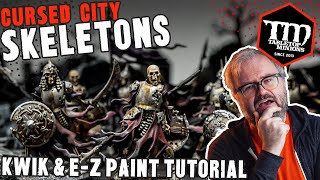
TableTop Minions approaches the set primarily as a painting project. The channel's host praised the build as quick and easy, with most of the models assembling from two or three pieces, and singled out the sculpts for their flowing, tattered cloth. Drive Thru Games echoes that enthusiasm for the figures, describing a genuinely enjoyable painting session and calling the miniatures amazing. The same reviewer, however, did not think the game mechanics lived up to the quality of the models or of earlier Warhammer Quest releases, and said plainly that the reviewer did not enjoy the game and no longer owns the box.
Watch It Played approaches the title from the news side. Its host introduced Cursed City as the newest entry in the cooperative Warhammer Quest line, moving the series' system into the fantasy setting of Age of Sigmar, with heroes fighting through the city of Orphan Khan against an undead tyrant. The host admitted that miniature-heavy games are usually intimidating, yet said the host was keenly interested in this one. That segment did not offer a verdict on the mechanics, so the disagreement that does exist is mostly between the painting-focused reviewers, who admire the figures, and the reviewer who found the play experience wanting.
Availability also shaped early discussion. TableTop Minions noted that the box had sold out quickly on the Games Workshop website and that it was unclear whether more stock would arrive, advising readers to check local stores. The reprint plans mentioned by Drive Thru Games suggest that access may improve over time.
Core Mechanics That Define Warhammer Quest: Cursed City
Start-of-Turn Dice Rolling
Cursed City runs on a dice system: at the start of a turn, each hero rolls a set of dice and converts the results into the actions available that round, from moving and attacking to activating special abilities. Watch It Played frames this as the backbone of the cooperative rhythm that carries over from the earlier Warhammer Quest titles, even as it points out that the setting and roster are new. Drive Thru Games, who spent the most hands-on time with the box, is the reviewer closest to this system directly, and it is that same reviewer who argues the mechanics underneath the dice rolls do not match the quality of the miniatures sitting on top of them.
Campaign Missions and the Narrative Arc
Cursed City is structured as a campaign in which a group of adventurers works through a series of missions, learning more about the curse afflicting the city and about their nemesis with each one. That nemesis is Radukar the Wolf, who was infused with dark power during the Shyish Necroquake. Watch It Played highlighted this same premise when it described the set as a fantasy adaptation of the series' system, which points to the campaign arc as the element that most distinguishes the title from the older Warhammer Quest games that the painting reviewer compared it against.
The Warhammer Quest: Cursed City Experience
A Dark, Gothic Undead Atmosphere
The atmosphere is where reviewers most consistently find the game's character. Drive Thru Games describes a cast of undead that includes vampires, undead orcs, zombies carrying gravestones, and a gravedigger with a distinctly Dark Souls and Bloodborne feel. Watch It Played leaned into the same tone, quoting the tagline that dares players to enter the cursed city. The overall impression is of a grim, decaying city in which every sculpt suggests a story, and the setting is strong enough to carry the premise even where the reviewers are less enthusiastic about the rules.
The Satisfaction of a Hands-On Hobby Project
Much of the experience that reviewers describe comes from the miniatures themselves. TableTop Minions treats the set as a satisfying, methodical project, walking through a black-and-white xenotal highlight that lets the cloth catch light while the shadowed crevices stay dark. The host notes that the models reward slow, careful technique, such as building up dry-brushed grey in small strokes on the tattered cloth. Drive Thru Games similarly describes the painting as a fun and rewarding process, suggesting that the emotional payoff of Cursed City currently rests as much on the hobby as on the tabletop.
What Makes Warhammer Quest: Cursed City Stand Out
Sculpt Quality and Detail
The most consistent praise concerns the sculpts. TableTop Minions argues that the dramatic focal point of the skeletons is the cloth rather than the bone, and that the tattered battle dress is what makes these figures the most visually interesting part of the set. Drive Thru Games reaches a similar conclusion from a different angle, calling the miniatures amazing even while criticizing the rules. For reviewers, the sculpts are the reason the box is worth owning, and they are the element most likely to outlast any dissatisfaction with the game.
A Setting That Invites Players In
Watch It Played singled out the setting as the factor that made the game appealing despite the host's usual reluctance toward miniature-heavy titles. The combination of an undead tyrant, a city rendered in Age of Sigmar style, and a campaign that unfolds across missions gives the game a clear narrative hook. Reviewers who approach the title as a story-driven experience tend to find that hook more persuasive than any single rule.
Potential Drawbacks
Mechanics That Fall Short of the Presentation
The most pointed criticism comes from Drive Thru Games, which argues that the rules do not match the production quality of the miniatures or the standard set by earlier Warhammer Quest releases. The reviewer did not enjoy the game and sold the box, though remained hopeful that expansions might address some of the shortcomings. Readers who value the mechanics above the models should weigh this perspective carefully, since it is the most direct negative assessment in the discussion.
Limited Initial Availability
TableTop Minions observed that Cursed City sold out quickly on the Games Workshop website and that restocking was uncertain at the time of recording. Local stores were still carrying stock in some areas, which the host recommended as the first place to look. For a cooperative game whose appeal depends in part on its miniatures, scarcity at launch can make the experience harder to access, although the planned reprint offers some relief for players who missed the first run.
If You Enjoy Warhammer Quest: Cursed City
Players who enjoy the dark, cloth-heavy fantasy of Cursed City and want a skirmish game with similarly characterful figures may find Malifaux a rewarding next step. TableTop Minions has used Malifaux models to demonstrate the same xenotal highlight technique, which makes the connection to the painting experience particularly direct.
Players who appreciate the campaign structure and cooperative play that Watch It Played described will find Silver Tower and Black Fortress a natural fit. Both are earlier cooperative titles in the Warhammer Quest line, and the news segment placed them directly before Cursed City in the series' progression. Players who enjoy the Cursed City narrative arc will find the same sense of progressing through a campaign in these predecessors.
What Reviewers Are Saying
"The drama in the sculpts is in the cloth, the kind of flowing, tattered sort of battle dress."
— TableTop Minions
"I actually had a really fun time painting this set. I just don't think the game mechanics really lived up to it, the quality of all the other Warhammer Quest games from the past. But the miniatures are amazing."
— Drive Thru Games
"Warhammer Quest Cursed City is a newest game in the series, and takes its system over to the more fantasy based Age of Sigmar, and it's all set in the city of Orphan Khan."
— Watch It Played