


Warlock of Firetop Mountain Deep Dive
What the Community Thinks About Warlock of Firetop Mountain
Warlock of Firetop Mountain holds a special place in board game culture as a bridge between classic gamebook adventure and tabletop play. Reviewers consistently praise it as an exemplary solo dungeon-crawling experience, particularly valued by players seeking a complete adventure that fits within a tight time window. The game represents a turning point in hobby gaming: an accessible entry into the Fighting Fantasy universe for those who want the gamebook experience translated into tabletop mechanics, yet also challenging and lethal enough to demand genuine skill and nerve.
Created by Steve Jackson and Ian Livingstone, Warlock of Firetop Mountain stands out among dungeon crawlers for its commitment to unforgiving gameplay. Reviewers emphasize that this is not a game designed to coddle players or provide second chances. Instead, it embraces the classic ethos of rapid character death and consequence, where a bad roll or poor decision can end your quest in minutes. This brutal honesty appeals to players who value tension over hand-holding and who appreciate games that make every choice matter.
Core Mechanics That Define Warlock of Firetop Mountain
Dice-Based Combat and Peril
The heart of Warlock of Firetop Mountain is its reliance on dice rolls to resolve encounters with no mercy. Combat is swift and lethal, with every roll representing genuine stakes. Reviewers note that you cannot rely on narrative comfort or fudged outcomes; the dice determine your fate, and the game honors those rolls absolutely. This creates a stark contrast to modern tabletop RPGs where a dungeon master might soften a deadly outcome. In Warlock, if you roll poorly, you die. The game does not second-guess this decision, which creates an intensity that shorter, more forgiving games cannot match.
Solo Dungeon Exploration and Navigation
The other pillar of the experience is navigating a themed dungeon environment filled with traps, monsters, and puzzles. You make choices at key decision points, and each path can lead to wildly different outcomes. The adventure is structured around exploration and discovery, with the dungeon map laid out to be referenced as you move through chambers and encounter new threats. This structure gives the game a tangible, spatial quality that elevates it beyond pure dice rolling. You are not just resolving encounters in a vacuum; you are genuinely exploring a hostile space.
The Warlock of Firetop Mountain Experience
Old-School Challenge and Lethality
Playing Warlock of Firetop Mountain means accepting that death will likely find you. Reviewers openly discuss how a player will not survive even 45 minutes without facing character death at least once. This is presented not as a flaw but as a core feature. The lethality creates genuine tension throughout each attempt. Every monster encounter, every trap, every decision could be your last. This high-stakes pressure transforms what could be a routine adventure into a memorable experience. Modern board gaming often emphasizes accessibility and encouraging player agency; Warlock instead trusts players to embrace challenge and consequences as features, not bugs.
Quick Adventure Experience for Busy Players
Reviewers repeatedly highlight that despite its difficulty, Warlock of Firetop Mountain can be completed in under an hour once a character is created. This makes it an ideal choice for players with limited time who still want a substantial adventure. You generate a character quickly, then plunge into the dungeon for a focused, intense experience. There is no campaign drag, no hours-long commitment. Instead, you get a complete arc of tension, exploration, and climax all within a narrow time window. This efficiency makes the game attractive to busy hobbyists and families where gaming windows are precious.
What Makes Warlock of Firetop Mountain Stand Out
Fighting Fantasy Legacy and Pedigree
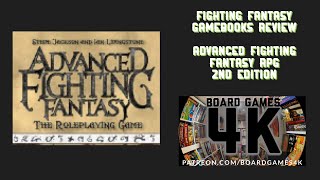
Warlock of Firetop Mountain is built on the legendary Fighting Fantasy gamebook series created by Steve Jackson and Ian Livingstone, authors who shaped multiple decades of tabletop gaming. The IP carries tremendous weight in gaming history, and reviews emphasize how revisiting this classic adventure through tabletop mechanics feels like honoring that legacy. The game benefits from sourcebooks full of Rust Nicholson artwork and carefully laid-out dungeon maps that make the experience feel premium and considered. Reviewers note that the advanced Fighting Fantasy tabletop reprints have been well-designed, with clear rule layouts and supporting materials that respect the original source material.
Uncompromising Mechanical Honesty
The game refuses to soften its difficulty with modern comforts like fudged rolls, safety nets, or catch-up mechanics. Reviewers explicitly contrast this with newer RPG editions where dungeon masters might soften deadly outcomes or where characters come equipped with plate mail and superpowers at level one. In Warlock, a first-level wizard might enter the dungeon with a single hit point and only a knife, and if bad luck strikes, that wizard dies. The game respects the players' ability to handle genuine challenge and random adversity. This creates a refreshing contrast to the theatrical, forgiving approach of many modern dungeon crawlers.
Potential Drawbacks
Brutal Difficulty and Sudden Character Death
The lethality that reviewers praise as a strength is explicitly a drawback for players who prefer forgiving mechanics. If you become frustrated by quick deaths, random bad luck eliminating hours of planning, or games that refuse to help you succeed, Warlock of Firetop Mountain will frustrate you. There is no difficulty slider, no story mode, no optional challenge. You accept the harshness or you play something else. Reviewers are unanimous that this is intentional design, not a flaw, but it remains a barrier to entry for many modern players accustomed to more accommodating design philosophies.
Limited Narrative Depth and Replayability Concerns
While Warlock of Firetop Mountain delivers a complete adventure, reviewers note that it is still fundamentally an adventure book translated to tabletop mechanics, not a narrative-rich campaign. The reading is minimal, the story beats are straightforward, and the focus remains on tactical survival rather than worldbuilding or character development. For players who prioritize deep narrative immersion, extensive lore, or complex interpersonal dynamics, the game may feel thin. Additionally, once you have completed the adventure once or twice, you will know the dungeon layout and key encounters, which diminishes surprise on subsequent playthroughs.
If You Enjoy Warlock of Firetop Mountain
Players drawn to Warlock of Firetop Mountain typically gravitate toward other punishing solo dungeon crawlers that do not coddle the player. Bag of Dungeons and Book of Dungeons, from Gunpowder Studios, offer similar quick-play dungeon crawling with high lethality. Dungeon Quest is another Games Workshop classic that shares the same aesthetic of brutal challenge and rapid death. For those interested in the broader Fighting Fantasy universe, the Sorcery series offers narrative depth alongside the same unforgiving mechanics. Players who appreciate old-school Dungeons and Dragons, particularly first-edition rules where a bad roll could kill you instantly, will find familiar DNA in Warlock of Firetop Mountain.
What Reviewers Are Saying
"You are going to breeze through this book and you are going to have your character, which doesn't take long to make, and you are going to go through this. There is some reading and it's an adventure book, but it is a crawl. And I'm telling you, you're not making it to 45 minutes without dying at least once."
— Rob's Tabletop World
"He's got a rust Nicholson artwork in here and it's all laid out really well."
— BoardGameBollocks
"You got a map of warlocks dungeon there."
— BoardGameBollocks