




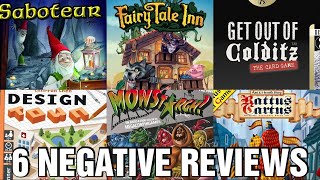









Saboteur Deep Dive
What the Community Thinks About Saboteur
Meeple Mountain introduces Saboteur as a 15-year staple of the US market, noting the title marks its 15th anniversary with this release, which the channel calls the first-ever board game version of a game that started as a card game. Players tend to discuss it in terms of its social tension rather than its card play, and the goal in both versions is the same: collect the most gold.
Opinion splits along one clear line. Players who enjoy suspicion, bluffing, and conversation at the table tend to rate Saboteur highly. Players who want more depth from the cards themselves are far less impressed, and the criticism concentrates on whether the card layer can carry the experience once the novelty of the hidden team wears off.
Core Mechanics That Define Saboteur
Hidden Roles and Social Deduction
In the board game version, players are placed on teams, and a saboteur on each team secretly works for the other side. Nobody announces who is loyal to whom. The central challenge is working out who the saboteur is while still pursuing the gold, which makes every table conversation part of the game itself.
Because the saboteur's identity stays hidden, suspicion builds throughout the session. Players must decide whom to trust, how to deflect accusations, and when to make their own claims about the people around them.
Path Building and Tunnels
The physical play centers on tunnels. Players build a path from a start space toward the mines, and each mine is guarded by a dragon. Saboteurs work to make the tunnels head in different directions, so connecting a route becomes an act of persuasion as much as an act of construction.
Blocking is the other half of the card play. Players can hand out cards that stop others from acting, which keeps every turn tied to the question of who can be trusted with a useful move.
The Saboteur Experience
Table Talk and Accusation
Saboteur is strongest in conversation. Each session gives players many chances to interact before the game ends, so table talk and card play run at the same time. Groups that enjoy bluffing and deflecting suspicion get the most from this overlap, and a well-matched table can turn a simple tunnel-building turn into a long argument.
The Build, Block, and Accuse Loop
The rhythm of the game is building, blocking, and accusing. Once a table recognizes that pattern, the game can start to feel familiar, and repeat sessions often unfold in similar ways. That repetition is one of the main points of criticism, discussed below.
What Makes Saboteur Stand Out
The Hidden Team as the Main Draw
The hidden team is what separates Saboteur from many other games. Loyalty is never announced, yet everyone is still working toward the same gold. That tension between cooperating and suspecting keeps the experience engaging for groups who want their games to involve social pressure as well as strategy.
A Long-Running Classic
Its reputation as a classic is part of its appeal. Meeple Mountain's framing of fifteen years of availability and a first-ever board game version gives the title a continuity that many party-style games lack, and it remains a reference point for players who value hidden-role design.
Potential Drawbacks
Shallow Gameplay Beneath the Talk
The most consistent criticism is that the card layer does not match the social layer. Some players find the actual gameplay shallow, even when the suspicion and conversation are enjoyable. A session can end before the group is clear about what went wrong, which leaves the experience feeling smaller than the conversation that surrounded it.
Blocking Cards Frustrate Players
The sharpest complaint concerns handing out cards that stop other players from doing anything. Players who dislike that style of play argue that it removes options without offering anything interesting in return, and that the game tends to repeat the same pattern from session to session. Some argue the format works better in a party setting than in a more serious game night.
If You Enjoy Saboteur
Saboteur suits groups that prefer bluffing, suspicion, and talking through accusations over tight card optimization. The same Chairman of the Board session that reviewed Saboteur also covered Subterra, a cooperative mining game built on a Pandemic-style action system, and the pairing is useful precisely because the two games pull in opposite directions: Subterra puts everyone openly on the same side, while Saboteur's appeal is that nobody can be sure who actually is. Readers who want the suspicion and accusation without Saboteur's card-blocking can look for other hidden-role, social-deduction games built around table talk; readers who found the blocking cards more frustrating than fun, per Chairman of the Board's complaint, are better served by a fully cooperative game like Subterra instead.
What Reviewers Are Saying
"actually get to play on teams and you have a saboteur on your team you don't know who that saboteur is who's actively helping the other team"
— Meeple Mountain
"has some horrible take that you're just giving cards out to other players meaning they can't do anything which i find not fun at all"
— Chairman of the Board
"the actual gameplay just felt a little shallow to me"
— All You Can Board