







The Number Deep Dive
What the Community Thinks About The Number
The Number is a quirky, polarizing speed game that divides players into enthusiasts and skeptics. Reviewers praise its fast pace, social tension, and accessible rules that belie surprising depth. Yet it is profoundly unconventional: it feels as much like a psychological duel as a traditional board game. Some describe it with the affection reserved for hidden gems; others note its polarizing nature candidly, acknowledging that not every player will embrace its blend of luck, bidding risk, and memory warfare. What unites these perspectives is agreement that The Number delivers an intense, quick experience that feels unlike anything else at the table.
Core Mechanics That Define The Number
Secret Number Bidding and Digit Elimination
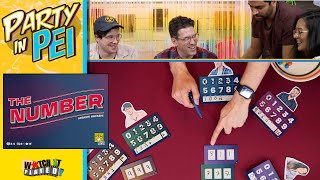
The heart of The Number is deceptively simple: each player secretly writes a three-digit number (0–999) and then reveals it simultaneously with all other players. The numbers are arranged from highest to lowest. The game then scans downward from the top number, checking each digit against all digits in every number below it. If any digit in a number appears anywhere in the cards beneath it, that number is eliminated and scores nothing for the round. Only numbers that survive this digit-elimination gauntlet earn points based on the value of their top digit. The highest surviving unique number also claims a bonus, which escalates with each subsequent round. This creates a tension between bidding high to score big and bidding low to avoid sharing digits with opponents' cards.
Escalating Penalties and End-Game Scoring
The game lasts five rounds per session, with the bonus increasing each turn: +2, then +3, +4, +6, and finally a multiplier of 2x on the fifth and final round. Numbers used successfully in a round are crossed off a player's reference sheet, permanently unavailable for future rounds. This creates a resource-management puzzle: bid too recklessly early, and you exhaust your safe numbers before the high-value final round. The dwindling pool of available digits, combined with the growing bonuses, forces players into increasingly desperate calculation. The last round's 2x multiplier adds a cruel twist. Timing matters as much as card sense. Players must balance the temptation to save their highest numbers for the 2x multiplier against the reality that every other player is thinking the same way.
The Number Experience
Tension Through Hidden Information and Risk
Every round of The Number crackles with anticipation. Players sit in silence, privately writing a number, knowing they are being watched (or rather, that watchers are crafting counter-strategies against their likely plays). When cards flip, the elimination phase unfolds like a lottery: "Did anyone guess what I was thinking? Did my safe number hit someone else's card?" A player can spend a round perfectly safe, only to be eliminated by a single duplicate digit two positions down. Reviewers describe the sensation vividly: the knowledge that one wrong prediction can wipe you out, the scramble to find a number that no one else might have considered. There is no hiding. Success and failure are absolute and immediate.
Social Negotiation Through Deduction
Though The Number has no explicit negotiation phase, it is fundamentally a game of reading opponents. Reviewers note the social layer: "eyeballing each other," trying to decode what number will come next based on what has been crossed off, what bonuses are ascending, and what risks different players tend to take. Some players lean conservative and low; others hunt for the high-value surprise. The game punishes predictability. If the table figures out that you always shy low, they can hunt that digit range and eliminate you. Conversely, if you develop a reputation for audacious bids, savvy opponents might avoid those same digits to avoid duplicate catastrophe. Over multiple rounds, a metagame emerges: players begin adjusting not just their card choices but their perceived strategies in response to what they have learned about opponents' patterns.
What Makes The Number Stand Out
A Wildly Unconventional Secret-Number Mechanic
The Number's core appeal lies in its structural uniqueness. The simultaneous reveal and digit-scanning elimination creates a resolution phase unlike almost any other game. It is not a majority-rules system, not a set-collection engine, not a worker-placement puzzle. Instead, it is a pure bluffing and deduction race where the interaction between cards is binary and unforgiving. A player who writes 777 and plays it safe has made a bet: that no one else writes a number containing a 7. It is an elegant constraint that forces players into difficult decisions. Reviewers describe it as "quirky," and the quirkiness is precisely what draws many players in. For those who love psychological games and memory-based deduction, The Number delivers an experience that feels fresh.
Blazingly Fast, Compact Design
The Number plays in roughly 13–14 minutes, depending on player speed. It requires no board, no pieces, just paper or dry-erase mats and a few reference cards. This compactness is deceptive: despite its small footprint and quick play time, the game generates surprising tension and memorable moments. Reviewers note that The Number works as a palate cleanser between heavier games or as a opener to a game night. It draws players in quickly without demanding deep focus for setup or teaching. Yet for those willing to engage with its psychology, it offers more replay value than its slim ruleset suggests. The fast pace means failure stings less and reinvitation to play again feels natural, which is crucial for a game that thrives on repeated play as players refine their intuition for what numbers opponents favor.
Potential Drawbacks
High Variance and Perceived Luck
Reviewers acknowledge that The Number is controversial precisely because skill and luck are thoroughly intertwined. One reviewer noted the game is "somewhat controversial because it has that kind of mind that mind tarnish where you know people say is this really a game" and conceded "there is a lot of luck involved." The elimination mechanic can feel arbitrary: a carefully chosen "safe" number can be obliterated by a digit collision no one predicted. Over a single round, luck plays a substantial role. However, reviewers who have played multiple rounds note that skill emerges through pattern recognition and psychological profiling of opponents. This duality, luck in individual rounds, skill in the meta across an entire game, is precisely what makes The Number polarizing. Players who love pure strategy may dismiss it as too random; those who enjoy social deduction and memory games tend to embrace the uncertainty as part of the appeal.
Polarizing Design and Not for Everyone
The Number's unusual blend of mechanics, high-risk bidding, and social pressure creates a game that genuinely does not work for all tables. Reviewers describe it as "very polarizing," and some players find the constant threat of total elimination (scoring zero in a round if you are the highest bidder and your number gets eliminated) disheartening or overly harsh. The fact that skilled play is subtle, choosing between lowball strategies and high-risk bets, reading opponents' patterns, means new players often feel they are losing to luck rather than recognizing the deeper strategic layer. Additionally, the game demands memory: players must track which digits have been used, which numbers each opponent tends to favor, and what bonuses await in upcoming rounds. This cognitive load, combined with the social pressure of simultaneous reveals, can be taxing for casual players. Those who do not enjoy bluffing, memory games, or games where failure is swift and public may find The Number exhausting rather than fun.
If You Enjoy The Number
Reviewers have drawn comparisons to High Score, a classic bidding and push-your-luck game that shares The Number's tension and risk-reward balance. Like High Score, The Number forces players to wager on outcomes they do not fully control and to manage the escalating pressure of each successive round. Both games thrive on players reading opponents, adjusting strategy based on past outcomes, and accepting that one wrong call can eliminate you from contention. If you love the bidding races of Liar's Dice or the social deduction of Love Letter, The Number's mechanics will feel familiar yet distinct. Its compact, fast-moving design makes it an excellent fit for game nights that demand quick, high-stakes entertainment.
What Reviewers Are Saying
"I had a blast playing this most recent game, and I taught it to my girlfriend for the first time, as well as playing with two other regular people in my gaming group, and four player was just so much fun, and I have no hesitations recommending The Number if you like the kind of worky little games that you can kind of turn your brain off but not completely, and very fast."
— Chairman of the Board
"Very polarizing, kind of blind bidding style game, where you have a fixed amount of numbers you can use. If you bid too high and there's a duplicate number below you, then you are wiped out of the equation and you don't score any points. Really cool. Definitely a quirky game."
— Chairman of the Board
"There was a little bit of, like, oh, I see what you're doing, I'm gonna try to avoid this, oh, you didn't do that, oh, you went even lower, oh, like, we were, like, kind of eyeballing each other, will we be safe. There's a little bit of social deduction happening."
— Watch It Played