



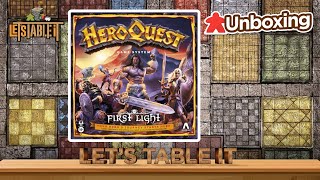

HeroQuest: First Light Deep Dive
What the Community Thinks About HeroQuest: First Light
HeroQuest: First Light has struck a chord across the board game community as a gateway into dungeon-crawling adventure. Reviewers consistently praise it as an accessible entry point into a storied franchise, one that captures the spirit of the original 1989 game while removing barriers to play. The tone is largely celebratory, with reviewers highlighting how the game opens RPG-style gaming to players who might otherwise find the complexity or price of the larger HeroQuest base game intimidating.
Where perspectives diverge slightly is on what makes First Light worthwhile for returning players. Some see the new quest line and double-sided board as genuinely fresh content that justifies the purchase; others view it primarily as a tool for introducing new players to the system without redundancy. But even here, the consensus is positive. Reviewers like kovray emphasize that the game delivers substantial value for its $50 price point, while those who have played the solo experience note that the free companion app genuinely improves the system, making hands-off play possible where it wasn't before. There is little disagreement that First Light succeeds at its stated purpose: making HeroQuest playable by anyone, regardless of budget or appetite for complexity.
Core Mechanics That Define HeroQuest: First Light
Dungeon Crawl with Asymmetric Teams
HeroQuest: First Light is built on the dungeon crawl loop, but with a crucial twist: one player takes on the role of Zargon, the evil sorcerer, controlling monsters and orchestrating the environment, while the others play as heroes cooperating to overcome quests. This one-versus-many structure gives the game its narrative heart. Heroes move through rooms and corridors, fight monsters, search for treasure, disarm traps, and gradually acquire better equipment and weapons as they progress through quests. Each quest is structured as a distinct scenario with its own objectives, allowing the designer to pace difficulty and introduce new rules gradually. Reviewers note that this structure sits somewhere between a pure board game and a tabletop RPG, offering the storytelling potential of role-playing without requiring a player to improvise.
The beauty of this design is that all players can win or lose together as a team. There is no hidden scoring or betrayal element; instead, the challenge comes from collective resource management and coordinated decision-making under the pressure of Zargon's threats. Board Game Brody emphasizes that heroes must work together to defeat Zargon and his forces, and that victory is entirely shared.
Dice Rolling and Roll-to-Move Mechanics
Combat and movement in HeroQuest: First Light rely on dice rolls, a mechanic that Meeple University acknowledges is anything but modern in its design philosophy. Players roll to determine how far their heroes can move and which dice they roll for attacks and defense. This injection of randomness means that planning is limited, but tension is high: every roll matters, and outcomes are never guaranteed. The mechanic is deliberately simple, familiar to anyone who has played roll-to-move games or traditional board games like Monopoly, making the entry curve gentle for newcomers. Reviewers accept this as a stylistic choice that fits the game's mission as a family-accessible introduction to adventure gaming, even as they acknowledge that players steeped in modern tactical games may find the lack of meaningful movement choices limiting.
The HeroQuest: First Light Experience
Lighthearted, Breezy Play
HeroQuest: First Light plays in roughly 60 minutes per session, according to kovray, and the pacing reflects its accessibility mandate. Turns move quickly, the ruleset is forgiving, and downtime is minimal. Reviewers describe the experience as fun and low-stakes; losing does not feel punitive because the game is designed primarily for enjoyment of the shared narrative rather than competitive victory. Meeple University frames it as family-level complexity, noting that a parent can serve as the game master without needing to improvise rules or manage complex mechanical interactions. The tone is lighthearted throughout, inviting casual players and children to participate without fear of being overwhelmed.
Nostalgic Gateway to Adventure
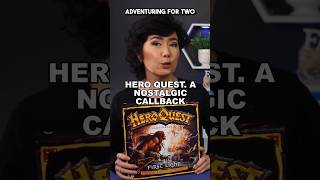
For veteran players and newcomers alike, HeroQuest: First Light functions as a bridge between classic board gaming and role-playing. Meeple University expresses nostalgia for the original 1989 game, noting that First Light carries the same spirit while modernizing components and rules. For those new to the genre, kovray observes that the game fills a gap in the market, serving as a perfect introduction to dungeon-crawling adventure without the learning curve of a full RPG or the price tag of the premium HeroQuest base set. The game promises exploration, combat, treasure, and narrative progression, all within a single night of play. It evokes a sense of embarking on an epic quest without requiring any prior experience with the genre.
What Makes HeroQuest: First Light Stand Out
The Free Companion App and Solo Play
Perhaps the most significant modern addition is the free companion app that serves as Zargon when no human player wants the role. kovray highlights this feature as transformative: the app guides players step by step through quests, can run the game entirely solo for a single player, and enables group play without anyone being forced into the game master seat. Drive-Through Review delves deeper, noting that the app has been updated since the original HeroQuest release with improvements like landscape mode for tablets and difficulty toggles that let players tune the challenge. While Drive-Through Review observes that solo play can make the experience feel app-centric, the feature nevertheless expands accessibility enormously. Players can experience the game on their own schedule without needing to coordinate a full table.
New Quests and Modular Content
First Light ships with 10 entirely new quests, completely distinct from both the original HeroQuest and the 2021 re-release. Drive-Through Review praises these quests for including clever twists and interesting puzzle design that feel fresh even to veteran players. Equally important is the modular design: the new quests and the new double-sided board can be mixed and matched with the larger HeroQuest base set, meaning First Light functions as both a standalone entry point and an expansion. Positively Board Gaming emphasizes this flexibility, noting that players can use First Light's quests with the base game's miniatures, or leverage the simplified ruleset with the larger game's components. This modularity is rare in mass-market games and speaks to thoughtful product design.
Potential Drawbacks
Cardboard Over Plastic
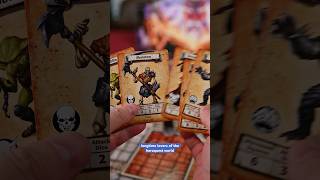
To keep the price down to $50, HeroQuest: First Light replaces the 3D plastic furniture and miniatures of the larger base set with cardboard standees and cardboard furniture. Drive-Through Review acknowledges this trade-off explicitly: the plastic 3D elements are iconic to HeroQuest and contribute meaningfully to the visual immersion of exploring a dungeon. Flat cardboard furniture, while perfectly functional, lacks that pop-off-the-board tactility. The plastic doors in First Light are also solid black rather than hollow, making it difficult to see what monsters or treasures might be hidden behind them. These compromises are understandable given the price point, but they do represent a tangible loss of the physical experience that longtime fans prize.
Solo App Pulls Attention from the Board
Drive-Through Review finds that when playing solo with the app as Zargon, the app becomes the focal point of the experience. Because a solo player is controlling all four heroes, they spend much of their time in the app interface managing movement, trap triggers, and combat outcomes, rather than engaging with the physical board. This can feel abstract compared to the visceral experience of moving miniatures through a dungeon and discovering what lies around each corner. Drive-Through Review notes this matters less in group play where one person manages the app while others focus on the board, but for solo adventurers, the app's demands can be a drawback. That said, the reviewer still enjoyed the quests themselves and found the experience worthwhile despite this friction.
If You Enjoy HeroQuest: First Light
Players attracted to HeroQuest: First Light's cooperative dungeon crawling will find similar satisfaction in the original HeroQuest base set, which offers the same quest structure and hero roles but with premium components and deeper tactical complexity. For those who love the system but want lighter play, the mechanics align with classic games like Gloomhaven, though reviewers note that Gloomhaven demands significantly more tactical acumen and narrative depth. The game also appeals to anyone seeking an accessible gateway into role-playing: it provides the structure and tools of a DM-guided adventure without requiring a player to prepare or improvise. Fans of cooperative games in general, especially those that emphasize shared storytelling over competitive victory, will appreciate the collaborative spirit and the shared win-or-lose outcome.
What Reviewers Are Saying
"HeroQuest First Light packs a ton of adventure inside of this box. And I can't wait to see what the next Quest has in store."
— kovray
"You've got simple mechanisms that are familiar to a lot of people and you can develop quests, go through a story, and ultimately have a lot of fun with it."
— Meeple University
"I really enjoyed it. I think the quests themselves that I've seen are are really fun. I think there's a couple of nice little twists in there that I've seen. I haven't gotten all the way through the quest book yet."
— Drive-Through Review