


Kradia: Wild Hunt Festival Deep Dive
What the Community Thinks About Kradia: Wild Hunt Festival
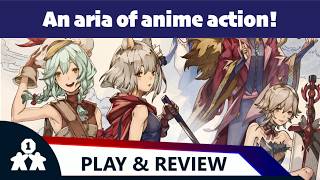
Kradia: Wild Hunt Festival represents a refreshed take on a beloved cooperative boss-battler that reviewers have rediscovered with genuine enthusiasm. Across the board, the community praises this JRPG-inspired adventure for nailing the feel of video game combat in tabletop form. One Stop Co-op Shop's recent deep dives highlight how the new expansions have reinvigorated the system, while reviewers consistently note that they initially underestimated the game's staying power, only to find themselves kicking themselves for ever selling it off. The consensus leans toward appreciation for its refined mechanics and new adventure modes, though some note that the experience scales best with smaller player counts.
Core Mechanics That Define Kradia: Wild Hunt Festival
Boss Life and Activation System
The centerpiece of Kradia's gameplay is its unique boss life and activation mechanic. As players deal damage to a boss, they directly influence the boss's activation and behavior, carefully choosing how much damage to inflict each turn becomes a genuine tactical decision. Rather than the boss simply gaining health, the amount of life remaining determines which special powers and attack patterns it will use. This inverted pressure, where damage dealt shapes what the boss does next, creates a distinctive tension absent from many boss battlers. The system rewards planning and coordination among the party.
Character Roles and Party Composition
Each character in Kradia fills a distinct role within the party structure. Players choose from attackers, healers, defenders, and other specialized roles, each with unique combat statistics, strengths, weaknesses, and class-specific abilities. As characters level up, they unlock new powers tied to their role and philosophy, turning what might seem like a simple turn structure into a layered system where the synergy between party members matters. The new expansions like Arya of Light and Shadows add characters such as Rui and Haruno with special mechanics that interact with story bosses in memorable ways, deepening the sense that team composition is not cosmetic but mechanically crucial.
The Kradia: Wild Hunt Festival Experience
A Faithful JRPG Translation
Reviewers consistently describe Kradia as succeeding where many games fail: it captures the essence of JRPG combat on the tabletop. The pacing, the way abilities chain together, the importance of healing and defensive positioning, and the sense of progression as characters grow stronger all evoke classic video game RPGs. This is not just thematic flavor, the mechanics actively reinforce that experience, making each battle feel like you are controlling a party of adventurers with distinct personalities and powers.
Exploration and Narrative Depth
Beyond boss encounters, the recent versions include an adventure mode where players actually move around a map and engage with narrative elements. Reviewers note this mode feels genuinely exciting and adds variety to what could otherwise feel like a battle-focused slog. The story elements are present without overwhelming the core game, they enhance immersion without becoming burden. Expansions like the Dankai Survey Brigade and story-driven boss sequences create a campaign-like progression that draws players deeper into the Kradia world.
What Makes Kradia: Wild Hunt Festival Stand Out
Elegant Design That Rewards Strategy
Despite turn-by-turn simplicity for individual heroes, Kradia achieves surprising depth through party composition and tactical decision-making. Each decision, how much damage to deal, which abilities to use, who acts next, shapes the encounter. The game doesn't hide complexity behind fiddly rules; it emerges naturally from the boss activation system and character interactions. This makes it accessible for new players while rewarding those who invest in learning the matchups and boss patterns.
Quality of Life and Accessibility
The re-release has incorporated meaningful improvements to playability that earlier versions lacked. These enhancements suggest the designer listened to player feedback and genuinely refined the system rather than simply republishing the original. Combined with the new adventure mode, character expansions, and solo-play support, Kradia has evolved into a richer experience. Reviewers appreciate that the game remains inviting for solo play and small groups without sacrificing the cooperative magic.
Potential Drawbacks
Dice Luck and Randomness
Combat resolution relies on dice rolling to determine both hero attacks and boss actions, which can occasionally swing outcomes in frustrating directions. A particularly unlucky streak can make some boss matchups feel unwinnable, especially if a party composition happens to clash poorly with a specific boss's mechanics. While quick playtime lets you reset and try again, the swingy nature isn't for everyone.
Turn Economy at Higher Player Counts
With three or four players, each individual hero's turn becomes quite straightforward and short. Reviewers note the game shines brightest with one or two players, where tactical variety and personal impact feel highest. Larger groups can feel more passive, since each player spends more time waiting and less time making impactful decisions on their own turn.
If You Enjoy Kradia: Wild Hunt Festival
Players who love Kradia often also enjoy other boss battlers that emphasize party composition and tactical coordination, such as Encounter: Shattered Waste and Boss Fighters QR. Games like Final Fantasy (the video game series it draws from) appeal to the same cooperative resource-management instincts. For those seeking similar adventure-meets-combat experiences, Madara and Seventh Inning Stretch offer different spins on cooperative challenge. The mechanics also echo system-driven games like Quorum that reward careful planning and synergy.
What Reviewers Are Saying
it is so much fun and the new stuff is amazing and they've made some upgrades to the playability of the system and all kinds of stuff. Great for solo play. Uh just an awesome JRPG inspired boss battler in general.
— One Stop Co-op Shop
the new mode where you're actually like adventuring and moving around a map, that's just awesome. And they also made some really good quality of life changes to the core game. And I just forgot what a good boss battle this is and what a good like representation of a JRPG combat system this is.
— One Stop Co-op Shop
You have to really carefully decide how much you want to damage the enemy cuz it's going to directly determine what their likelihood of certain attacks is. And also in a JRPG way, the build of your party is super impactful. Trying to pick healers and tanks and all that kind of stuff is great.
— One Stop Co-op Shop