







The Mind: Soulmates Deep Dive
What the Community Thinks About The Mind: Soulmates
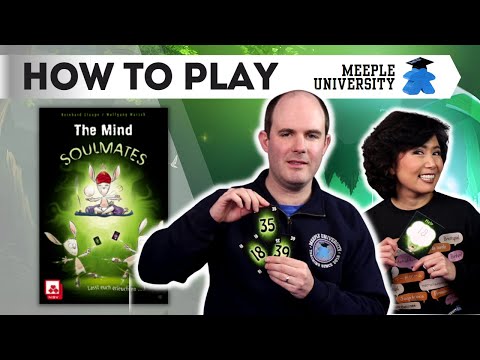
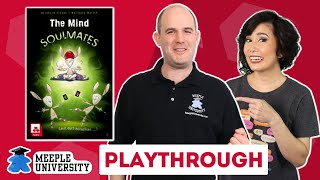
The Mind: Soulmates has surprised reviewers with how dramatically it transforms the original Mind formula through a single, elegant mechanic. Rather than feeling like yet another entry in an increasingly familiar series, Soulmates stands as its own distinct experience. The consensus among reviewers is clear: this is not merely the Mind with an extra rule layered on top. Instead, it represents a fundamental shift in how cooperative play feels. Meeple University reviewers found themselves genuinely excited by the design, calling it their favorite of the three Mind games. BoardGameCo's Alex acknowledged being impressed by what the designers accomplished, even while choosing to prefer the original. The universal agreement centers on one insight: the Seer mechanic transforms the game from a test of synchronicity into a deduction puzzle, and that transformation is far more significant than the rulebook suggests on first read.
Core Mechanics That Define The Mind: Soulmates
Face-Down Cooperative Card Sequencing
The foundation of The Mind: Soulmates is stripped down compared to its predecessors. Players hold a smaller deck of numbered cards ranging from 1 to 50, rather than the original's 1-100 range. The critical constraint: all cards are played face down simultaneously. There is no turn order, no communication whatsoever allowed. Players simply place their cards into a center pile at the moment they believe it is correct to do so, attempting to achieve perfect ascending sequence. When all players have played their cards, only then does the Seer check whether the sequence was correct. If not, the team loses a life and reshuffles those same cards to try again. Designer Wolfgang Warsch, alongside co-designer Reinhard Staupe, has compressed the decision space of cooperative play into its essence: the only tool players have is their own patience, timing, and ability to read table context.
The Seer's Limited But Powerful Information
The twist that makes Soulmates fundamentally different from its siblings is the Seer role. One player, rotating clockwise each level, receives advance knowledge. At the start of each level, the Seer secretly views a subset of the cards in play (the number decreases as levels progress). On a wipeable help board, the Seer writes down exactly one number per clue (with later levels granting more clues). This single piece of information is the team's only lifeline. Reviewers noted that choosing which number to reveal demands real strategy. Do you write the highest card you see, to signal someone to wait? The lowest, to anchor expectations? A number in the middle? As Meeple University discussed, the Seer cannot simply show everyone what they saw; they must think like their teammates to encode a hint that will shape behavior without direct communication. Because the Seer sees all cards eventually (after the first failure), they accumulate perfect knowledge over retries, creating a cooperative puzzle where the team gradually gathers information and must use deduction to solve the sequence.
The The Mind: Soulmates Experience
Tension and Watched-Time Decision-Making
Reviewers described Soulmates as genuinely tense. Unlike the original Mind's emphasis on reading how long other players wait before playing, Soulmates layers in observation of who plays quickly versus who pauses. This timing data becomes inference material. When a player hesitates before placing a face-down card, does that indicate a high card or uncertainty about card location? Reviewers found this created a mode of play that is simultaneously silent and deeply communicative through body language. The game establishes itself as a travel-friendly, compact experience that can play through twelve escalating levels in about twenty minutes, but the focus and intensity pack far more weight than the playtime suggests. Meeple University remarked that what appeared as a small mechanic change actually came as a complete revelation when played, transforming every failed level into a fascinating puzzle rather than a frustrating reset.
Progressive Deduction and Collaborative Problem-Solving
The second key vibe of Soulmates is how failure becomes data. After each unsuccessful attempt, the Seer reveals one more card to the team. Reviewers emphasized that this creates a game where every retry feels productive. You are not simply playing the same cards; you are accumulating information about what cards exist in the current set. As you play the same level repeatedly, memories form: reviewers noted which card locations became apparent when two players played rapidly in succession (they must have low-value cards), or when someone waited a long time (they likely held a mid-to-high card or were uncertain about their neighbors' holdings). This transforms Soulmates into something closer to The Crew, a game also based on cooperative deduction, rather than the original Mind's gut-check synchronicity test. Reviewers found this shift genuinely rewarding. The game signals that thinking together, even wordlessly, is its core appeal.
What Makes The Mind: Soulmates Stand Out
A Mechanic That Pays Off Its Own Premise
Reviewers consistently noted their surprise that a single rule change could remake the entire game. The Seer mechanic is introduced on the back of the rulebook almost as an afterthought, but once played, it becomes the entire identity of the experience. Meeple University called it "mind-blowing" in a literal sense: reading the rulebook suggested only a minor twist, but playing revealed a completely different game. What makes this stand out is that the mechanic is not flashy or components-heavy. It is the addition of structure to silence. By formalizing the Seer role and limiting clues, the designers forced players to make hard choices about what information to share. This constraint breeds emergent gameplay: reviewers noted that there is no "correct" strategy for clue-giving. Different Seers gave different numbers for the same hand, and those differences rippled through the team's deductions in surprising ways.
Works Across Player Counts Without Losing Its Soul
Another standout element is how well Soulmates scales. Reviewers played it with two players (starting with one fewer life token), three players, four players, and even mentioned reaching level nine with a four-player group. The Seer role remains meaningful regardless of count; with fewer players, each person sees more cards because more cards go to other players. With more players, the Seer must contend with more simultaneous decision-makers and more chances for someone to play a card at the "wrong" time. Reviewers found the game works genuinely well across this range, maintaining tightness and tension. BoardGameCo's Alex noted that while they prefer the original Mind, they were genuinely impressed by the design consistency Soulmates achieved. The game does not lean on elaborate components or theme to land its mechanic; the design stands on pure mechanics.
Potential Drawbacks
Memory Demands at Higher Levels
The memory component becomes a real factor as levels progress. With twelve cards in level 12, the Seer sees only four in the first attempt. Remembering which exact four, and which numbers they held, becomes challenging on retry. Meeple University's Stella mentioned explicitly that by level 12, the memory demand becomes substantial enough to affect play. This is not a flaw so much as a consequence of the design: part of the game's elegance is that information arrives gradually. But reviewers noted that players who struggle with working memory may find late levels taxing, not because the mechanics are unfair but because the cognitive load is real. Unlike the original Mind, which relies on reading others, Soulmates requires players to hold numbers in mind. Some reviewers suggested this makes it feel less like a pure party game and more like a dedicated puzzle.
Not an Automatic Upgrade Over the Original
BoardGameCo's Alex captured this clearly: despite finding Soulmates impressive, they would rather reach for the original Mind in many contexts. The original is faster to teach, requires no memory, and focuses entirely on reading player psychology. Soulmates demands more cognitive effort and setup. Some playgroups may prefer the simplicity of its sibling, especially in casual play settings. Reviewers noted that Soulmates is best when played with intention, sitting down for a full campaign through the twelve levels. Pop-it-out for a quick filler, and it may not deliver the magic that impressed reviewers during extended play. Meeple University noted that the game shines when you commit to seeing how your team evolves in solving it together, rather than as a standalone experience.
If You Enjoy The Mind: Soulmates
Players drawn to The Mind: Soulmates's puzzle-deduction angle will find similar satisfaction in The Crew, which shares the cooperative, silent-communication core but builds a campaign of narrative challenges. Those who value the scaled difficulty progression and "failure as information" model should explore other games by designer Wolfgang Warsch, whose philosophy favors elegant mechanisms that reveal themselves through play. For fans of quick cooperative games with real mental engagement, The Crew: Mission Deep Sea extends similar principles into a deeper experience. The original Mind remains the natural comparison point: choose The Mind for reading other players, or Soulmates for collaborative deduction. Both are valid. The Mind: Extreme, the middle entry in the series, feels somewhat redundant after Soulmates; reviewers agree the Seer role transformation makes Extreme's face-down twist feel less innovative by comparison.
What Reviewers Are Saying
"I also thoroughly enjoyed this. I thought it was such a huge improvement on the mind, the original mind, because it took it from you, it took it from a limited communication completely simple, it took it from a completely simple party game that was kind of, you know, it came and went and it filled the gap, and it took it, turned it into something which had that crew sort of feel to it."
— Meeple University
"I really like it, and I think it is, what was a real surprise to me was how different a game it was. You know, when I first read the rules for this, I flicked through them, it's like this is just the mine but with someone who's seen things, it's like it's just made the Mind easier. I'd kind of forgotten about the face up versus face down things, that had been a while since I played the mind. Then when you were at the rules, yeah, so I kind of went into it not really expecting very much, and it was a real revelation as we played through this game, and we started trying to work out the ones that we failed at. It was really fascinating trying to figure out why people were giving certain clues and what bits of information they were getting."
— Meeple University
"The mind soulmates was a very fun version of the mind. Ultimately, I'd rather play the mind. I was impressed with what the mind soulmates did. Like I was impressed at how they able to take the mind and make it different and add this kind of seer element to it. But I while I enjoyed it, I'd rather just play the mind."
— BoardGameCo