
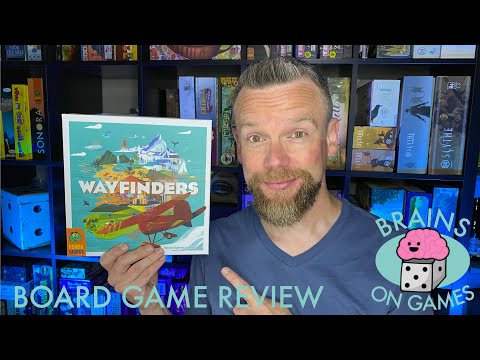








Wayfinders Deep Dive
What the Community Thinks About Wayfinders
Wayfinders draws divergent reactions from the board gaming community, with reviewers appreciating its innovative mechanics but divided on its execution. Board game educators and competitive players alike praise the game's modular design and spatial puzzle-solving, while some experienced gamers critique its abstract systems as disconnected from its whimsical island-hopping theme. Brains On Games offers the most enthusiastic endorsement, highlighting how the game combines multiple engaging systems into a cohesive experience. Apple University celebrates the strategic depth beneath its light complexity, while the Dice Tower's retrospective assessment suggests the game has not aged as memorably as intended. The consensus points to a game that succeeds mechanically but invites debate over whether its systems match its vibrant presentation.
Core Mechanics That Define Wayfinders
Worker Placement
Worker placement anchors Wayfinders' moment-to-moment decisions. Each turn, players choose between placing one of their five meeples into a column of the hanger board or collecting all their placed meeples at once. The columns fill randomly from a bag and differ in quantity by player count; players can place up to three workers in a single column. When a player collects their meeples, they harvest resources from that column from top to bottom, building a hand that fuels all subsequent movement and construction. This creates constant tension around timing: place all your workers to maximize your resource haul, or collect early to act before opponents deplete the resources you need. Brains On Games noted how this racing dynamic unfolds: the first player to build an airstrip claims full control, but later players have the unusual option of paying resources directly to the first builder rather than depositing resources into a shared pool. This twist transforms a traditional worker-placement consequence into a negotiation: spend your hard-won resources to fund an opponent's victory, or wait and hope for a better moment.
Modular Board
The modular board stands as Wayfinders' signature replayability engine. Of the 16 tiles in the box, only the central player-order tile is fixed; the remaining 15 are shuffled each game, creating a unique island landscape every session. Three island types anchor the design, each offering different effects when claimed: some award victory points, others grant resources or permanent abilities. Reviewers consistently praise this variety. Brains On Games highlighted how the puzzle changes with every layout, forcing players to adapt their route and placement strategy rather than memorizing one optimal path. Pair of Dice Paradise listed the modular design as a primary reason for including Wayfinders in their top Essen picks, noting that the shifting terrain ensures the game remains fresh across multiple plays. The constant landscape variation transforms each session into a different spatial problem, keeping the core worker-placement and resource systems from growing stale.
The Wayfinders Experience
Whimsical Race Under Pressure
Wayfinders establishes a distinct emotional rhythm: a lighthearted, colorful exploration framed as an urgent scramble for position. Players outfit plastic planes with resources and race to claim islands before opponents lock down key spaces or monopolize valuable resource types. Apple University captured this tone perfectly in describing the game as entering a "whimsical world" where crews outfit their planes with the right gear. The pacing creates constant low-stakes tension; while the game unfolds over just 35 to 45 minutes, every resource decision carries weight. A player cornering the supply of one resource type can either fund their own island development or force rivals to pay inflated costs to build. This creates cooperative moments alongside competitive ones, blurring the line between alliance and rivalry.
Spatial Satisfaction and Problem-Solving
The core satisfaction of Wayfinders lies in spatial planning and pattern completion. As the game progresses, the board gradually fills with colorful hangars, and players calculate which island clusters will yield bonus points. Brains On Games experienced this firsthand: the reviewer's son pursued one strategy by building squares of hangars to trigger area-scoring bonuses, while the son's girlfriend attempted to monopolize a single resource type, eventually falling behind because scattered spending prevented efficient island development. The game demands executive functioning skills across working memory, spatial reasoning, and long-term planning. Orchestrating five workers, managing a three-resource hand limit, tracking available movement, and predicting which islands opponents will target creates a mental puzzle that feels rewarding to solve, particularly for players who enjoy tangible spatial progress.
What Makes Wayfinders Stand Out
The Airstrip Payment Mechanic
Wayfinders inverts traditional worker-placement consequences with an unusual twist: when a second or later player builds an airstrip on an island already claimed, they must give resources directly to the first builder instead of returning them to the communal pool. This single rule generates much of the game's strategic richness and negotiation potential. Brains On Games emphasized this as the heart of the push-and-pull dynamic: "it does become interesting do you want to build an airstrip there and give the other player some of your resources instead of just dropping them in the bag." This mechanism rewards early claims while preserving options for followers. A player might intentionally overpay to build second, accepting the resource transfer as the cost of access to a high-value scoring location. The twist respects multiple valid strategies rather than locking the board behind whoever arrives first.
Modular Replayability Without Randomness Bloat
The modular board design achieves high replay value without introducing luck that undermines planning. Each game presents a genuinely different puzzle because the island positions, resource bonuses, and scoring efficiencies shift based on tile arrangement, yet players retain meaningful control over their strategies. Pair of Dice Paradise selected Wayfinders for their top Essen picks specifically for this balance: "wayfinders joins my list because it's modular design makes it seem highly replayable it's push your luck element hopefully retains a sense of risk in each and every game and it's estimated 25 to 45 minute playtime will hopefully keep it from becoming a drag." The push-your-luck element Chaz Marlar references appears through the resource collection and island-claiming gambles, yet both elements stem from strategic decisions rather than card flips or die rolls. This ensures the game feels different without feeling random.
Potential Drawbacks
Theme-Mechanics Disconnect
The game's biggest criticism arrives from players who expect thematic coherence between the island-hopping adventure framing and the underlying systems. Board Game Dad expressed this frustration explicitly: "the game has nothing to do with the theme it's just colorful pieces doing pretty abstract things with no mechanic that really pops out." The colorful planes, island illustrations, and exploration narrative suggest an adventure narrative, but the core loop remains worker placement and resource conversion with only superficial island flavor. For players who value thematic integration, the mismatch between Pandasaurus Games' vibrant presentation and the abstract optimization underneath can feel like a disconnect. This is partly a matter of player preference; Brains On Games embraced the light abstraction as appropriate for family play, while Board Game Dad preferred games where mechanics and theme reinforce one another.
Endgame Tracking and Scoring Complexity
As the game progresses toward conclusion, tracking active player powers and calculating final scoring becomes cognitively demanding. Brains On Games observed that the abundance of permanent abilities, flying through certain islands for free, holding one extra resource, triggering bonuses for adjacent hangars, accumulates faster than most players intuitively remember. The reviewer noted that late-game scoring required external aids (poker chips) to tally overlapping bonuses from resource types, island colors, adjacent patterns, and surrounding context. While this depth appeals to strategic players, it can slow endgame pacing and create mental load that steepens the complexity curve toward the finish line. The game would benefit from player reference sheets or a scoring summary card to make power tracking and final point calculation less taxing.
If You Enjoy Wayfinders
Players drawn to Wayfinders' worker placement foundation should explore Dominion for deckbuilding depth that parallels the resource accumulation puzzle. Those captivated by the modular board and replayability will find similar satisfaction in Seven Wonders, which uses card drafting and modular tableau building to create variable setups that reward adaptive play. Sushi Go offers a lighter, faster alternative that combines push-your-luck hand management with set collection, similar to how Wayfinders balances individual ambition with shared resource competition. For players specifically interested in spatial worker placement with elegant simplicity, Brains On Games' analysis suggests the core loop will feel fresh across multiple plays thanks to the shifting island landscape and competing paths to victory.
What Reviewers Are Saying
"It does become interesting do you want to build an airstrip there and give the other player some of your resources instead of just dropping them in the bag now once I've built this airstrip the next thing that happens here is that I it's this is a resource island so I'm going to get a resource."
— Dr. Brian McDonald, Brains On Games
"For light game it definitely has some deeper layer of strategy this tiles use each game a random to a certain degree so they are the variety types and bonuses make each game different."
— Stella, Apple University
"Wayfinders joins my list because it's modular design makes it seem highly replayable it's push your luck element hopefully retains a sense of risk in each and every game and it's estimated 25 to 45 minute playtime will hopefully keep it from becoming a drag if those risks don't pay off."
— Chaz Marlar, Game Night Picks - Pair Of Dice Paradise