







Marvel Champions: Sinister Motives Deep Dive
What the Community Thinks About Marvel Champions: Sinister Motives
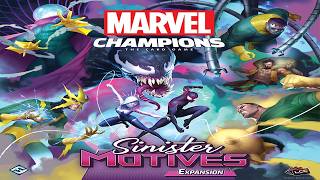
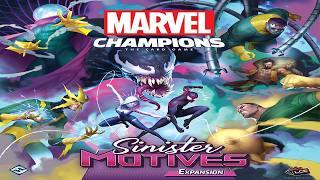
Marvel Champions: Sinister Motives arrives as the Spider-Verse expansion fans have been waiting for, bringing Miles Morales and Ghost Spider into the living card game alongside the Sinister Six. The community response has been mixed to positive. Reviewers consistently praise the thematic execution and the dynamic hero partnerships the expansion enables, particularly the synergy between Miles Morales and Groot, which surprised many players. The scenarios themselves offer engaging mechanical variety and strong design in most cases, though the campaign's arc and the standard encounter cards prove divisive. The consensus leans toward: solid expansion for Marvel Champions enthusiasts who want more cooperative storytelling and Spider-themed gameplay, though not without its rough edges.
Core Mechanics That Define Marvel Champions: Sinister Motives
Reputation Track System
The expansion introduces the Reputation Track, a campaign-long progression system that fundamentally reshapes how players interact with the board. As heroes complete objectives and defeat minions, they build reputation, unlocking Shield Tech upgrades that grow more powerful as the track climbs. What makes this mechanic compelling is its asymmetry: each hero tracks reputation independently, creating unique decision-making for solo players and allowing different characters to benefit from the same track in distinct ways. The system also carries a cost: higher reputation makes villains stronger by adding Osborne tech to their decks, forcing players into meaningful risk-reward calculations. Reviewers appreciated how the reputation track makes scenarios feel thematic while maintaining mechanical depth.
The Encounter Card Integration
The standard encounter cards in Marvel Champions have long frustrated players, and Sinister Motives doesn't resolve this tension. Cards like "Webbed Up" and "Shadow of the Past" stun heroes or create cascading indirect damage that undermines player agency. Reviewers noted that these cards feel particularly punishing because they trigger automatically: players can plan defensively against a villain's attack, but a revealed encounter card that forces the villain to attack again completely bypasses that preparation. The frustration is compounded by cards like "Shadow of the Past," which bring in additional villains and deal unavoidable indirect damage. While the expansion's scenarios are generally well-balanced in difficulty, the constant shuffling of encounter cards into player decks (especially in Mysterio's scenario) and the unpredictable timing of these disruptions create moments that feel less about clever play and more about card draw luck.
The Marvel Champions: Sinister Motives Experience
Thematic Storytelling and Escalation
The expansion delivers strong thematic moments across its scenarios. Miles Morales and Ghost Spider's presence brings a distinctly Spider-Verse flavor, with players encountering iconic villains like Sandman, Venom, Mysterio, and the Sinister Six in a campaign that unfolds naturally. The scenarios don't always follow expected patterns; the Sinister Six appear mid-campaign rather than as the final boss, which breaks tradition (and initially frustrated some reviewers) but creates memorable surprises. The mechanics align with theme throughout: Sandman's sand counter system mirrors his destructive presence, while Venom transforms from villain to reluctant ally. The reputation track tying into how citizens view your heroes adds narrative weight to every mechanical action.
Difficulty and Variance
Sinister Motives presents a challenging campaign with high variance. Opening hands can be devastating: reviewers repeatedly mentioned drawing hands that feel completely unworkable, especially for Miles Morales, whose preconstructed deck attracted criticism for not synergizing well with his kit. The game's difficulty depends heavily on card draw and synergy activation. This creates moments of exhilaration when builds come together (Groot with growth counters and laser goggles can become a powerful engine) but also frustration when the right cards never arrive. Players succeed or fail based partly on skill and partly on whether the encounter deck cooperates. This high-variance experience makes Sinister Motives feel intense and memorable, though it can dull replays when the same cards dominate.
What Makes Marvel Champions: Sinister Motives Stand Out
Ghost Spider's Flexible Toolkit
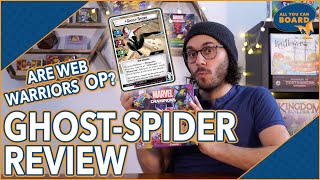
Ghost Spider emerges as a standout hero with exceptional defensive and planning tools. Her Dizzying Reflexes ability lets her ready after playing interrupts or responses on events, creating a responsive playstyle that feels distinct within Marvel Champions. Paired with cards like Ticket to the Multiverse (an upgrade that resets the deck, draws up to hand size, and readies all cards in one powerful action), Ghost Spider can orchestrate massive turns that reset the entire board state. The Ticket provides a board reset potential that reviewers found genuinely game-changing, especially in mid-game pivots where the scenario felt overwhelming. Her protection suite synergizes beautifully with web warrior cards, creating cohesive builds that reward deck construction and planning.
Hero Synergies and Unexpected Partnerships
The expansion shines when heroes work together. Miles Morales and Groot proved surprisingly effective despite coming from different traditions. Groot's growth counter economy combines with Miles' web-based abilities in ways that multiply each hero's strengths. For solo players (using two heroes simultaneously), discovering these pairings becomes part of the fun. Ghost Spider's web warrior archetype benefits from cross-expansion synergies with heroes not in Sinister Motives but available in other expansions. Reviewers found the team-building aspect more engaging than in previous campaign boxes: there's genuine discovery in figuring out which aspects and heroes click together, and the reputation system rewards cooperation by giving shared benefits to the party rather than just the active hero.
Potential Drawbacks
The Sinister Six Scenario's Pacing
The Sinister Six scenario represents the expansion's weakest moment. While only three villains are in play at any given time (and they cycle quickly), the scenario drags on far longer than intended. The main scheme, "Light at the End of the Tunnel," accumulates enormous threat from carry-over encounter cards, creating a threat pool in the 40+ range that players struggle to reduce meaningfully. Reviewers felt the scenario overstayed its welcome, lacking the punchy engagement of Sandman or Venom. The pacing falters: players make meaningful actions but see progress measured in single-digit threat reductions against a bloated pool. The decision to place the Sinister Six mid-campaign rather than as the final villain (echoing a similar structure from Mad Titan's Shadow) satisfied narrative expectations but created mechanical problems with scenario length.
Variance and Accessibility
Success in Sinister Motives requires hitting specific card synergies, and the opening hand matters enormously. Miles Morales's preconstructed deck frustrated reviewers because its cards don't synergize with his mechanical identity well. The shield-focused build costs too much for the value it provides, and players find themselves desperately wanting his web-shooter cards instead. Beyond the precons, the campaign's difficulty swings dramatically based on encounter card draws. "Shadow of the Past" and "Webbed Up" can swing games single-handedly, and reviewers felt punished by bad luck rather than bad play. New players or those learning the expansion might find the difficulty spike discouraging, especially if they haven't optimized their decks through multiple plays. The expansion assumes some familiarity with Marvel Champions' ecosystems and rewards experienced deck builders.
If You Enjoy Marvel Champions: Sinister Motives
Players who enjoy Marvel Champions: Sinister Motives's Spider-themed cooperative adventure will find similar satisfaction in other Marvel Champions campaign expansions. Marvel Champions: The Mad Titan's Shadow offers a comparable campaign structure with four scenarios and escalating difficulty. For those drawn to the web warrior archetype and protection focus, earlier Marvel Champions heroes like Spider-Gwen and Captain America provide rich deck-building opportunities. Marvel Champions: Galaxy's Most Wanted provides campaign mechanics and the market deck system that influenced Sinister Motives's reputation track design. Beyond Marvel Champions, Sentinels of the Multiverse scratches a similar cooperative itch against iconic villains with asymmetric abilities and escalating threat. For players seeking campaign-driven cooperative storytelling with high variance and card-draw dependency, Arkham Horror: The Card Game offers investigator-driven narrative campaigns with similar decision spaces and synergy-based deckbuilding.
What Reviewers Are Saying
"They also did a kind of cool thing with the reputation track. Definitely makes it more thematic whenever it's the two neighborhood Spider-Men of Miles and Ghost-Spider, because you have kind of a more, you want to deal with the victory point stuff a little bit more. And throughout the every setup, you take a community service side scheme that gets shuffled in."
— Board Games UnLocked
"Use tickets with multiverse, reset the entire thing, have another turn. That was basically what won me the game, and I love that there's this card that can do that, and that they found a way to make a situational card that you're going to want to use later in the game still valuable earlier on by offering you two wild resources. Do not sleep on the two wild resources that this offers, that's actually really really useful."
— All You Can Board
"Then we have Shadow of the Past. Yippy Fernax comes in with the Blazing Inferno. After the villain phase begins, deal two indirect damage to each player. Well, that's pretty much a loss right there."
— Board Games UnLocked