





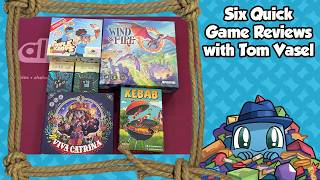

Champions of Wind & Fire Deep Dive
What the Community Thinks About Champions of Wind & Fire
Champions of Wind & Fire from iDventure strikes reviewers as a compelling dragon-trainer where the building phase outshines the tournament finale. The consensus leans favorably, with reviewers consistently praising the core drafting experience and the joy of progressively strengthening a dragon, while expressing reservation about an endgame that feels disconnected from the craftsmanship that precedes it. Multiple reviewers describe satisfying component work, exceptional artwork, and strategic tension in the drafting rounds, balanced against a tournament phase that some feel attempts to do too much mechanically without landing the payoff those earlier rounds promised.
Core Mechanics That Define Champions of Wind & Fire
Dice Drafting via Split-and-Choose
The heart of Champions of Wind & Fire rests on a split-and-choose mechanism, where one player divides rolled dice into separate groups and opponents draft those groups before the divider picks last. Reviewers consistently highlight this as the friction point that makes the game sing. The drafting creates a puzzle of incentives: you want valuable resources, but picking early risks leaving your opponents with options that hurt you, while the divider must split cleverly, knowing they pick last but can shape what others face. One playthru commentary notes how this mechanic gets "harder because it's like hard to get into your mind of what you want" and involves "trying to force the other player to take things that they cannot take to give them black crystals," the game's penalty tokens that weaken dragons. The mechanism's elegance comes from its simplicity paired with the constant strategic tension: every split and every pick reverberates forward.
Engine Building Through Dragon Upgrades
The dragon upgrade track represents a second-act payoff that reviewers universally identify as the game's true satisfaction point. Players combine colored dice to match patterns on their personal board, which unlock trainer cards and trigger bonuses; when enough patterns complete, they advance one of three dragon parts (head, wings, tail) toward full upgrades. As the game progresses, early-round sacrifices compound into card draws, coin generation, and free placements that accelerate late-game growth. One reviewer describes the experience as "like a video game where you start off with this like rags and you get armor and Equipment," capturing how meager early turns give way to a swelling engine. The progression feels earned rather than handed, and the interplay between resource scarcity and upgrade pace keeps tension taut throughout the training phase. Reviewers note repeatedly that this is "the best part" of Champions of Wind & Fire, where positioning, card selection, and tactical foresight bloom into concrete power.
The Champions of Wind & Fire Experience
Puzzle-Like Placement and Incremental Progress
Champions of Wind & Fire delivers a progression fantasy where early scarcity sharpens into abundance. The game board itself becomes a spatial puzzle: crystals must be placed adjacent to previously collected crystals, bonuses trigger for gap-filling, and the grid tightens as rows fill and limits lock in place. Reviewers note how "this game gets a lot tighter as time goes on," with early flexibility giving way to hard choices about which color spaces to claim, which patterns to complete, and when to cash in bonuses. The satisfaction accumulates visibly: players see their dragons take shape piece by piece, coins stack up, and trainer cards fill hand spaces. This tangible, layered progression mirrors the upgrade fantasy the game promises, turning abstract resources into a physical dragon you built with your own hands.
Strategic Decision-Making in Every Pick
The drafting rounds cultivate a constant hum of conflict and evaluation. Because splitting the dice shapes the entire table's turn and picking constrains your options while unlocking bonuses, no choice is neutral. A reviewer comments that split-and-choose creates "good decision-making" where you must weigh immediate value against future position and opponent consequences. The playthru reveals this tension in real-time: players constantly ask themselves whether to take a valuable group early or let opponents fight over scraps, whether to pursue a coin-heavy path or maximize crystal combos, whether to risk a penalty (black crystal) for a breakthrough upgrade. The drafting rhythm keeps all players mentally engaged across the full table; a well-made split forces hard choices, and a pick either validates or disrupts opponents' plans.
What Makes Champions of Wind & Fire Stand Out
Phenomenal Presentation and Tactile Satisfaction
Every reviewer praises the physical presentation unreservedly. The artwork is described as "phenomenal," the pieces as "great," and the act of placing tiles and dragon parts as "satisfying." The component quality extends beyond aesthetics into usability: the dice tray works smoothly, the elemental board layout is clear, and the dragon parts fit into their slots with a pleasing click. The visual progression of a dragon assembling across the table creates a psychological anchor that makes upgrades feel substantial. iDventure's production elevates the dragon-trainer fantasy into something tactile and memorable, where engaging components reinforce the narrative of training a unique dragon from scrap to champion.
A Thematic Narrative That Guides Play
The game's theming surrounds every mechanic with narrative purpose. Drafting dice becomes selecting magical elements; crystal patterns transform into spell-casting; coins represent a dragon's growing strength; and black crystals embody setbacks that weaken your trainer's efforts. This coherence means players rarely parse rules in isolation; instead, each action reads as a chapter in a dragon's origin story. The tournament, whatever its mechanical criticisms, frames the endgame as what all that training was for, giving earlier rounds a clear arc and emotional payoff even if the tournament itself resolves quickly or anticlimactically.
Potential Drawbacks
The Tournament Phase Feels Detached and Anticlimactic
Multiple reviewers identify the same friction: the tournament, which should be Champions of Wind & Fire's climax, often feels underpowered by comparison to the training rounds. One reviewer notes that "the game itself is about drafting those dice and filling in the board and getting lots of bonuses and getting cards and upgrading your dragon," and that "the game could have just stopped with that instead of adding the tournament on at the end." The basic tournament simply totals up dragon power without adding tension, while the advanced tournament layers on betting with dials and spending coins, but some feel it "adds a lot more rules and tournament cards" without "doing that much better." The gap between the satisfaction of engine-building and the resolution of a tournament round, whether simple or advanced, leaves some players wishing the final act matched the preceding hours of tactical play.
Added Complexity That Doesn't Elevate the Endgame
The advanced tournament introduces new rule overhead: bidding mechanisms, tournament cards, and meta-betting that require mental accounting at the table. Reviewers perceive this as a feature-creep solution to a thematic problem; the extra rules attempt to make the tournament stakes feel higher, but at the cost of clarity and elegance. One reviewer expresses preference for "the simple tournament because the advanced tournament adds a lot more rules and tournament cards and this and that," suggesting that design-by-addition sometimes muddles rather than sharpens. The tension felt sharply during the training phase sometimes dissipates under tournament rule density, leaving some players wondering why the game pivots to a more cumbersome system when the earlier drafting and engine-building already proved themselves.
If You Enjoy Champions of Wind & Fire
Champions of Wind & Fire shares DNA with Carcassonne, the classic tile-placement game where players build a shared landscape by drawing and positioning tiles, earning points for completed features. Both games feature modular board states that reshape with every player action, reward spatial foresight, and deliver quiet satisfaction when a carefully planned tile clicks into place. Where Carcassonne excels at collaborative puzzle-building, Champions of Wind & Fire layers on personal engines and resource management, trading shared landscape for individual dragon growth. The split-and-choose mechanism also echoes bidding and auction games where asymmetric information and strategic commitment create tension; games like 7 Wonders (where simultaneous card drafting mirrors the decision calculus here) might appeal to Champions players who love weighing immediate value against future positioning. And if the dragon upgrade fantasy appeals, engine builders like Dominion or Splendor offer similar arcs of early scarcity flowering into abundance.
What Reviewers Are Saying
"The components of this game are amazing. The artwork phenomenal. The pieces are great. Satisfying to put those tiles in, and the mechanisms are fun."
— The Dice Tower
"I feel like it's um like a video game where you start off with this like rags and you get armor and Equipment."
— Board Gaming Ramblings
"I split you choose is always a lot of fun and thrown in a package like this I think it comes across well."
— The Dice Tower