







Hood: Troubles in Sherwood Deep Dive
What the Community Thinks About Hood: Troubles in Sherwood
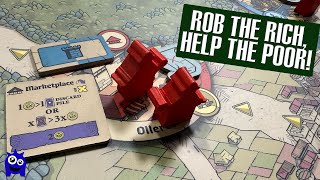
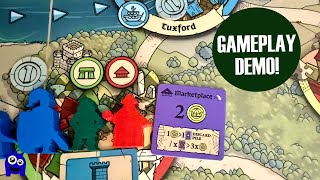
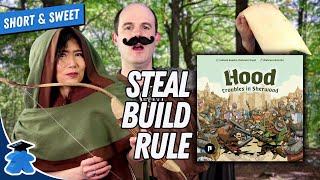
Coverage of Hood: Troubles in Sherwood comes almost entirely from before its Gamefound campaign, and it is warm. Zilla Blitz played a prototype copy from Phalanx, recorded a faction overview and gameplay demo, and named it a game of the month candidate after a four-player session he called "a very memorable experience." His recurring point is that Hood gives you the asymmetric, multi-faction feel of Root and GMT's COIN series with a much lower barrier to entry, because the Robin Hood legend tells every player what their side wants before they read a rule. Meeple University's rules overview lands in the same place, calling it a fun asymmetric brawl where four separate strategies collide on one board. Because both sources worked from prototype material, treat these as early impressions rather than verdicts on a finished product.
Core Mechanics That Define Hood: Troubles in Sherwood
Asymmetric Faction Gameplay
Each of the four factions chases 25 victory points in its own way. In Meeple University's summary, Robin Hood wants to keep stealing, push up his fame track and set up camps that make his band faster and stronger. The Sheriff of Nottingham "wants boots everywhere," because more guards means more points. The Bishop of Hereford is trying to build a holy empire but needs workers, which he gains from other players' defeated units and returns to them with coins. The French nobility farm fate cards, set up forts and charm rivals into taking titles that may help the nobles more than the player who accepts them. Meeple University sums it up as "four separate strategy games" fought over the same board, merchants and gold supply. Zilla Blitz rates the complexity at three and a half out of ten on his wargame scale: the rules are straightforward, but playing well takes a good understanding of both your faction and everyone else's.
Fate Cards and Combat
Coins and fate cards are the two resources that drive a turn. Fate cards can be played for their effects or as strength in battle, and some of them score victory points directly. Combat triggers when certain factions move into an area with other factions, and Meeple University describes it as a mix of strength plus cards plus dice, with attacker and defender able to play cards before, during and after the fight. Zilla Blitz's demo shows how much a well-timed card matters: the Bishop happens to hold a card that scores an extra victory point after winning a combat, and the French nobility string together fate card plays in a single long turn to claim a title.
The Hood: Troubles in Sherwood Experience
Everyone Stays Engaged
The shared King Richard's ransom keeps the whole table involved. On their turns, players may deposit gold into the ransom bag. In a four-player game, once 16 gold has gone in, play stops for a special King Richard phase, and every three gold a player donated earns another victory point, alongside faction-specific bonuses. Meeple University credits this mechanism, together with the interplay between factions, for keeping everyone very engaged, because ignoring it lets someone else snowball and win easily. Zilla Blitz's four-player session left the same impression: "We all had a lot of fun with this one."
A Theme That Teaches the Game
The setting does real design work. Zilla Blitz says the thing he likes about a Robin Hood game is that "you immediately know what your faction's trying to do," a contrast with counterinsurgency games where understanding each side's goals takes much longer. After playing, he said Hood was easier for him to parse than Root, and easier to understand both his own faction and what the other factions were supposed to be doing, while the gameplay still felt deep. He also praised the prototype rulebook as clean, well organized and "logical and easy to grasp."
What Makes Hood: Troubles in Sherwood Stand Out
A Gateway to COIN-Style Games
Zilla Blitz's clearest recommendation is about who Hood is for. He calls it more accessible than Root and more accessible than a COIN game, and suggests it as a tool for introducing people to those designs: four asymmetrical factions each doing something different, but with a theme players grasp immediately. Meeple University adds a note of humour to the pitch, observing that the race to 25 points "sounds easy until you realize the other players exist only to ruin your plans."
Bright, Inviting Presentation
Zilla Blitz says the map gives him his biggest impression of the game. Its bright colors and playful art remind him of the tone of Root, and he sees the look as part of what makes Hood a deep yet accessible entry point into multi-faction games. When the production copy arrived, he described its production values as really high.
Potential Drawbacks
Built for Four Human Players
Hood supports two to four players, but in two- and three-player games the unused factions are run by a special set of rules so all four stay on the board. Zilla Blitz feels the game is best at four players, with a human controlling each faction. Solo play is a weak point in his estimate: with hidden cards, alliances, deals and other interplay missing, he suspects it will be "tricky at best" and rates it three out of ten on his solo scale. Groups that cannot regularly gather four players should keep that in mind.
Depth Takes Time to Unlock
The rules are simple, but the factions are not interchangeable, and Zilla Blitz expects that playing well will take a good understanding of every faction on the board. Turns can also run long: in his gameplay demo the French nobility chain fate card plays in one action, and he remarks that it is "quite a long turn." Every game uses the same map and the one main scenario, so the variety comes from learning to play each faction well rather than from new setups.
If You Enjoy Hood: Troubles in Sherwood
The comparison every source reaches for is Root. Zilla Blitz says Hood has "very much a Root type feel," from the playful art to the unique factions, but he likes that Hood is quicker to understand, since Root takes a while to learn how all its factions work. If Hood clicks and you want more, he points to GMT's COIN series, the heavier family of asymmetric games he says Hood borrows design and flavor from, and he suggests Hood is a good way to bring players toward those games.
What Reviewers Are Saying
"The thing I liked about this game, it reminds me a little bit visually and gameplay-wise of Root, but I think that's about as far as I would compare the two. This is more accessible. I feel like this was easier for me to parse and it was easier for me to understand my faction and what the other factions are supposed to be doing. And yet, I feel like the gameplay in this one is deep."
— Zilla Blitz
"I would recommend if you like Root and if you're interested in coin games and you have people you want to try to introduce these games to, you might want to check out Hood as being a tool for that. It's got real fresh gameplay and it's fun largely because you understand the theme right away, right?"
— Zilla Blitz
"The tension is real. The card play is clever. The King Richard ransom and the interplay between factions keep everyone very engaged because if you ignore it, someone else may snowball and win easily."
— Meeple University