



Stratego Junior Deep Dive
What the Community Thinks About Stratego Junior
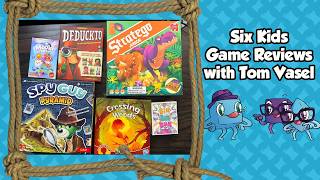
Coverage of Stratego Junior is limited, and both available reviews come from a single channel, The Dice Tower. The first appears inside a roundup of six kids' games, and the second inside a summary of a large batch of recent plays. Because the two videos frame the game differently, they read as slightly different verdicts rather than one repeated opinion.
The kids' roundup gives Stratego Junior a six out of 10 and treats it as a narrow recommendation. The reviewer's central point is that the game sits in an awkward category. Very young children may not grasp the strategy at all, while older children will find it too simple. The summary video is warmer, scoring the game 7.5 and calling it a nice way to introduce young children to Stratego. In that second review, the reviewer does not argue that the game stands on its own. They present it as a way in.
The points of agreement are clear. Both reviews see Stratego Junior as a younger relative of the classic game, both place it at the youngest end of the audience, and both assume that players who enjoy it will eventually want the full version. Where the reviews differ is emphasis. The roundup focuses on what the game lacks for older kids, while the summary focuses on what it does well for younger ones.
Core Mechanics That Define Stratego Junior
Hidden Dinosaur Ranks and the Bomb Pieces
The central system is the hidden-information battle that the game inherits from Stratego. Each piece is a three-dimensional dinosaur, and the reviewer notes that the shape is set into the base so the piece stands firmly and does not tip over. That detail matters because the number printed on the back of each dinosaur is the information a player is trying to keep private or uncover. Stratego Junior also keeps the familiar bomb pieces. The reviewer describes them as "its versions of the bombs," so the game keeps the bomb pieces from the original in a form suited to younger players.
The reviewer's main caveat is that this system offers little room for deception. They say there is not much trickery that can be done, and that for very young players the strategy of hiding and revealing ranks may simply elude them. The mechanic is therefore present and recognizable, but the game does not give it the bluffing depth that defines the adult version.
A Single Dinosaur Egg as the Objective
The second defining mechanic is the win condition. Rather than capturing a flag or reaching an opposite edge, the reviewer describes the goal as simply finding a dinosaur egg. That reduction is the clearest sign of how Stratego Junior has been adapted. The reviewer summarizes the game as "a dumbed-down version of Stratego," and the egg objective is a large part of why they reach that conclusion. A single, easy-to-understand goal lowers the cognitive load, which is the point for a children's title, but it also removes the layered planning that gives the original its character.
The two mechanics work together. The hidden ranks create the uncertainty, and the egg objective gives players a clear reason to push forward through it. The reviewer's sense is that the combination is intentionally simple, and that it works as an entry point rather than a destination.
The Stratego Junior Experience
Gentle Onboarding Tension
The experience the reviews describe is one of light, controlled tension. Players are working around the uncertainty of the hidden numbers on the backs of the dinosaurs, and the reviewer's focus stays on how approachable that puzzle is. The tension is not the sharp, personal pressure the reviewer associates with the full game of Stratego. It is closer to a friendly guessing exercise. The reviewer's language, that the game "definitely feels like an onboarding game," captures that tone precisely. It asks very little of the player beyond attention, and it leaves them curious about what comes next.
Playful Discovery Through Dinosaurs
The second feeling is playful discovery, driven by the theme and the physical pieces. The reviewer praises the dinosaur art and says the game has "cool dinosaurs" and a number of other appealing aspects. Handling the pieces, turning them over to reveal their numbers, and searching the board for the egg gives the game a tactile quality. For a child who enjoys dinosaurs, the experience is less about winning a contest and more about exploring a small, well-made world. The reviewer's preference for the game as a first step reflects that the fun comes from the theme and handling as much as from the strategy.
What Makes Stratego Junior Stand Out
Components Built for Small Hands
Reviewers consistently point to the physical production as a strength. In the kids' roundup, the reviewer describes the pieces as really nicely shaped, with 3D dinosaurs mounted on bases that keep them upright and keep the number on the back readable. That practical design matters for young players, who are more likely to knock over or mishandle small components. The attention to construction is one of the few areas where the reviewer's praise is unqualified, and it helps explain why the game has an appeal beyond its rules.
A Bridge Into the Stratego Family
The second standout is the game's role as a gateway. Both reviews return to the idea that Stratego Junior is a sensible first step toward the adult game. In the summary video, the reviewer says that the game is a nice way to teach young children into the Stratego family, and they suggest it works well as a bridge. For families where a child has heard of Stratego but is not yet ready for its full rules and bluffing, this framing is the game's most persuasive argument. It is a dedicated stepping stone rather than a generic children's title with a famous name attached.
Potential Drawbacks
Limited Depth for Older Children
The most consistent criticism is that the game is too simple for children who have outgrown it. The reviewer in the kids' roundup warns that upper elementary players will see the game as a warm-up, and they note that a suggestion to move on to the real Stratego may come quickly. The concern is not that the game is poorly built. It is that the strategy and the sense of discovery are shallow enough to lose older players.
A Narrow Window of Appeal
The second drawback follows from the first. Because the game is aimed at very young players, the reviewer argues that the window in which it is the right choice is small. Very young children may struggle to grasp the hidden-rank strategy, and older children will likely find it too easy. The result is a game that serves a specific developmental stage well and offers little beyond it. The reviewer's six out of 10 in the roundup reflects this, though the warmer 7.5 in the summary shows that the same game can land more favorably when judged as an introduction rather than a complete experience.
If You Enjoy Stratego Junior
Players who enjoy Stratego Junior's hidden dinosaur ranks and its bomb pieces will find the fuller version of the system in Stratego. The reviewers treat the original as the reason Stratego Junior exists, and the transition is the natural next step. The reviewer in the kids' roundup specifically describes the original as made for upper elementary players, which makes it the logical destination for a child who has finished the junior edition. Where the junior game offers a single egg to find, the full game supplies the richer planning and bluffing that the reviewers say the younger version leaves out.
What Reviewers Are Saying
"It is really just a dumbed-down version of Stratego."
— The Dice Tower
"I think the window here for this one is pretty small because this definitely feels like an onboarding game."
— The Dice Tower
"It's a nice way to kind of teach young kids into Strateggo."
— The Dice Tower