











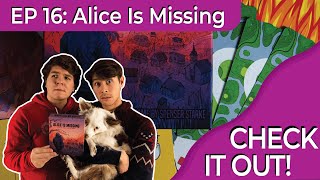

Alice is Missing Deep Dive
What the Community Thinks About Alice is Missing
Alice is Missing stands apart as one of the most distinctive and accessible RPG experiences available. Reviewers consistently praise its immersive, text-based gameplay and low barrier to entry, making it an ideal gateway for players new to tabletop roleplay. The game appeals across different tastes: some groups find it a compelling artistic work that explores themes of community and mystery, while others appreciate its practical accessibility for remote play and time-conscious groups. However, opinions diverge on replayability and emotional weight. The dark subject matter, combined with limited character variety in the base game, means some players view this as a one-time experience while others see potential for multiple sessions with different groups.
Core Mechanics That Define Alice is Missing
Silent Text-Based Storytelling
The central mechanic of Alice is Missing strips away traditional tabletop roleplay's spoken dialogue. Instead, all communication happens through text messages, with players texting as their characters and the game master introducing prompts and plot developments via group chat. This constraint creates space for deliberate, thoughtful responses. Players can take time to consider how their character would react rather than improvising on the spot, reducing performance anxiety. The text-only format also enables a remarkable immersion effect: when players focus solely on their phone screens, they dissociate from seeing their friends and more easily adopt their character identities. The 90-minute session unfolds at a rapid pace since messages flow quickly, and the included soundtrack serves as both atmosphere and timer, structuring the game into clear phases and preventing it from feeling like an unguided writing exercise.
Cooperative Deduction Through Prompts
Alice is Missing presents a mystery that players uncover collaboratively. The game master and players receive timed prompt cards that introduce suspects, locations, and clues. Players must weave these discoveries into a coherent narrative as they pursue what happened to Alice. The randomness of card draws means each session generates different combinations of leads and red herrings. Players must decide which story threads matter and which are distractions. This creates variable outcomes, not all equally satisfying. Sometimes the prompts align perfectly, creating memorable dramatic moments like a suspect location catching fire right after players had discussed setting up a drug operation there. Other times, the person revealed to be behind Alice's disappearance may have barely featured in the group's narrative, requiring players to retrofit logic around a result that feels disconnected from the story they built.
The Alice is Missing Experience
Tense, Character-Driven Immersion
Players describe Alice is Missing as one of the most immersive RPG experiences they have played, largely because the physical and mechanical setup supports emotional investment. The voice note component creates a particularly effective touchstone: at the game's start, each player records a message to Alice, perhaps recounting a memory or asking a question. Hearing these voicemails again at the end of the session, knowing Alice's fate, recontextualizes every word. The thematic setting of a Pacific Northwest town with missing teenagers resonates with popular media like Life is Strange, grounding the mystery in a contemporary, relatable world. The character creation process establishes relationships and motivations quickly, so players care about each other's characters from the first text. This foundation transforms the text-based medium from cold communication into intimate group storytelling.
Dark, Potentially Triggering Atmosphere
The game's core premise centers on the disappearance of a high school friend, which carries inherent darkness. Some groups lean into melodrama, playing up teenage rivalry and interpersonal tension while keeping the tone lighter. Others follow the story wherever darker implications lead. Reviewers emphasize the importance of group communication beforehand, since different players have different tolerances for heavy themes. A game might begin feeling like a mystery adventure and gradually shift into exploration of grief, trauma, or worse. The emotional weight demands a group willing to sit with uncomfortable feelings, making this game unsuitable for groups that prefer lighthearted escapism or who have unresolved sensitivities around disappearances and violence.
What Makes Alice is Missing Stand Out
Genuinely Low Barrier to Entry
Unlike most tabletop RPGs, Alice is Missing requires no lengthy rulebook study or character sheet mastery. The rules fit on a few pages: players create characters by choosing an archetype and adding personal details, establish relationships to other characters and to Alice, and then follow the game master's text prompts for 90 minutes. This simplicity makes it possible to teach and play in a single session without overwhelming newcomers. The game also sidesteps one common RPG barrier by eliminating the traditional game master role where one person runs the game while others play. Here, the game master participates as a full player, texting as a character while also moderating the prompts. This equal participation removes the pressure and asymmetry that can intimidate new players. Moreover, because each session is self-contained with no continuation expected, players can approach it as a one-off experiment with no long-term commitment, lowering the perceived risk of trying something unfamiliar.
Accessibility for Distributed and Time-Constrained Groups
Alice is Missing functions perfectly over online text platforms, not requiring players to gather in person or make eye contact. This opens the game to groups separated by distance or scheduling constraints. Groups report successfully playing via text group chats, Discord, or dedicated apps, expanding when and how they can meet. The fixed 90-minute runtime provides structure and closure, preventing the open-ended drag that can plague improvised play. Players know exactly when the session will end and when resolution arrives, which appeals to groups that struggle with pacing or commitment to lengthy campaigns. This combination of accessibility and bounded playtime makes Alice is Missing a practical choice for busy players or groups with logistical challenges.
Potential Drawbacks
Limited Replayability with the Same Group
Character archetypes in the base game are predefined roles like "the best friend," "the one with a crush," and "the older brother." While players flesh out each archetype with personal details, the underlying character concepts remain consistent. Replaying with the same group means familiar character types recur, which can diminish novelty. Players note that the character designs sometimes feel repetitive, especially across expansions where new characters simply swap out existing ones with minimal narrative distinction. Replaying with a different group solves this issue, but groups who want to experience the game multiple times together may need to invest in an expansion to expand the character pool enough for the experience to feel fresh across several sessions.
Emotional Intensity and Dark Themes
The game's premise deals with a missing teenager, and potential outcomes can range from tragic to criminal. Some groups interpret the narrative as primarily suspenseful mystery, while others pursue darker psychological and criminal angles. Reviewers note that the game's tone is highly group-dependent, and the emotional intensity can escalate unexpectedly. Groups containing members with trauma histories around disappearances, violence, or loss may find the experience genuinely harmful rather than entertaining. Unlike a book or movie, where emotional beats are controlled by the creator, this game places that control in player hands, and group dynamics or impulsive story choices can derail the experience for sensitive members. Establishing clear consent and boundaries before play is essential but often overlooked when groups approach the game casually.
If You Enjoy Alice is Missing
Players drawn to Alice is Missing's text-based, narrative-focused design may find similar satisfaction in Life is Strange, the video game that shares the same Pacific Northwest mystery aesthetic and themes of teenage friendship amid dark circumstances. Players who value the accessibility and low rules overhead of Alice is Missing should explore other one-shot RPGs with streamlined mechanics and clear structure. The game's strength in creating immersive character moments appeals to story-first players who prefer collaborative narrative over mechanical complexity. Its viability for remote play means online-first RPG groups should prioritize trying it. Groups that enjoyed the voice note feature and character intimacy might seek other RPGs with emphasis on personal stakes and relationships rather than combat or resource management.
What Reviewers Are Saying
"What's good about Alice is Missing is that it is a work of art. It brings an unusual and unique approach to a role-playing game, and it puts you in an interesting and unsettling predicament."
— 3 Minute Board Games
"This is definitely one of the most immersive RPGs that we've ever played. There's also quite a nice touch where you leave a voice note at the beginning of the game."
— Board Of It
"Alice is Missing, a silent roleplaying game about the disappearance of Alice Briarwood, a high school junior in the sleepy Northern California town of Silent Falls. During the game, players use their phones to text messages to each other as they unearth clues about what happened to Alice. The game runs over a single session of 2 to 3 hours."
— Quackalope