There's ONLY 7 Types of Board Games | BGG Top 10 Discussion
Games in This Video
20 games are featured in this video — they unlock as you watch.









Transcript
Let's rethink the labels of Ameritrash or Euro or competitive or cooperative board games. Using seven fantasy Japanese clans, we derived a new way to categorize board games. Perhaps games stand strong on principles. Or they're super elegant like a crane. Or maybe they trick you like a scorpion. So we're going to break down all seven of these clans, talking about how their line of thinking would go, and then giving some examples of games that would fit within each clan. We'll end with an analysis of how the BGG top 10 fits into the seven clans structure and what clans we personally would want to like. And then what clans we actually end up preferring in reality.
I was watching a YouTuber called Knights of Last Call who came up with this interesting way of defining role-playing games and it made me think, "Oh, I wonder if you could take that model and apply it to all board games?" Or just really all games.
Yeah. Or at least all traditional games as far as we're concerned. And that is using the Legend of the Five Rings clans. In the land of Rokugan, it's kind of like a vague fantasy Japan. And there's seven different clans. For our discussion overall, we're looking at these clans and thinking, "Oh, well, if we think about X board game, how does that board game align most closely with the ideals of this Legend of the Five Rings clan?" So how does that make sense? Like what what is a Lion clan game? Okay, so actually the Lion clan I understand the least out of all these. But they're essentially principles first. So they really want to get their core idea down. So the Lion clan, they are the right hand of the emperor. They're all about honor before anything else.
Mhm. That's the only thing they focus on.
Mhm. So a Lion clan game is a game that focuses on its core design principles before anything else gets in the way. They don't care about accessibility. They don't care about fun. They don't care about theme. I mean, they could. Though those games could care about those things, but It takes a backseat. Yeah, they just want the thing to be within itself. So whatever the principles of the game are, the rules have to follow from those principles always above anything else. So something it's not on the BGG top 10, Yeah. but I think an example of a of a Lion game is chess. The point is that someone who's better at chess should always beat me.
Mhm. Okay.
Cuz that's one of the design principles of chess is that player skill is the most important thing in that game. And if you are better than someone else, you will always win. Another one that you brought up first outside the podcast was EU4. Sorry, Europa Universalis: Price of Power, the big big board game, which has uh the idea is to emulate the video game, which is itself an emulation of real life. So it's very complex. There's always something to look up. Yes. And but it's still principally trying to mirror that 1517 Western or I guess all of Europe idea. Well, it's trying to uh adhere to the video game Mhm. as much as it possibly can. So the second clan are the Crane clan. And the Cranes are the left hand of the emperor in Rokugan. So they're all about uh whereas the Lion is like sort of the the hard power using the sword to conquer your enemies, the Crane is about soft power. Mhm.
And they [clears throat] succeed through the perfection of poetry or tea ceremonies or other, you know, smaller scale things. I guess more soft power things. Thus principally focused on elegance and making the most elegant game that you can possibly make. And what that game would look like is one that is extremely easy to play. It it might be very complicated. Like it might actually have a lot of rules, Mhm. but it will be really really deep even within having a lot of rules. So interestingly, maybe chess could also be described as a Crane game. But I think Yeah. uh a chess doesn't necessarily have elegance as its principal driving factor. Whereas a game like Azul surely does or Splendor. Sure. I think something that comes to mind is Tokaido, probably. It's very elegant. It's very easy. But it's not that deep. But it doesn't have to be deep. Um I guess maybe the word the principal word for this is easy to learn, hard to master.
Mhm. All right, so next one. And we're at number three now.
Yes. So next is the Phoenix clan who are sort of like the wizards and the philosophers of the empire.
Mhm. So they care very much about ideas and about artistry and about expressing themselves. So a Phoenix game is a game that cares about communicating an idea Mhm. uh John Company is Right. the first thing that we thought of. Well, I think something that comes to mind with this category is you think of your board game as art. Something to evoke emotion. Something for your players to when they're playing it, they're not focused on winning or losing outcome. Basically, they're focused on "Oh, wow, this is like such a good experience I'm forming." And then when I look back on it, I'm like, "Oh, wow, this game did something for me." Yeah, like it enhanced my life. It made me have a bigger perspective on the world. Yeah, so the next one we're going to talk about is the Dragon clan Mhm. who in Rokugan, they're like the investigators.
They're also monastic monks who sit in their little temples high up in the mountains. See, they're different from the Phoenix. They they don't live in like cities. They live far away from other people and they just think about life and uh you know, what comes after life.
Mhm. And they try to find their own way through life. They're all about doing things their own way. A Dragon game is a game where players have a great input in what actually happens in a game. I wrote down it is a facilitator design. Um as in the players are supposed to facilitate the playing and the completion of the game. Mhm. So it is very much you could say these are more sandboxy games would fit into this. Yes. Uh but also games with a lot of uh loosey-goosey storytelling things they want you to do. For example, Alice Is Missing, very big one. There's basically no rules. It's just, "Hey, hang out on the Discord server and just talk." Not sure if it's a perfect example of a Dragon game, but I think Cosmic Encounter is pretty close
because it is a game where the focus of it isn't necessarily on winning or losing. It's not about adherence to its base principles so much as it is "Here's just a bunch of stuff. We just have like a bunch of things and who knows what'll happen." Mhm. The point of the game is it's a wild combination of as many different things as possible. And each game will be wildly different from one to another. I think a Dragon game will let you do that. Or rather, it'll, you know, like you can pull the lever yourself. Mhm. How hard or how fun the game is.
The next are the Unicorn clan. This is my favorite to talk about. The in Rokugan, they are the only clan that deals with outsiders. Deals with people outside of the empire. Mhm. Um which means they have to be very adaptable. They have to be able to work within any situation which might be completely unexpected for them. And so a Unicorn game is a game that has as much appeal as it possibly can to as wide a you know, a game that appeals to as many people as possible.
It adapts to many play styles. It adapts to many skill levels or experience levels. And I think the go-to answer for this is a party game. Sure. You want to have as many people play your game. So it's very easy to learn. There's not really any thing too bad feeling. It's not hard. It's not unintuitive. It's rather short. You know, probably like 20-30 minutes. Everyone is probably involved in some way. There's usually not so much player elimination, but there are party games that have player elimination, which are kind of a crossover between uh Unicorn and one we'll talk about later. The game
still playable at like five [clears throat] players or 10 Uh or 15 Mhm. is probably a Unicorn game. Mhm. So one that comes to mind for that is like Seven Wonders, right? Very good as a three-player game. Very good as a seven-player game. No downtime either way. I've played the game in Japanese. There you go. Yeah. When I I didn't know anyone else was saying. I was able to play the game. So you know, if it also works across language barriers, then Mhm. it's probably got some Unicorn design. This is a good area to bring up cooperative games because I think the cooperative structure allows for a lot of people of differing skill levels to play together and still have a good time. Mhm. And usually cooperative games work fairly well with like solo two players. Sometimes around three or four, they they could get some problems depending on the game, but the cooperative structure tends to smooth out a lot of friction within groups. Well, it's interesting you say that because I'm going to go to the next clan. Yeah. So the next are the Crab clan who in Rokugan are the great defenders of the the wall. But basically, Rokugan is being invaded permanently by these demons. Um an infinite horde of Oni. So the Crab clan are all about defense. And everything that they build, everything they make has to be as reliable as possible because, you know, they don't get a second chance effectively. They're fighting against you know, hell Mhm. essentially. So a Crab clan game is a game that is
unbreakable. It is as reliable as a game can possibly be made. Will deliver the most cohesive player experience as
it can possibly deliver. So I think an example of that would be a cooperative game. Yeah. Exactly. Yeah. Yeah, I mean Yeah. Or Wingspan is what I wrote down because in Wingspan, I mean, I haven't played it to death. I played it a few times, but it's a game where if you play it, you're going to get a pretty consistent experience to the last time you played Wingspan. Mhm. There's more guardrails put into place Mhm. to protect a cohesive player experience. I'm actually thinking that I think a lot of games nowadays are more about reliability as I said in the previous video. They're very good at making a first impression. But it doesn't mean all games are within this Crab territory, but I just see more games having this consistency element, right? More games are cooperative. Cooperative games tend to be very consistent. Yes. You all win together, you lose together. It's very consistent. It it's it's kind of a game where when it was being designed, the designers thought, "How could a player break this game? And how could we stop that so that could never happen?" And the last are the Scorpion Clan, who are the most infamous in Legend of the Five Rings because they're the only clan that actively besmirches honor. That doesn't mean they don't understand the importance of honor in their bushido samurai-esque society. They know what they're doing is dishonorable like spying or, you know, other spycraft, assassination. What they will do it knowing that they are destroying their own honor because the most important thing is the empire.
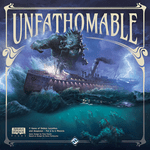
And as long as the empire perseveres, then what they did was worth it. You know, the ends justify the means no matter what. So, a Scorpion game is an outcome-driven game. The only thing that matters is what happened. How did you walk away from the game? Did you have fun? Did the game facilitate what, you know, that outcome? So, to me, a Scorpion game is diplomacy because if you play diplomacy, you will play it and you will get betrayed. I think actually before that I want to talk about Battle for Galactica because it's another one where you can just strip the theme and you still have the climactic reveals. Unfathomable. Unfathomable, right, is is the perfect example of they just made a sequel. Um you have all these roles which which help the theme, but ultimately they all want to help facilitate this big silent reveal or throwing someone in the brig to prevent them from uh revealing themselves.
Okay, so now that we've discussed all seven clans, now we can rate the BGG top 10.
Right, there we go. Yeah, let's get into that finally after uh dozens and dozens of minutes of talking. Uh so, we'll start at 10 and then go to one. Yes, so Ashton and I both wrote uh what we thought the closest clan to each of these games were, and we didn't tell each other at all. Yeah, it should be fun. So,
All right, so number 10. And this is as of now, of course, 2026. Star Wars Rebellion. Yeah. I think it's a Scorpion game. I also think it's a Scorpion game.
Okay. Yeah. I mean, this has been really enhanced by uh reading up on Corey Konieczka's research for the game, which is just like he took all the like he watched the movies and I think maybe some of supplementary stuff. And he just took notes of like, "I want to replicate this and I want to replicate that. So, I want this feeling of blowing up the Death Star or, you know, freezing people in uh carbonite or Han rescuing Chewie." And that's all in the game.
That that's that's why I I keep saying uh I think the game could be very easily translated to a Clone Wars setting because so many of the mechanics are so outcome-driven. They will always lead to a certain result in the game. Like, you will very consistently get the Empire's running out of time. They have to find the Rebel base. You will always get the Rebel Alliance always feels pressured. Uh they have to work as efficiently as they possibly can.
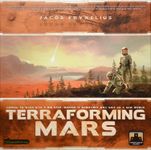
Yeah. Okay, I I think it's this is like by far probably a going to be our biggest agreement out of this list. So, number number nine is uh Terraforming Mars. Right. How much have you played of Terraforming Mars?
Uh zero. I I I actually I I've played a round. Okay.
Technically. That's that's probably still like 45 minutes. It was a long game.
against bots.
I called it a Lion game because it is all about terraforming Mars and everything goes back to the the principal idea of what is the most point efficient and point explosive way to terraform Mars. Um you could do that through slamming comets into the planet. You could do it through creating oceans, melting the ice uh on Mars already to create more oceans. Um and everything about the card design of which there's so many cards that exist in the game. There's no guardrails in the game whatsoever. If you are a new player and you don't know what cards to look for, you don't know what synergies exist between certain companies or between uh certain ability cards, you don't know the flow that like, "Well, animals and plants are going to be really valuable towards the end of the game cuz you can't do anything with them at the beginning. The planet is too inhospitable." It's a very high player skill game. If you're really good at it, you will win a lot and really hard. And if you're really bad, you'll lose really bad.
Then, yeah. I mean, I had what I have written down here makes me feel like a fool. No, you won.
Well, I mean, I only have played it once. I wrote down Scorpion cuz I thought, "Oh, the idea of the game is truly to just engine build and to tableau build." So, everything is fixated around that. But the way you describe it, the Lion and the principle of this is all about Mars makes a lot more sense. I think the idea about Scorpion probably works for more clearly for shorter, more abstract tableau builders. So, we're at number eight now. War of the Ring second edition.
Okay. So, originally, I had Scorpion down cuz I didn't understand Lion. But now it is definitely a Lion game. It's a very Lion first, principle first, principally Lord of the Rings first as in the War of the Ring. Okay.
Yeah. I might be wrong. You could explain it. I thought you were going to explain myself. Well, Well, what I said was um I said War of the Ring is a Phoenix game.
Oh, interesting.
Cuz it's uh focused on telling the story of War of the Ring. But it's not um uh to me, it's different from Star Wars Rebellion where Star Wars Rebellion is a very consistent experience. War of the Ring is not consistent at all. I mean, it kind of is, but it's more interested in kind of like giving the theme the feeling of Lord of the Rings versus it will always produce a certain outcome. Because I've played that game so many times, like maybe 20 times. The amount of times that Frodo has got to Mount Doom is, I don't know, maybe like two Okay. or three times. It's it's super difficult. I've I've almost never seen it happen.
So, you've seen more like Fellowship military victories. Oh, absolutely. 100%. Yeah. Oh, definitely. Uh-huh. Or just in general, the Shadow wins. So, maybe the game's just unbalanced, but
Right, right. That's why I would say it's a Phoenix first game because it's more interested in communicating the idea of, "Well, what if we put Lord of the Rings into a board game and you could play the Tom Bombadil card?" I wrote principle first cuz it just feels like every single mechanic felt derived from some type of Lord of the Rings thing. Sure. Uh I guess it is kind of hard to say, but um you know, when you're playing, you even like the actions are different for the Shadow versus Free People and the the quantity of actions, so that feels different. They have different goals, which feels very different. Um and then like a lot of cards, you can equip them to heroes that they feel like they're fitting to or they don't equip them. You you play them when the hero's in combat, which feels very, "Oh, you want to recreate this story moment." I guess that's kind of Scorpion. That's why I had Scorpion at first. It wants to recreate all of these battles. Battle for Osgiliath, then you retreat into Minas Tirith, then maybe Grond gets played on Minas Tirith, and then the Witch-king comes, right?
Oh, but then Gandalf runs all the way from Fangorn Forest. You know, all all these things. So, you're you're saying that for War of the Ring, it's the concept of Lord of the Rings in a board game. How do we do that?
Yes. And I'm saying that there's the principle of putting Lord of the Rings into all these mechanics.
Yes. Okay. You're also right. Hmm. Yeah, I don't know. I I like my Phoenix being more simplified as in, "Oh, it's it's more they want to evoke this emotion. It's not so much about the game." Number seven. Dune: Imperium Uprising. So, Dune is actually twice on this list, so we're just going to talk about both Dune: Imperiums here. Yeah. Um so, should I go first or you go first? Okay. Well, I said it was a Crane game uh because
because it is principally focused on being as elegant and sublime to play as possible, which is very similar to how a Lion game would be played, but it is slightly different in that a Crane game cares more about accessibility and less about competitiveness. So, I'd say Dune: Imperium is a Crane game because on your turn, there is a vast array of options that you have before you. It's a very deep game. But the actual things you can do are really, really slim. And once you do one thing, that will very cleanly lead into something else happening. I I initially had Scorpion for this. Hmm. Wow.
Because I was thinking, "Well, the game is really about getting feeling of worker placement and deck building." I don't think it and then the alliance track. I feel like everything else is kind of an afterthought. That that was my that was my thing because the theme I mean, it's there. It's kind of plastered on. It is kind of like you're kind of fighting for things, but
No, I agree. It's plastered on. Yeah, it's pretty plastered on. There's cool names dropping. There's cool art. And then no matter what you do in the game, it's never stopping you from getting that satisfying gameplay loop of like, "Oh, like, you know, I'm placing workers. I get to play the cool card. I get better cards. And then sometimes I pay water to go on good spaces and then get space give me spice." It's like kind of like that satisfying euro loop. That's pure Crane.
That's that's that's as distilled Crane as you can get.
May- maybe it is then. It just doesn't feel Yeah, it doesn't feel like the most elegant to play. That's kind of why I bring it up. It feels more centered around that worker placement and deck building mechanic. How do you make that as good as possible?
I I do think the like military system is not very elegant.
Yes, exactly.
That's that's a little clunky. That feels like we're drifting into Lion territory where um it has to be in there because it makes sense for a Dune game to have it in there, so it's got to be in there. And also, it needs to have a lot of room for player expression. But we sort of we added all that, but then we kind of forgot to make it like easy to understand and easy to play. So, we sort of lost the essential Crane-ism of the worker placement portion of the game. I I guess it is more worker placement because uh now that you bring it up, a lot of things will worker placement and card and then also, you move up on the track. So, it's like three things in one. Cuz usually like the side track is something that oh you just kind of get as a benefit and then what happens when you move to a certain place on a track? You get a reward. Yeah, so that I guess that is very crane. Yes. Well, we're condensing a lot of mechanics into just maybe one thing.
Right. And so tracks are really good for that.
Yeah, tracks. You you slowly go down a track and you know, the that's just what it does, but you know, on the process of becoming the Bene Gesserit ally, you're going to get cards. Or like in the I forget what it is, but it's like you get money or you get Solari, you get troops, you get spice. I don't think anyone gives you spice. You get stuff as you go along. And then it's like oh well, since I also did this, that means now something else is opened up for me. Right. And it just naturally happens. Yeah, I like that. Yeah, yeah. It feels like even when you're first starting the game, you can get goodies and we didn't plan for it. Yeah. Uh crane games are very satisfying to play.
And number six. And number six, TI4. Yes. Uh so, I'll go first for this one. Okay. I mean, we've talked about this a lot at ad nauseam. Uh it would be crane. This is a crane game in my uh my opinion. Okay. Yeah, because there's so much condensed. I mean, this is just taking what I got where there's so much condensed into pretty much only two actions in the game. Either you place a command token down and what happens when you place a command token? Well, there's a huge list of things you have to do, but most of it is either attacking or building. But it gets condensed into just this one thing. What does a command counter do? Well, it actually simplifies a lot of things. It's like where you are going, it's where someone else has gone already, it's where you cannot move out from. You're going to explore. You're going to explore. Um you do this one thing, you explore, you fight. Well, you you move, you explore, you fight and you build.
It's all in one action. And uh what happens when you take out a command counter? Whoa, that's really strong. It's a super elegant thing. Uh and principally, if we're saying TI4 specifically, I think it is very streamlined from TI3. Yeah, like the tech web. Yeah, the tech web. Uh the game is shorter. Um I think factions probably a little bit more simplified, I don't remember, but it is it is simpler. Um and then another thing is like the strategy token, right? So, the first action you can do is a command token, the second action you do is a strategy card. And what is doing? Well, you flip it over and you get to do the front, the top, everyone else gets to do the bottom. So, this is one simple thing triggering a ton of things. Yeah. And uh sometimes it will ask you to trade things with other people or ask them for certain things. Um and sometimes it's very pivotal. Like if for example, if you flip an eight, you get a point and you get to get secret objectives. And everyone else gets to guess your objectives. The game is very complex, but there's a lot of things that were very elegantly made. Yes. Yes, it's very clean how um the way the strategy cards are picked. It very [clears throat] naturally makes sense.
Like at the start of the game, you no one takes Imperial, no one wants it. At the end of the game, everyone wants Imperial. Everyone wants that specific card. And that even follows the fiction of the world, yeah. Which is why I will uh disagree and I will say that Twilight Imperium is I think a dragon game and I think it's especially a dragon game now.
Um maybe maybe um
With all the expansions.
Yeah, with just the base game, I I mean, I don't disagree with anything you said. What you said is completely true. Um but I do think there is a lot of room for players coming up with their own way to play the game. I mean, I've played with many people in Twilight Imperium who say like I don't really care that much about XYZ. I don't care about getting points, I just want to play space risk or I just want to play the space lions um or the peace turtles. And I just want to role play as that faction and I want to do what they do. Like okay, I have these objectives I could fulfill or I could build more PDSs. There's so much room for like players to make the game their own way. And I think uh the expansions kind of reinforce this. Yeah, yeah. quite strongly of like well, not only are we going to add in more actions for you to take on your turn, uh which massively bloats the complexity.
Um but also now those actions are uh doable on other uh players. So, like all the agents that have rules now, there's like a whole new diplomatic avenue in Prophecy of Kings to interact with your other players.
Um in Thunder's Edge, we got the Twilight's Fall game mode, which is very I mean, it's kind of like Cosmic Encounter. It really like Imperium. It's like well, well, just make up your own faction, do whatever you want, play the game your own way.
Well, you can think of the galac- the galactic events that you choose there's a deck of 20, you choose a couple that is fundamentally dragon. It's just like they don't even tell you which ones you should play as. They just say yeah, just draw a couple and just sort it out. So, definitely I I fully agree. Like with all the stuff being added on, I think it is definitely uh a very dragon game. I could also I actually thought you were going to say it'd be a phoenix game. Yes, that was the other one I would have gone with.
Because the word people always say for TI4 is oh, this is space opera. Yeah, so the goal is to have a space opera and I guess you could say it's a very accessible space opera, popular one. But we still want to keep it grand and epic. So, a lot of the stuff is just meant to facilitate everyone always doing cool stuff, everyone having politicking uh interactions. And you still have the cool combats, but there's not that much emphasis on it. Uh it's more about just the overall experience. I guess I've had enough bad games of Twilight Imperium, I wouldn't call it a scorpion game. I wouldn't say it's not like it's consistently uh awesome, you know, it's not like the Aurora Borealis or something, but uh sometimes it is. So, uh and I think that is a very key distinction about why I think it's a dragon game first and foremost because it's kind of player driven how good a game experience of it is for me. Yeah, yeah, yeah. No, I I I agree. Um it's definitely not a scorpion game because if it was a scorpion game, it'd have to be like oh, when someone reaches a VP, then everyone else gets a certain thing.
So, then the game can have a more predictable ending. Uh no, maybe not predictable, but more consistent ending cuz uh TI4, some of its beauty and maybe you could even say some of its epicness comes from how inconsistent the endings are and how unpredictable they are. Sure. So, maybe you could say uh the more epic an ending is with more players and more ingredients, the less consistent it could ever be. Hm. Uh number four, Gloomhaven. Oh, yeah. Oh, yeah. Who goes first? Oh, gosh. It's surely is me. It's it's it's you. Yeah. Please go first. So, so I said Gloomhaven is a lion game and I said that because it is very much a player skill matters game. And it is all about like evoking the theme of your characters. So, it's like from the thematic standpoint, you're playing as mercenaries in or around Gloomhaven and you go around and you do your mercenary abilities.
And those abilities are very balanced against each other. Every uh enemy that you encounter is very balanced against yourself. Every puzzle that you go into uh regardless of what your level is, regardless of who your mercenaries are, it doesn't matter what your player count is. If you are good enough at the game, you can always win uh at least in my experience. Yeah, I've played it a hundred times. I think I I probably have some idea of what I'm talking about.
Okay, all right. I I mean, I can't definitively say oh, yeah, every character works, but every mercenary combo I've played with is um
winnable. When you say Gloomhaven, you mean Frosthaven. I've played both. Oh, okay, played both. But but yes, uh principally, I mean Frosthaven. But yeah, I've I've played Gloomhaven first and second edition. I would say they are focused on their principal idea of that being player skill matters, uh but each character has to be different and evoke a different fantasy feeling while also still being very balanced. I was actually thinking about crab for a little bit there. Um but
Certainly. I think what I settled on and I'm still holding to this even though you made a pretty good case is scorpion because I think so much of how they designed classes feels like oh, you're very much like supposed to play the class in a couple of these ways. And then you combine the cards together and you can combine them in different ways, but they've tested every single way to combine the cards. And how you combine the cards in a dungeon, you know, puts you in certain areas of the dungeon and you know, if you play optimally, you might be able to grab the loot before you leave. And uh you have the the secret agenda, which gives you another layer of uncertainty among your group. So, that's good. That's a very consistent it's a very like you're it's very directed like you're going to get that experience of this uncertainty and you have to be very efficiently. Sometimes they play traps in a certain way. Some guy's going to take the damage. It is all very crab, but then also the game's not that much on crab on on guardrails. Crab rails.
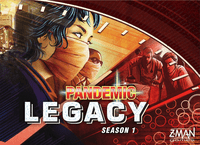
Next is Pandemic Legacy. Ah, yes. Season one. Did you ever finish this game? Uh I played about almost half of it and then our group just kind of fell apart. I think we all lost interest. But uh we're trying to do a review on that again. Yeah, I played uh three fourths of it. Okay. It's kind of ironic, too, but I think this still fits. I think it's crab. I also think it's a crab game. Okay. Yeah. So, it feels ironic because it's a legacy game, so the map is changing. But actually upon playing the game, the map doesn't really change that much and it's very reliably changing. I mean, there there are some twists in the game, I don't want to spoil it, but it doesn't seem like it changes that much. Right. And even if you lose, you don't actually lose. Right. Like you you can you can play the exact map again or you could just move along to the next one. Um it's very reliably going to give players the same experience every time they play it. And you know, at some level, if you've played Pandemic before, it's a very reliable experience jumping into this. Oh, sure. I mean, the design of Pandemic is there is a very optimal way to play the game and it's pretty easy to figure out and you don't really need a group of other people there to help you to play the game optimally. One person can win it all by themselves.
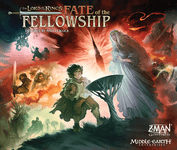
I mean, also this game is pretty much always the same ending, right? I haven't completed it, but it seems like there's no decision to make really. Like certain areas can get more affected than others, but you're still doing fundamentally the same thing. Uh I also think mechanically it's similar to a crab game because the core system is so sturdy, you can take it and you can really mess with it and it still works almost exactly the same as normal. And thus we can see the reliability and robustness of the system in Lord of the Rings Fellowship of the What is it called?
Uh Fate of the Fellowship.
Fate of the Fellowship, yes. So, what's number one on BGG?
So, we'll go all the way back to number one. We had to We had to do it. So, drum roll. Well, number one is Brass: Birmingham.
Okay, I wrote down I think I'll stay with it, crab. I think it's very much while not explicitly on rails, there's so many things that just make you have a reliable experience. You can even look at how the board resets. That wants you to not get too carried away from the first era to the second era. If you mess up on a placement, it'll probably still be okay in the future. It'll probably still get you some money in the future. A card can be used for multiple things in your hand. And if you want to look at a more meta level, the game is a lot when I heard it's a lot friendlier than the previous version Lancashire. So, they were trying to make it more accessible. So, to make it more accessible, you have a more reliable experience, more feels good, more friendly.
From my limited plays with it, I would call it a lion game because taking basically everything you just said, I would ratchet up a little bit and say like, "Well, because the board resets, that means you have to play harder. You have to win harder. You have to get as much value as you can. Placement matters even more because it's going to have a greater effect over the course of a long grindy game." But I haven't played it as much as you have, so I could be swayed, but that's why I would say it's more of a lion game. I was actually thinking lion. But frankly, I yeah, I think we're kind of on the same wavelength with this game. Okay, but now that we're at the end and maybe it's the most fun part. It's like what is What are our what predilections for these these categories? What is something that you like the idea of a lot and something you like the idea of the least and what's something that you actually end up liking?
If the fiction and the mechanics are so nicely intertwined that everything makes sense, that's like, "Wow, that game must be perfect." That that that probably is like a perfect game for me. Does that ever turn out to being true in practice? No. Dune: Imperium. Almost never. I see. You know, funnily enough, I actually wrote the same thing. I wrote down I personally like crane the most. Like I have the most respect for it. I think it's very cool. Yes, I I I imagine it's also really hard to design. Yes. Because if you design like a lion, then you just need to design with How do we make this game the most of a war simulator as we possibly can? How do we make the most competitive game that we possibly can? And let's just follow that to its logical conclusion.
Or a crab game, which is let's just make this game as consistent an experience for players as possible. Everyone's got a fair shot at winning.
Maybe really hard to heavily to like get blown out. Okay. Um and then we we look at all these different ways of designing or the way I really wanted to get at is theme first. So, we build the theme. Star Wars, Lord of the Rings, Harry Potter, whatever. The Plato, Republic. And we take that idea and we say, "Okay, how do we build a game off that?" We know exactly where to go to when we need to think of a mechanic, we just look at the source material and we say, "Oh yeah, that needs to be a mechanic." That seems comparatively very easy. I don't know if that means the game will be balanced, but I'm just saying if you need to come up with an idea, that seems very easy. Similarly, if we think of the game like like a lion game and it's like a game it's a one versus one card dueling game. Okay, what themes can we affix onto that? Again, that seems relatively easy compared to a crane game, which has to do all of that and it also has to play really well. Like it has to be very clean to play.
It also has to visually like communicate all the ideas of the game have to be communicated visually cuz you want to use as few words as possible because words are clunky and you don't want to use words when you have symbols. Yeah. Uh wouldn't you say this is a big criticism of a lot of FFG games that I think they were very lion based? Like for example, you could say a lot of the Eldritch Horror line and you could say, you know, some other big sprawling game like Kevin Wilson games, right? They're They're very principle first. Let's make something really cool. That's a principle idea and then the rulebook will like kind of suck and then there's like way too many components. It's like a It's a table sprawl.
Yes. Yeah. And it's like, "Oh, but it was It was a cool principle." I think whenever I play a game that seems very crane oriented, I haven't been let down. Like they're they're very they're very impressive in some way or another. Whereas so many lion and phoenix games are just like, "Oh my god, they just like burned. They just crashed and burned." Or I have very reliable games like crabs that are just like, "Okay, that was like cool, but so what?" Right. It's just like Or you have a unicorn game and it's like, "Yeah, it was fun, but there's nothing really stand out about your game."
Yeah, like even Dune: Imperium, right? Like we always come back to it. It's very crane game. Even there are games I've been kind of bored or like I'm behind or, you know, the theme is sucking, I still enjoy the systems and how they come together. And I wrote down here that actually I think I used to be more of a interested in unicorn games because I'm like very
I can find the perfect unicorn game for my group. Obviously at the time I wasn't thinking of that way. And it's like, "Oh, you know, Lords of War and Dice Well, I like Maybe I like the theme. Maybe someone else likes the worker placement. Someone else likes how it should work." So, there's all these like cool things that um again, mass appeal. Mass appeal is always interesting to think about.
It's kind of essential. I mean, you can't just like disregard it and say, "Well, it appeals to everyone, so it appeals to no one." Like I guess, but if you're a designer, your game has to appeal. And thus the game I end up liking the most are phoenix games. I like games that have something to say or that are trying to teach me something about history or about whatever the theme of the game is. The game designer is trying to communicate some idea. Those are the kinds of games that I end up liking a lot.
Okay, I'll phrase it in a different way. You know, board games you could say board games are like art whatever, but I think board games are more closer to luxury goods as in you play them to have fun. It's not like a car where you want a reliable car. It's I don't want like a reliable board game in the sense that it's always doing the same thing reliably. It's It's important for it to be reliably fun, but if it's reliably doing the same thing, I don't think that's a good thing. And it's I think it's as a designer it can be hard to say, "Oh, my game is reliably fun" because that's hard to design. Whereas maybe you want to more say, "I want to reliably create these moments." In practice for me, I end up liking scorpion the most. Yeah, I mean I just see Yeah. You love being tricked.
I wouldn't say it's a trick, but I think I think if the game can provide these really cool moments, I think it's just like, "Wow, this is awesome to play." Absolutely. I think on a on a average for me, for sure. Scorpion games are extremely good and really fun. Right. I'm I'm happy to be tricked. I'm I'm okay with games pooping once in a while. Right? Some people can't stand it, but I'm okay with it. And I think also part of that is just like, "Well, it pooped out for me, but maybe I can enjoy my friend having a good time." And that's a cool story. The thing I actually like the least is phoenix. Yeah.
Yeah, I I've experienced it. I wish I wish it wasn't the case. Yeah, concepts don't do much for you. Uh I think it's Yeah, I mean it's it's fine. I mean they can be fine, but on average I'd prefer probably a different approach, something at the very least more principle oriented. But I wish this wasn't the case. I think I'm figuring this out in the last two years or so, you know, with John Company, all these GMT games, the whole cuz yeah, I know I know you board games are art sort of thing. I I get it, but sometimes yeah, I just want to have a good time. Sure.
Yeah. I don't think there's anything wrong with that. It's and it's not like, you know, any of those games are neces- Like none of these games are monolithic, right? I mean, we're putting them in categories cuz it's fun, but you know, it's a lot of elements coming together. Uh so, personally I play games to win and the journey to, as Mark Rosewater said, the journey to win in a game should be fun. Like doing the winning thing should be all fun. But in phoenix games, that's not really a priority. I just can't come back to John Company.
It could be. Uh I think in Cosmic Encounter actually trying to play to actively That's not a phoenix game.
It's got phoenix.
It's got a lot of phoenix elements, yeah. I'm broke.
lots of games have different themes about them. So, to me I would imagine you're kind of a lion fan cuz you like games that you play to win and you play them a lot and you get good at them and you you beat other people because you understood how to play the game and the game rewarded you for your time invested in it.
I mean, I could say that about TI4. I mean, Cosmic TI4 is a crane game. TI4 Sometimes it doesn't matter how good you are. You'll still You'll get screwed. But I feel like I am getting rewarded for being better at the game. Doesn't mean I'll win, but I'm getting rewarded. Like I get to do more cool plays. I get to, you know, negotiate better. It's pure dragon. It's pure dragon. I guess. That's a That's a Johnny. Yeah. This is just
Comment below. What L5R clan are you? Which one are you? Thanks for watching on our discussion where we broke Ashton. Yeah, it's hard. It's It's hard because there's so many things to consider, right? There's so many things to consider. Cuz it's by by talking about one game in one train of thought, you can say, "Oh, but then what isn't it kind of like that one as well?" And then Yeah, but maybe it's both of these. Well, which one is it more of?