





Ohio Bob Deep Dive
What the Community Thinks About Ohio Bob
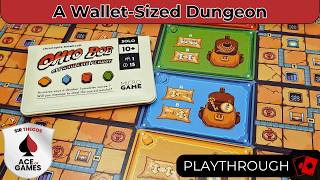
Ohio Bob generates genuine disagreement among board game reviewers. On one hand, Akos from Sir Thecos completed a full playthrough and awarded it their "silver surfer" recognition, calling it a "really clever little solo dungeon crawler" that "does a lot with just these few cards." The design impresses them as a thoughtful exploration of what's possible within a compact card-based format, with "really fun decisions" that carry weight throughout the game.
On the other hand, Tom Vassel from The Dice Tower delivered a harder critique, rating the game 5 out of 10. They found the ruleset confusing, describing the rules as "absolutely atrocious," and felt the game experience fell short, calling it "a really slow dull solo type game." This split reflects two different experiences: reviewers who found Ohio Bob's puzzle tightly designed versus those who struggled with the ruleset and felt the pacing dragged.
Core Mechanics That Define Ohio Bob
Multi-Use Cards as Strategic Currency
Ohio Bob's equipment cards are its beating heart. Each card in your hand serves multiple purposes: it can be played as a movement action, a way to explore new rooms, a shield against traps, or a resource that earns you gem colors needed to win. The constraint is strict: you play one card per turn and choose a single function from its options. This creates tension across every decision. Do you use that compass card to move and gather resources now, or do you save it for a trap defense later? Akos found this structure particularly elegant because it forces players to constantly evaluate opportunity cost. With only four starting cards and a limited hand, each turn matters.
Energy Recession and Reclamation
Your energy meter ticks down with every action, especially when you rest to recover your cards. But rest is mandatory when your hand empties, so the game forces you into a cycle: play cards to explore, deplete your hand, rest and lose energy, rebuild your hand. Resting becomes both lifeline and penalty. This push-your-luck tension is where the puzzle emerges. Akos showed in their playthrough how careful planning around rest turns separates winning from losing. You must explore efficiently, gathering the right gems without exhausting yourself before reaching the third level. The reclaim mechanic is not novel, but Ohio Bob makes it central to the solo experience.
The Ohio Bob Experience
Exploration and Discovery
You move through a temple one card at a time, each new room revealing fresh hazards: chests that reward you with new equipment, traps that drain energy, pits that force you to rest, and rations that restore health. The temple grows under your hand as you explore, creating a physical map of your journey. Akos narrated their playthrough with genuine curiosity about what lay beyond each wall. The game does not hand you the solution; it asks you to navigate with incomplete information and cards you did not choose. This creates a rhythm where setbacks feel like puzzle obstacles to solve, not arbitrary failures.
Compact Design, High Portability
Ohio Bob exists in two editions. The wallet version is cards only, fitting entirely in a pocket, requiring nothing but a single token (which Akos notes you can improvise from a pebble). Akos praised this version specifically because it removes friction from play; no lookup tables, no board fiddling, just pure card management. This portability appeals to solo gamers who want something they can play anywhere, anytime. The larger box edition adds tokens and a two-player cooperative variant, which the teaching video (Kovray and Tyler from Coy) explored in detail: players progress separately but can exchange cards when adjacent, adding a collaboration layer to the core solo design.
What Makes Ohio Bob Stand Out
Doing Much with Few Components
Akos returned to this point repeatedly: Ohio Bob is "one of the best like uh small compact put in your pocket uh dungeon crawler designs." They were struck by how the game manages three full levels of dungeon with only a deck of equipment cards, no miniatures, no tokens beyond one placeholder. The modular starting cards let you set difficulty by flipping them to their harder sides, which gives the game significant replayability without adding bulk. Compare this to the many dungeon crawlers that demand a table's worth of real estate and dozens of tokens: Ohio Bob proves that elegance often lives in constraint.
Strong Solo Scaffolding
This is a solo game first, not a multiplayer game with a solo mode bolted on. Akos noted throughout their playthrough that every mechanic serves the one-player experience. The energy system creates stakes. The limited hand forces meaningful choices. The fixed temple structure means you are not playing against a scripted AI; you are playing against the puzzle. Akos compared Ohio Bob favorably to The Last Lighthouse, one of their favorite small solo games, though they felt Lighthouse still edges it out in overall design. The comparison suggests Ohio Bob sits in a tier of genuinely serious solo work, not a novelty.
Potential Drawbacks
Rules Clarity and First-Time Confusion
Tom Vassel's criticism directly targets the ruleset. They stated bluntly that "the rules are absolutely atrocious," suggesting new players face a significant barrier to entry. The teaching video (Kovray and Tyler) does help here, running through every icon and effect methodically, but the fact that a 40-minute rules explanation was necessary points to real clarity issues in the printed rulebook. If you are the kind of player who becomes frustrated when ruleset architecture feels slippery, Ohio Bob may demand patience before it clicks.
Pacing and Momentum
Tom Vassel also called the game "slow and dull." This is a subjective criticism, but it deserves weight. Dungeon crawlers of this type ask players to accept deliberate, thoughtful turns. You move one or two spaces, resolve room effects, maybe grab an item. The game does not rush. For players accustomed to faster card games or real-time systems, Ohio Bob may feel like watching paint dry. Akos did not complain about pacing in their playthrough, but Tom's reaction suggests the game's meditative rhythm is not universal. Some players will find that contemplative space appealing; others will find it exhausting.
If You Enjoy Ohio Bob
Consider Idaho Joe, which shares Ohio Bob's adventuring theme and puzzle-like exploration structure, though with a different mechanical foundation. Akos mentioned The Last Lighthouse several times as a spiritual sibling in the solo-game space: both are compact, card-driven, thoughtfully designed experiences that reward careful planning. Both demand you sit with uncertainty and make difficult choices with incomplete information. If you love the small-box dungeon crawler aesthetic and solo play, these comparisons point to a family of designs you will likely appreciate.
What Reviewers Are Saying
"Ohio Bob and the Lost Amulet is a really clever little solo dungeon crawler. It does a lot with just these few cards. The decisions are really fun and I had a really great time with it."
— Akos, Sir Thecos
"I think is a really solid dungeon crawler. I think this like one of the best like uh small compact put in your pocket uh dungeon crawler designs."
— Akos, Sir Thecos
"The rules are absolutely atrocious and the game just feels bad as just a really slow dull solo type game."
— Tom Vassel, The Dice Tower