






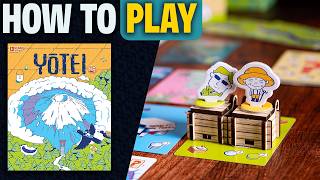



Yotei Deep Dive
What the Community Thinks About Yotei
Reviewers consistently praise Yotei for its charm, accessibility, and engaging core mechanic of bidding with potatoes. The game struck a chord at conventions like Essen, where it sold out before reviewers could acquire copies. This is a game that appeals broadly: critics appreciate it both for its thematic design and its clever mechanics that create meaningful tension without overwhelming players. The general consensus is that Yotei delivers on the promise of a light, quick game that nonetheless rewards tactical decision-making. Tantrum House calls it one worth checking out for players who enjoy tactical decision-making paired with strong aesthetics, while BoardGameCo notes that the demand at Essen was so high that no copies were available for purchase, suggesting genuine enthusiasm in the community.
Core Mechanics That Define Yotei
Hidden Auction and Bidding
Bidding is the heartbeat of Yotei, and it works differently than traditional auction games. Players secretly place potatoes into bidding boxes and commit them to cards they wish to claim. As Meeple University explains, this creates a central tension: "Can you get the good cards cheaply using a low bid?" The system forces players to estimate both the value of a card and what competitors might be willing to spend. Because bids are hidden and binding, there is no second-guessing or adjusting after seeing what others commit. This mechanic, combined with Mighty Boards' clean design, transforms the simple act of claiming a card into a moment of calculated risk. The bidding interacts dynamically with the game's path-building structure: players can also flip cards face-down to block opponents and gain basic rewards, adding another layer of strategic blocking to the auction.
Resource Management with Potatoes
Potatoes serve as Yotei's currency, but they are not merely chips to spend and forget. They are the lifeblood of the economy: spent to place workers, bid on cards, and ultimately scored at the end of the game (every three remaining potatoes equals one Charm Point). This dual function creates genuine scarcity. Every potato spent is a potato not scored. Reviewers note that the game's designers have made the economy accessible compared to Splendor, letting players reach higher-tier cards faster without the grinding prerequisite chains. Yet this faster pace does not trivialize the resource puzzle. BoardGameCo observes that despite the game's short 30-60 minute playtime, players face constant arithmetic decisions: is it worth using three potatoes now to block a powerful opponent, knowing that will cost three Charm Points later?
The Yotei Experience
Cozy, Charming Hokkaido Atmosphere
The theme of building a charming town at the foot of Mt. Yotei in Hokkaido, Japan, sets a tone that is distinct in the genre. Reviewers consistently describe the aesthetic as cozy and cute. The artwork, components, and the whimsical potato currency create a visual and tactile experience that feels inviting rather than confrontational. Meeple University opens their review with unambiguous enthusiasm: "I love the theme. I love the fact that you bid and pay with potatoes. And this is so cute." This charming presentation extends to the game's physical design; laser-cut wooden components and a color palette that evokes a peaceful mountain village contribute to the sense of building something pleasant together, even though players are competing. The short playtime reinforces this feeling: the game moves quickly, rarely overstaying its welcome, which allows players to enjoy the theme without fatigue.
Tense, High-Stakes Bidding Moments
Beneath the cozy surface lies surprising tension. The hidden bidding system means that every player faces uncertainty on every turn. Should a player bid aggressively for a card they desperately need, risking overpayment, or bid conservatively and risk being outbid? Meeple University notes that "the tension is higher because of the betting." This tension is heightened by the blocking mechanic: players can flip over cards their opponents want, denying them while gaining a small reward. The game's quick turns and rotating turn order mean that the card distribution can feel unpredictable. Meeple University observes that while this randomness can occasionally feel frustrating to some players, it prevents any one player from running away with the game early on. For most reviewers, the emotional arc is satisfying: the cozy theme and accessible rules lower the stakes emotionally, but the bidding mechanics deliver real decision-making and the possibility of surprise reversals.
What Makes Yotei Stand Out
Faster Progression Than Splendor
Yotei borrows the tableau-building DNA of Splendor but streamlines a core pain point. Grant Lyon directly compares the games: "You can get to the top cards much more quickly in Yotei. They don't have anywhere near as much cost or prerequisite comparatively speaking." This design choice has two effects. First, it reduces the grinding early game where players feel locked out of powerful options. Second, it keeps the game's economy tighter. Because cards are more accessible, the decision of whether to bid now or save potatoes for later remains urgent throughout. Splendor can feel like a race to unlock an engine; Yotei feels more like a continuous negotiation with opponents, all happening on a level playing field.
Potatoes as Currency and Scoring
The potato gimmick might sound superficial, but it is the mechanical and thematic beating heart of the game. Potatoes are not interchangeable with gold or money; they evoke the rural, agricultural character of Hokkaido and create cognitive resonance with the theme. More importantly, the fact that potatoes serve both as spending currency and as endgame scoring (three potatoes equal one Charm Point) creates a constant internal negotiation. This design prevents the common tableau-building problem where players who earn the most resources early run away with the game: potatoes are always a trade-off between immediate power and final points. The potato mechanic is remembered by reviewers; Meeple University returns to it multiple times as a reason to recommend the game, suggesting that the whimsy and thematic integration left a lasting impression.
Potential Drawbacks
Top-Deck Randomness Can Undermine Strategy
While the quick turns and rotating turn order prevent kingmaking and keep the game close, they introduce an element of uncontrollable luck in card availability. Meeple University flags this concern: "The most valuable cards can be subject to a bit of top deck randomness, which can be a bit of a shame in some players." If the card a player has been saving potatoes for fails to appear, or if a powerful card comes out just after resources were spent, the game's tight resource economy can feel less rewarding. Players who prefer games where careful planning reliably yields results may find that Yotei's card-draw timing occasionally overrides their strategic intent. The mitigating factor is the game's short playtime, which means any run of bad luck is resolved quickly.
Blocking Mechanics Can Feel Confrontational
The ability to flip cards and block opponents, combined with hidden bidding, means that player interaction is constant and sometimes direct. A player might flip a card an opponent desperately needs simply to deny it to them, even without being able to take it themselves. For groups that prefer cooperative or low-confrontation games, this can feel mean-spirited. The game encourages aggressive play and a willingness to spend resources on blocking, which some playgroups might find exhausting or frustrating. The cozy theme can create cognitive dissonance with the cutthroat bidding underneath.
If You Enjoy Yotei
Players who appreciate Yotei's bidding and resource-management core will find similar satisfaction in Splendor, which pioneered the tableau-building engine mechanic that Yotei refines. Splendor shares the goal of expanding an economy through careful procurement of cards, but Yotei's hidden bidding system and shorter playtime make it feel more dynamic and less like an optimization puzzle. For those drawn to the charming theme and cozy aesthetic, seek out games with strong thematic production and quick turn resolution that do not demand lengthy analysis, such as other Mighty Boards titles or lighter European designs. The tight resource economy and constant decision-making in Yotei also appeal to fans of push-your-luck games and economic simulations, though Yotei is lighter on rules complexity than classics in those categories.
What Reviewers Are Saying
"It's a charming town-building game set in Hokkaido, where you spend potatoes to claim cards, sometimes before you can even afford them. You're competing, bidding, and building your perfect town."
— Tantrum House
"Yotei is kind of like the engine building game Splendor. You'll gain some stuff which will help you get better stuff later in the game. In this one though, you can go to a card and guarantee you get it, but there are better cards you can try to bid for, but you might get outbid for them."
— Grant Lyon
"There's always the chance for a lot of blocking in this game because you have the option to flip a card over, getting its basic backside effect, and bidding on it, flipping over the cards your opponents want."
— Meeple University