


Gorilla Marketing Deep Dive
What the Community Thinks About Gorilla Marketing
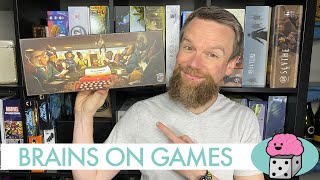
Gorilla Marketing strikes reviewers as a distinctly creative party game that prioritizes humor and originality over mechanical depth. The core appeal is straightforward: players write silly product names and marketing slogans, then their peers vote on which ones are funniest or cleverest. Brains On Games describes it as a "writing exercise" rather than a traditional word game, emphasizing that the creative and comedic process matters more than spelling or vocabulary mastery. Watch It Played's Rodney Smith frames it as a race to come up with "the funniest or cleverest marketing ideas and slogans," capturing how much reviewers value the humor and peer judgment. The Board Game Garden's Jenna echoes this during late-night convention play, where the game functioned perfectly as a silly, accessible group activity. Consensus is warm: reviewers enjoy the lightness and social dynamics, though none position it as a strategic or mentally taxing experience.
Core Mechanics That Define Gorilla Marketing
Dice-Driven Letter Constraints
The mechanical spine of Gorilla Marketing is deceptively simple: each round, players draw letter dice until they accumulate four dice or roll two red faces, whichever comes first. Special faces include blanks (reducing available letters) and a 2x multiplier (counting the next die twice). These letters form an acronym that all players must use to write their answers. Brains On Games demonstrates how rolling B, blank, and A forces a product name like "Bad Bailiffs" where each word must start with the corresponding letter. This constraint system, though it resembles word-building mechanics, serves a fundamentally different purpose: it jumpstarts creativity by narrowing the possibility space. Rather than asking "what can I spell?" the game asks "what clever name or slogan starts with these exact letters?" Designer Adam Wise and publisher Roxley Games built a system that feels loose and playful, never punitive, because the letter combinations are rolled fresh each turn.
Peer Voting and Award Categories
Once players have written their answers, the game shifts to judgment. A new die is rolled to determine an award category that judges by, such as "longest dramatic scene," "worst subtitles," or "best executive bathroom." The current judge reads through all the submitted answers and chooses the one they think best fits the award, or simply the one they find funniest or most clever. Watch It Played emphasizes that "you're the judge, it's up to you," giving each player final say over what wins their round. This voting mechanic transforms Gorilla Marketing from a solo creative exercise into a social event where the laughter and debate over which answer is "best" becomes the real game. The judge selects a winner who collects a banana meeple. Two rounds (one for product names, one for slogans) generate two judging phases, doubling the opportunities for peer recognition.
The Gorilla Marketing Experience
Uninhibited Silliness and Humor
The game's atmosphere is built on the expectation that players will be ridiculous. Brains On Games notes that players are "trying to be creative or clever or funny" in equal measure, and the dice constraint makes it easier to lean into absurdity because you are not trying to optimize your vocabulary. An example from the transcript of "Bad Bailiffs" as a movie title illustrates how the game invites players to stretch logic and embrace whatever wordplay or absurd concept the letters suggest. The Board Game Garden plays Gorilla Marketing late at night during a convention, where it fits naturally into a mood of "late night silly minds," suggesting the game is equally at home as background entertainment or the night's main event. There is no penalty for being weird or wrong; every answer gets read aloud by the judge and considered on its own merits.
Accessible Creativity for All Skill Levels
One of Gorilla Marketing's key strengths is that it does not require players to be "good at games." A player who struggles with strategy or word games can still contribute a hilarious product name or slogan. Brains On Games emphasizes that the game "requires some long-term memory to think back about previous movies or books or products or food trucks or bands," inviting players to draw on their own experience and taste rather than obscure game knowledge. Since the judge is the final arbiter, there is no such thing as a wrong answer; a terrible product name can win if it makes the judge laugh. This lowers the barrier to entry significantly, making Gorilla Marketing appealing to casual players, children (it supports ages 8+), and experienced gamers looking for a palate cleanser.
What Makes Gorilla Marketing Stand Out
It Is a Writing Game, Not a Word Game
Brains On Games makes a careful distinction that deserves emphasis: "Gorilla marketing is a game that's a fill in the blank kind of a game that involves letters, but it's more of a writing exercise than just a word game." The difference is profound. Games like Scrabble or Codenames live and die by vocabulary and exact word choice. Gorilla Marketing cares about the creative product: the name "Bad Bailiffs" is not being tested for spelling or for its dictionary validity; it is being judged for whether it is a funny courtroom drama title. This shifts the cognitive load from linguistic precision to imaginative expression. Players are not competing to find the best word; they are competing to come up with the cleverest concept. The letters are scaffolding, not the art form.
Peer Judgment Replaces Point-Chasing
Traditional party games often accumulate points through games of chance or trivia knowledge. Gorilla Marketing strips this down to its essence: do your peers think your idea is good? The banana meeples are a score-keeping convenience, not the driver of engagement. Watch It Played highlights this when describing the judge's choice: "it could be because you like how it matches the award or you might just think it's the funniest or the most clever, you're the judge, it's up to you." The judge is not consulting a scorecard or a rulebook; they are exercising taste and humor. This makes Gorilla Marketing feel less like a "game you are trying to win" and more like a "thing you are doing together where sometimes your idea gets celebrated." That shift in framing eliminates the sting of losing while preserving the pleasure of being recognized.
Potential Drawbacks
Limited Depth and Replayability
Gorilla Marketing plays in approximately 30 to 40 minutes with a light mechanical footprint. While this is a feature for some occasions, it also means the game has limited strategic development or mechanical innovation across plays. Each game follows the same cycle: roll letters, write an answer, judge, repeat. The die rolls ensure some variety in what letters players receive, and the seven category themes (companies, college courses, movies, etc.) provide cosmetic variety. However, players returning to the game after their first few plays may find the experience largely unchanged. The game's appeal is consistently strong for casual play at parties or conventions, but it may not be a title that develops depth or invites repeated study over many sessions.
Subjective Judging Can Feel Exclusionary
Because the judge chooses the winner based on personal taste, players whose sense of humor does not align with the judge's may feel that their best ideas are overlooked. There is no objective correctness to appeal to. If the judge thinks puns are unfunny and a player excels at them, that player will lose more often. This is not a rule flaw, but a social dynamic: in a game where judgment is subjective, some players may perceive bias or feel their contributions are undervalued. Additionally, players who are quieter or less verbal may struggle in the judging phase, where the judge's reading aloud and enthusiasm for the submissions influences how funny they land. The game requires a table that is collectively willing to be generous with laughs.
If You Enjoy Gorilla Marketing
Players drawn to Gorilla Marketing should consider other lightweight party games that prioritize creativity and humor over tactics. Codenames invites a similar collaborative naming process but with a hidden-information clue-giving dynamic. Wavelength challenges players to communicate abstract concepts on a spectrum, also emphasizing the social art of being understood and delighting peers. For a game that pairs creative writing with social voting, Wink Royale and the caption-writing game That's What She Said offer similar pleasure in seeing your joke land with a table. Gorilla Marketing is most at home alongside other games that value mood and table conversation over individual strategy: it pairs naturally with lighter fare and works best when players are primed to be silly and generous with their laughter. If you seek a game that accelerates the transition from strangers to a laughing group, Gorilla Marketing succeeds at that specific mission.
What Reviewers Are Saying
"It's a fill in the blank kind of a game that involves letters like some of the other games that we've talked about before, but it's more of a writing exercise than just a word game. You are doing some creative writing here, which is different from some of the other games."
— Brains On Games
"Guerrilla marketing in a nutshell, this is a game that's about creative writing that requires some long-term memory to think back about previous movies or books or products or food trucks or bands that have been advertised in the past."
— Brains On Games
"You choose the title that you like best, and it could be because you like how it matches the award, or you might just think it's the funniest or the most clever. You're the judge. It's up to you."
— Watch It Played