

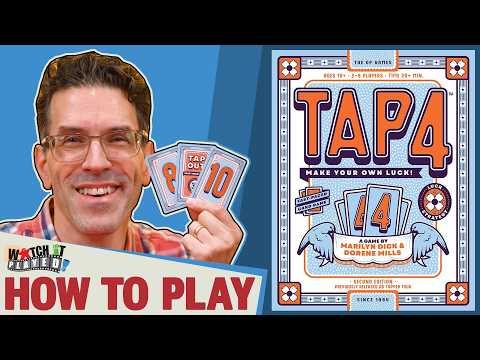






Tap 4 Deep Dive
What the Community Thinks About Tap 4
Tap 4 has earned widespread respect as a clever evolution of the card-shedding genre. Reviewers consistently praise it as a natural step forward from Push Your Luck games like Flip Seven, offering more tactical depth without sacrificing accessibility. The game's journey from underground hit to mass-market release through The Op speaks to strong community enthusiasm. Reviewers appreciate that the game delivers genuine decision-making moments alongside take-that moments, creating a competitive experience that feels both strategic and social. While one reviewer noted the inherent uncertainty of sequels to beloved games, consensus suggests Tap 4 stands on its own merits rather than merely capitalizing on an existing name.
Core Mechanics That Define Tap 4
Card Shedding
At its heart, Tap 4 is a card-shedding game where players race to empty their hands and piles. Each player begins with 19 cards: four face-down, four face-up on top of those, and 11 in hand. The goal is straightforward: get rid of all your cards before anyone else. To do this, players play cards to a central communal stack where each card must be equal to or lower in value than the card showing on top. The mechanic creates constant tension between playing conservatively (holding high cards for later) and playing aggressively (trying to clear your hand fast). Reviewers note this creates a natural rhythm to each round that feels more like traditional card games than the pure push-your-luck structure of Flip Seven.
The Stack Tap System
The signature mechanic that gave Tap 4 its name is the stack tap: when four or more cards of the same value sit on top of the stack, the entire stack is discarded and play resets. This creates explosive moments of relief and opportunity. A clever twist that reviewers highlight is the ability to play matching cards from other players' contributions, meaning if an opponent plays two nines, you can play your two nines on top of them to complete the set of four and clear the pile yourself. This interplay between players elevates the game beyond simple card ordering, as you watch the stack grow and make calculated bets about whether you have the cards to complete it. Tap-in and tap-out special cards also modify this system, allowing players to bypass the stack or block opponents from playing.
The Tap 4 Experience
Strategic Tension
Reviewers consistently highlight that Tap 4 delivers more strategic depth than might be expected from a card-shedding game. Players must decide when to play high cards, when to hold them, when to take a risky flip of a face-down pile card, and when to use their limited tap-in and tap-out cards. The face-down card element introduces blind luck, but even that becomes tactical: do you flip early and take the risk, or do you wait and hope for better cards in hand? The game creates natural decision nodes where a single card choice shapes the entire round's trajectory. This blend of luck and choice means that while fortune matters, skillful play consistently outperforms random decisions.
Take-That Competition
Unlike many shedding games that feel purely individual, Tap 4 puts direct competition at the table through its tap mechanics. Playing a tap-out card on an opponent forces them to skip their turn, creating moments of vindication and rivalry. An opponent with a tap-out played against them can counter with a tap-in card, raising the stakes of these confrontations. Reviewers appreciate this theatrical element, noting that Tap 4 feels like "more of a traditional card game" partly because players directly affect each other rather than simply racing in parallel. The take-that moments are punchy but not overwhelming: tap-outs are limited in the deck, so they matter when they land rather than dominating play. This keeps the game competitive without descending into kingmaking or runaway-leader problems.
What Makes Tap 4 Stand Out
Elegant Underground Pedigree
Tap 4 has a remarkable story that reviewers find compelling. The game was designed by two friends who met in Idaho, Marilyn Dick and Doryn Mills, forming such a strong bond over games that they decided to create their own. What began as a homemade design sold organically across the United States purely through word of mouth and local play, a rare achievement in the crowded board game market. The Op's decision to bring it to mass retail came not from pursuing trend-chasing but from recognizing genuine grassroots enthusiasm. This origin story shapes how reviewers approach the game: there is no corporate calculation here, just two friends refining an idea through play with their community. The game's authenticity resonates with players tired of manufactured hype.
Accessible Depth
Reviewers praise Tap 4 for striking a difficult balance: it is easy to teach and plays in 15 to 30 minutes, yet offers genuine tactical choices for engaged players. A game can be learned in a single round, with the core rules comprehensible within minutes. Yet the interaction of face-down cards, hand management, stack prediction, and tap mechanics creates a decision space that rewards experienced players. One reviewer notes that most players remark on discovering more strategy than they expected, suggesting the game sneaks depth in organically rather than overwhelming newcomers with complicated rules. This makes Tap 4 equally at home as a gateway game for new players and a fun tactical offering for experienced players who enjoy card games.
Potential Drawbacks
Sequel Skepticism
One reviewer immediately flagged a concern that seasoned board gamers will recognize: sequels to wildly successful games often fail to capture the magic of the original. When asked whether Tap 4 is a "follow-up" to Flip Seven, the reviewer's observation was honest: most sequels to beloved games underperform. While community consensus suggests Tap 4 succeeds in this regard, the comparison invites questions. Players who come to Tap 4 expecting another Flip Seven experience may find it plays quite differently, which could disappoint those seeking more of the same rather than a distinct game. The title's similarity to Flip Seven might even create false expectations about what kind of game experience awaits.
Blind Card Uncertainty
The face-down card mechanic creates tension but also introduces moments where luck can overwhelm decision-making. When you flip a face-down card from your piles without seeing it first, you risk drawing a high card that forces you to pick up the entire stack, undoing several turns of progress. While reviewers appreciate this as a source of drama, players who prefer games with lower randomness might find the mechanic frustrating. The blind card element can occasionally create situations where a single unlucky flip decides an entire round, particularly if multiple face-down cards are flipped in succession. Players seeking pure strategy over push-your-luck gameplay may find this aspect grating on repeated plays.
If You Enjoy Tap 4
If the card-shedding mechanics of Tap 4 appeal to you, reviewers suggest exploring Flip 7, which offers a purer push-your-luck experience if you want lighter, faster play. Swish provides another alternative in the shedding game space with its own unique twist on hand management. Poop Head, often mentioned alongside these titles, offers a similar competitive card-shedding experience with its own flavor of direct player interaction. Beyond the immediate family of shedding games, players who enjoy Tap 4 typically appreciate trick-taking games and other titles where hand management and reading opponents matter more than single-turn luck.
What Reviewers Are Saying
This game was originally created by a couple of grandmas in Idaho, I think, something like that. And it has been a underground hit. It has been a game that has sold all over the US just basically by word of mouth and stuff. So, the op is creating a more mass-market friendly version of this underground hit card game.
— Grant Lyon, Grant's Game Rex
I thought I would like flip seven more, but they're both different. Totally. Flip seven is strictly push your luck. This one feels like more of a traditional card game and flip seven doesn't.
— Tony and Marty, Rolling Dice and Taking Names
Here you'll be racing to get rid of your cards and keep your score as low as possible. This game was designed by two friends who met in Idaho and formed such a bond over games they decided to design their own.
— Rodney Smith, Watch It Played