


Castellans Deep Dive
What the Community Thinks About Castellans
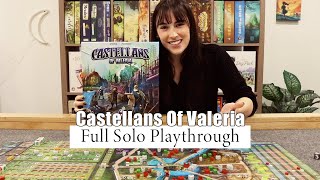
Castellans, published by Daily Magic Games and designed by Isaias Vallejo, is set in Kosk, the city at the center of the Valeria setting. The Board Game Garden is the only channel that has covered the game so far, and its three videos treat Castellans as a prototype. The reviewer repeatedly notes that the components and rules are still changing, including smaller building spaces so pieces fit the double-layered player boards, new screen printing on the pieces, reworked Monuments, and a single consolidated rulebook in place of separate books.
The overall reaction is positive but conditional. The reviewer describes the game as an area majority and area control design built around a dice draft, and they say the multiplayer game is where it shines. Their solo playthrough against an AI opponent ended with a 139 to 128 win, yet they were clear that the solo mode is a fun but less satisfying experience than sitting across from other people who can think for themselves. The reviewer also said they had a strong interest in the dice mechanism itself, calling it one of the parts they enjoy most.
Core Mechanics That Define Castellans
Dice Drafting
Each round, a pool of dice is rolled and players take turns drafting them. The reviewer begins each turn by weighing which resources they need, then decides which dice will let them take the three actions they plan to perform that round. Selection order matters because the AI opponent follows a published priority list, so drafting a die away from the AI can be a deliberate denial move. The reviewer also notes that the faces on the dice are what matter, since a die can feed a resource track, pay for a building, or trigger a bonus on the player board.
The reviewer's favorite layer is the bonus structure tied to specific dice. Each building and action on the player board has an associated die face, and using that face for that action unlocks an extra reward. A wood die placed on the Manor action, for example, lowers the wood cost of building it. Cards such as the Sculptor let any die count as a stone, which lets a player who commits to temples draft more freely.
Area Majority
The board is divided into six districts, and each round the game scores three of them, with every district scored in the final round. Players compete for control in each district, and the reviewer explains that the leader earns the largest reward while second place earns a smaller one. When players tie, the reviewer pooled the rewards for the tied places and split them evenly. Control power comes from citizens, temples, manors, ships, windmills, and green competition buildings, each contributing a different amount, which means a district can be won with a single well-timed placement or lost to a late rival.
The Castellans Experience
Tense
Much of the tension comes from the four guild influence tracks. Each district is tied to two guilds, and placing buildings there moves a player's marker along those tracks, with the highest position on each track earning victory points at the end. The reviewer repeatedly reacts to the AI racing ahead on a track, saying things like "oh no they're racing up that bird track I am nervous," and describing the AI as staying close on the key track. The race for influence keeps the solo game from feeling like simple bookkeeping, even when the AI's choices are less than ideal.
Satisfying Engine
The reviewer's pleasure comes from building a machine that works. Temples generate influence and cost an extra coin when another temple already sits in the chosen district, while the Statue scores victory points for every temple in its district at the end of each round. Some manors add an ongoing influence each time a new manor is placed, and the Lighthouse rewards a player for ships in its district. The reviewer's approach of going "full on Temple strategy" illustrates how a player can commit to one line of play and then adjust as the board changes.
What Makes Castellans Stand Out
Die Faces That Trigger Player Board Bonuses
The most distinctive feature is that the same die can be used for a building's base action or for its bonus action, depending on which face is chosen. The Board Game Garden highlights this as the element that turns a standard dice draft into a planning puzzle. Players must think about the resources they need, the actions they plan to take, and the faces they will use for each action, all at the same time.
Guild Influence Tied to Districts
Rather than scoring control alone, Castellans links every district to two guilds, so a placement affects both area control and a separate guild race. The reviewer explains that buildings usually move a marker on those tracks, and that the game's end scoring rewards whichever player is furthest along each track. This two-layer structure rewards players who think about both the current round's district scoring and the longer track race at the same time.
Potential Drawbacks
The Solo AI Places Buildings by Die Roll
The most consistent criticism comes from the solo mode. The AI follows a priority list for which dice it drafts, but where it places buildings is determined by a die roll. The reviewer says that the AI often makes placements that are not the best choice for it. The reviewer wonders whether the AI's end-of-turn Monument and Wharf scoring is meant to offset that randomness, but is not sure it does. The reviewer's suggestion is a mechanism that lets the AI evaluate placements by what would score it the most points, which they believe would make the solo game more challenging and more interesting.
A Prototype With Unsettled Rules and Components
Because the reviewer played a prototype, several rules questions came up during play. The Board Game Garden noted uncertainty about whether all five green competition buildings should be placed at setup when the AI did not claim a district, and the reviewer ultimately rolled to remove one at random. The solo Wharf card was also misread during the filming, and the reviewer later posted a correction explaining that the icons on the card do not matter for the AI's scoring, only the color of the box that matches the AI's dice. Those issues are likely to be resolved in the final rulebook, but they show that the rules were still being refined when the game was previewed.
If You Enjoy Castellans
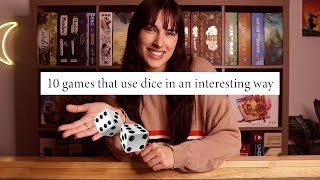
The closest comparison in the Board Game Garden coverage is Role Player from Thunderworks Games. The reviewer describes it as having a similar approach to dice drafting and placement, with dice taken from a central pool and placed into rows and columns to meet scoring totals. Players who like Castellans' dice draft will find a different kind of dice puzzle in Role Player, one that focuses on character attributes rather than district control. The reviewer covers this in their list of games with interesting dice mechanics.
For players who want to explore dice that shape their actions in unusual ways, the same video highlights Wayfarers of the South Tigris, where the reviewer builds a caravan that determines what each die face can do. That game is more about customizing dice than about area control, but it shares Castellans' focus on making each die face matter. The reviewer also called it one of their favorite games of 2022, which makes it a useful next step for players who think of dice as a resource rather than a randomizer.
What Reviewers Are Saying
"I will add as well that when you use certain dye for certain actions or building certain buildings you get some bonus reward, which is one of my favorite parts of this, trying to get those specific die that you know you're going to be using for placing out specific buildings. I think it's a really cool mechanism."
— The Board Game Garden
"Each of the different buildings and actions on your player board are actually going to have an associated die face, so if you use that die face to do that specific action you're going to be able to get some sort of benefit. At the same time as thinking about what resources you need when you're drafting, you're also thinking about what die you're drafting in order to do the specific actions and get rewards."
— The Board Game Garden
"I feel like it would have been a little bit more difficult if there was some sort of mechanism or something that you could determine where the AI would place a building based off of what would get them the most points or what would be best for them instead of just rolling a die and just putting it into a random spot."
— The Board Game Garden