


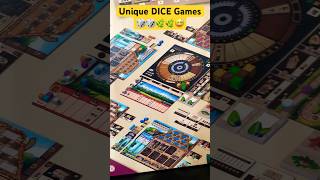









ICE Deep Dive
What the Community Thinks About ICE
ICE reveals a divided community. Reviewers consistently praise its most distinctive element, the multi-layered board structure, but opinions diverge sharply on whether the overall experience delivers on its mechanical promise. Some players describe a surprisingly engaging and tactical game with elegant simplicity. Others found a sprawling mess that tries to be too many things at once. What emerges is a portrait of a game that hits differently depending on expectations and play style. The archaeological theme and tile-digging core resonate with those who embrace the puzzle of excavation, while the competing objectives and luck-driven elements frustrate those seeking pure strategic depth.
Core Mechanics That Define ICE
Action Point Allowance
Each round, players receive a fixed budget of action points (five in standard play, varying by player count) and spend them on actions that define their turn. These actions include building camps on fully uncovered tiles, calling archaeologists to locations, exploring to adjacent tiles, and excavating to remove tiles and reveal layers below. The mechanic gives players control over turn pacing: you can take many quick actions or fewer deliberate ones. The cost structure creates decision tension because different actions cost differently, and players must rationally sequence their moves to stretch their budget further. Higher excavation costs can be reduced by positioning multiple archaeologists and leaders on the same tile, making team management essential. This system rewards efficient pathing and creates emergent gameplay where the board state constantly reshapes player priorities.
Set Collection Through Artifact Discovery
Beneath the ice lie artifacts that players place on their guild boards. These artifacts come in five types, each with active and inactive states determined by rarity. Once activated (by collecting enough of a specific type), each artifact grants a one-time or recurring ability: extra action points, movement bonuses, free excavations, or the power to collect collapsing tiles. However, activated artifacts are not permanent advantages. During the end-of-day phase, players must remove artifacts to complete request cards, which trade short-term ability loss for victory points. This forces a constant tension between maintaining powerful activated abilities and scoring victory points when demand is highest. The trade-off defines ICE's core economy. Players must calculate whether activating an ability serves them now or whether holding artifacts for end-game card completion maximizes final scoring.
The ICE Experience
The Satisfaction of Layered Progression
The multi-layered board creates a tangible sense of progress. Each excavation removes a tile, revealing a new layer and shifting the geography of play. Reviewers note that watching five layers of hexagonal tiles gradually come into view delivers a satisfying visual rhythm that most games cannot match. Early rounds feel like careful prospecting; middle rounds become about committing to profitable excavation paths; final rounds reward players who positioned themselves to reach the deepest artifacts. The gimmick wears off once players understand the pattern, but the core satisfaction of uncovering new terrain persists. This mechanical depth beneath the surface metaphor is ICE's greatest strength.
Tension Between Cooperation and Competition
Despite competitive scoring, ICE forces shared table space in ways that create unexpected interaction. Archaeologists are neutral; any player can move them, so your positioning choices depend on predicting what neighbors will do next. Request cards are drawn from a public market, forcing open negotiation over which objectives remain available. Camps placed strategically can become assets for all players, creating moments where helping an opponent slightly serves you more. This light social layer does not transform ICE into a negotiation game, but it adds enough interaction that silent analysis-heavy play feels hollow. The best experiences seem to arise when players treat excavation as collaborative puzzle-solving interrupted by competitive scoring.
What Makes ICE Stand Out
The Multi-Layered Board Mechanism
No board in the modern hobby looks or plays like ICE's five-layer excavation system. The physical structure is striking: players literally dig through overlapping hexagonal tiles, revealing new terrain with each excavation. This is not a reskin of existing movement or set-collection systems; it is a genuinely novel way to structure board progression. By making the board itself the primary resource that players compete to uncover, ICE anchors all decisions to a single, elegant concept. The production of multi-layer tiles enhances rather than gimmicks this mechanic, making it feel like a core pillar of design rather than window dressing.
Straightforward Rule Set Hiding Tactical Complexity
Players describe ICE as mechanically simple to teach but tactically dense in play. The base actions (build, call, explore, excavate, plan) are intuitive. The cost structure for excavation can be explained in a few minutes. New players grasp the goal immediately: collect artifacts, activate abilities, complete objectives for points. Yet the interplay of these systems creates surprising depth. Positioning choices matter enormously because every placed leader and archaeologist changes excavation economics for all players. The public artifact market and shared camps create dynamic board states that punish rote play. This gap between simplicity and depth is the hallmark of elegant design.
Potential Drawbacks
Luck in Artifact Discovery and Objective Matching
ICE embraces hidden information in ways some players find frustrating. Request cards specify artifact colors or shapes, but you do not know what lies on a tile until you excavate it. This creates scenarios where objectives and available artifacts do not align, forcing players to either abandon objectives or pursue suboptimal excavations. Similarly, some snow tiles (one-time effect abilities found on top-layer excavations) range from situationally useless to game-warping in power. Reviewers note that these luck elements sit uncomfortably in a game with such heavy tactical weight. When four players spend 90 minutes deliberating excavation paths only to have randomness undermine their strategy, the experience sours quickly. The randomness seems designed to keep kingmaking at bay, but it may frustrate euro-game players seeking full player agency.
Analysis Paralysis and Runtime Creep
The action point system, combined with the board's dynamic state, creates substantial decision space on each turn. Because positioning one archaeologist changes subsequent excavation costs for everyone, players often analyze multiple future turns before committing. With four or five players, each round can extend beyond reasonable time. The box claims 90 to 120 minutes, but reviewers report consistent experiences of two to three hours, especially in the early game when players are learning. This is not a light social experience where you can play casually; the tactical density demands engagement. For groups that do not embrace analytical play, the runtime and decision load become liabilities rather than features.
If You Enjoy ICE
Players drawn to ICE's excavation core will find similar satisfaction in Ticket to Ride, where the core loop of claiming and connecting routes shares the same addictive simplicity covering tactical choice. For those who embrace the set-collection and artifact-driven abilities, Everdell offers a lighter but mechanically related experience of gathering components to activate card effects. The hidden artifact discovery and spatial puzzling also appeal to fans of Space Base and Azul, both of which balance emerging complexity with accessibility. Finally, players who appreciate ICE's unusual theme and multi-layer board mechanic should explore other archaeology-adjacent exploration games, though few match its singular approach to board design.
What Reviewers Are Saying
"You have to spend these artifacts, which means you might not have them available to give you those special abilities. Now this is one of the main ways you're going to get prestige points at the end of the game, so you have to weigh removing these artifacts along with keeping them for those abilities."
— Getting Games
"This game sucked. I hated this one. We all did. It was boring. It was punishing. It was luck driven."
— Luke Hector, Broken Meeple
"It's a very straightforward rules-wise game, but it has some very nice interaction and very nice tactical choices. And there's a super cool layered board with five or six layers that you're digging down the ice to get artifacts."
— Board Gaming Ramblings