



Scream! Deep Dive
What the Community Thinks About Scream!
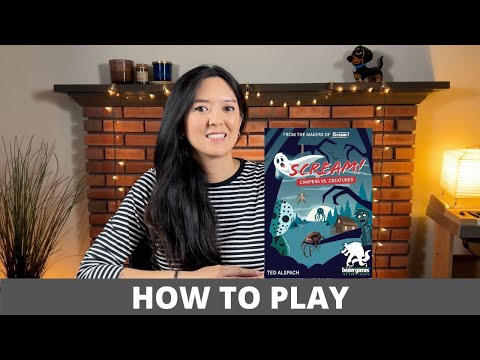
Scream! arrives as a spiritual sequel to the beloved camping-themed card game Scram, but trades the wholesome forest animals for a descent into horror. The premise sets the stakes clearly: the campers from Scram foolishly unleashed the powers of the Necronomicon, and now creatures from their darkest nightmares have invaded the campsite. Players must survive the night by managing their cards, bluffing strategically, and timing their final declaration just right to escape with victory. Reviewers view this as an evolution of a proven card game formula, adding layers of deception and dark atmosphere to a game they already understand and enjoy.
Core Mechanics That Define Scream!
Hand Management Under Pressure
Scream! is fundamentally a card reduction game where the goal is straightforward: finish each of three rounds with the lowest cumulative score possible. Players draw and exchange cards throughout the round, and most cards remain face down to conceal their values. This hidden information creates constant tension. When you first receive your six starting cards, you see all of them once, and then arrange them strategically before flipping them face down. This single moment of knowledge becomes crucial, because afterward, memory and guesswork guide your exchanges. Reviewers note that being aware of your play area and knowing where specific cards sit becomes as important as the cards themselves. The rearrangement phase is where early strategy reveals itself, as players lock in their positioning before the bluffing begins.
Bluffing and the Challenge System
The bluffing mechanic sits at the heart of Scream!'s tension. When you exchange cards for ones in your campsite, you may slide forward multiple cards at once, and they must match in value. However, with face-down cards, you can claim they match even if you are unsure or bluffing. Once you attempt an exchange involving any face-down cards, other players moving clockwise from your left can challenge you. If challenged and caught bluffing, you pay a penalty. If your challenger is wrong, they draw a penalty card instead. This creates a social layer where knowing your opponents, reading their confidence, and taking calculated risks becomes as valuable as the cards you hold. The ability to bluff extends to certain card actions as well. Some high-value cards grant special abilities like viewing other cards, but players can bluff about what they are using those abilities for, inviting further challenges. The result is a game where timing a bluff, recognizing when someone is bluffing, and managing the fear of being caught all factor into every turn.
The Scream! Experience
Dark Atmosphere Meets Hand-Management Tension
The horror theme is not merely window dressing. The dark, spooky camp setting frames every decision as a survival choice. Players are not playing through abstract card values; they are campers trying to protect their campsites from creatures of nightmare. This thematic layer gives weight to the hand management challenge. When you are deciding whether to challenge an opponent or let them get away with a likely bluff, you are making a choice about your own survival. Reviewers appreciate that Bezier Games, in their declared year of fear, created a game that maintains the accessible gameplay of Scram while wrapping it in genuine atmosphere. The zombie twist on the camper setting, where friendly forest animals turn hostile, adds dark humor and stakes that the original lacked.
Moment-to-Moment Decision Making
Each turn in Scream! forces a choice with consequences. Drawing from the main deck lets you use card actions, but reveals nothing about incoming threats. Drawing from the discard pile keeps cards face down but limits options. Exchanging cards shuffles your campsite but signals your hand strength to opponents. Most crucially, deciding when to scream and trigger the end of the round by claiming you have the lowest score is a high-stakes gamble. Succeed, and you score zero points. Fail, and you take a massive penalty on top of your current score. This decision point creates a race that accelerates as the round progresses, with players reading the table for tell and timing their moment perfectly. Reviewers describe this as creating killer moments where the game's outcome hinges on a single bold or cautious play.
What Makes Scream! Stand Out
The Successor's Fresh Take
Scream! sits in the lineage of golf-style card games like Silver and Scram, games where lower scores win and reducing your hand is the goal. However, by adding mandatory bluffing and the challenge system, Scream! raises the social stakes significantly. In Scram, you manage your hand in relative quiet. In Scream!, every exchange becomes a moment of truth. This evolution addresses one of the complaints some players have about pure hand management games: they can feel solitary or mechanical. Scream! injects player interaction, risk assessment, and reading opponents into a familiar format. Reviewers who know Scram see Scream! as a natural step forward, not a departure.
Accessibility with Hidden Depth
The rules are learnable in a single sitting. Draw a card, use it or exchange it, and manage your score. But the bluffing system and the hidden information create emergent strategy quickly. Newer players can play honestly and learn the card values. Experienced players will begin to bluff, remember positions, and make meta-reads on opponents. The game welcomes both, and the difficulty scales naturally with the table. This accessibility without sacrificing depth is a hallmark of well-designed card games, and reviewers recognize Scream! as hitting that mark.
Potential Drawbacks
Reliance on Memory and Player Engagement
Scream! demands that players pay attention and remember card positions and previous exchanges. For players who struggle with memory games or find information tracking exhausting, the hidden card element could feel overwhelming. The game can also suffer if players are not fully engaged or are playing too cautiously. If bluffing is rare or everyone plays honestly, the game becomes a pure memory test. Some players may find this less rewarding than the player interaction and risk-taking that make Scream! shine.
Potential for Table Conflict
Because bluffing is core to the game, successful bluffers may face resentment from other players, and unsuccessful challenges can create frustration. The challenge system is designed to feel fair, but some players may perceive repeated failed challenges as bad luck rather than part of the game's intended tension. A table that tends toward confrontation over games, or one where players hold grudges, may find Scream!'s bluffing mechanic more stressful than fun.
If You Enjoy Scream!
Players who loved Scram will find Scream! immediately familiar and engaging, especially those who wanted more player interaction from the original. Those who enjoyed Silver and other golf-style card games should explore Scream! as a darker, more interactive entry in that tradition. The comparison reviewers draw to Scram is direct and intentional, as Scream! operates in the same mechanical space while adding the bluffing layer that elevates social play. If you enjoy hand management games with hidden information, or games where reading opponents matters as much as the cards, Scream! delivers on both fronts.
What Reviewers Are Saying
"Scream the card deduction game for three to five players is the spiritual sequel to the camping theme competition scram and in Scream we learned that during their stay in the woods the campers from scram foolishly unleashed the powers of the necrom monicon oops well now your camping Adventure has turned all spooky and such with creatures from your darkest nightmares coming out of the woodwork can you survive the night well in Scream players will still draw and play and exchange their cards but also will use bluffing elements as well then scream when you believe you have the lowest score and with killer timing you'll survive until morning Victorious."
— Pair of Dice Paradise
"SCREAM IS A HAND MANAGEMENT BLUFFING card game where players race trying to get rid of their cards and have the lowest score possible in front of them at the end of each round. Most of this game your cards are going to be face down so that you're not going to see them. At the beginning of the game you're dealt five cards face down and one face up. You look at the face down card once, rearrange them and that's it. So that rearranging is important because you basically when you rearrange them make sure that it's something that works for you as far as for in your play area, you know, you have an idea about where they are."
— The Dice Tower
"They were showing off scream which is uh scram but like a darker version almost like a zombie version of scram and if you don't know what scram is it's very similar to the silver series which is a series that you all know that we love but it is a co-op game so that's all about like camping and the forest animals and all of that stuff and this version is if it's like takes place after that and there's zombies and the animals like turn on on you and all of this stuff so if you like the gam playay of scram and things like silver now there's going to be a spooky version."
— Foster the Meeple