Game Info
Year
2025
Players
1
Age
14+
Playtime
60 min
Collection
Your Tier
Loading…
Mechanic profile
Not enough video data yet
Vibe profile
Not enough video data yet
Description
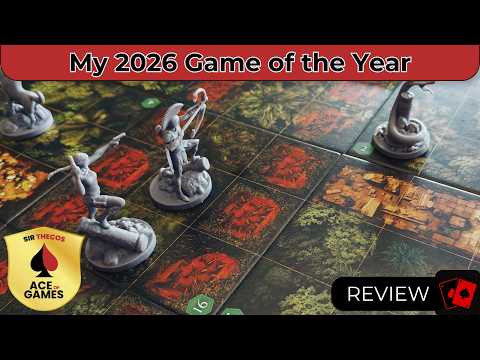
A solo Tomb Raider adventure game where Lara Croft explores a deadly island to find a time-bending artifact.
Featured Videos


Ask a Rules Question
Images

GID0452967.jpg

GID0452967_thumb.jpg
All mentions
Browse transcript mentions, sentiments, pros/cons, mechanics, topics, quotes, and references.
Total mentions: 8
This page: 8
Sentiment:
pos 8 ·
mix 0 ·
neu 0 ·
neg 0
Showing 1–8 of 8
Video GYvkRYDLS3U
Sir Thecos Review at 0:18 sentiment: positive
video_pk 106469 · mention_pk 307785
Click to watch at 0:18 · YouTube ↗
Overall sentiment (raw)
positive
Pros
- Streamlined setup and gameplay compared to other campaign games.
- Manageable table space and practical storage solutions.
- Engaging theme that captures the Tomb Raider feel, blending classic and modern elements.
- Satisfying crafting system that allows for loadout adaptation.
- Elegant and clever dice allocation system.
- Flexible gameplay allowing for various approaches (action or stealth).
- Sense of progression through research and one-time abilities.
- Consequential failure system that punishes mistakes without requiring full restarts.
- Adaptable enemy behavior, especially with advanced rules.
- Lots of replayability with different scenarios, objectives, and modes like Island mode.
- Compact box size for the content.
- Good rulebook clarity and useful glossary.
- Attention to detail in thematic elements like outfits and miniatures.
- The save system works well for continuing campaigns.
Cons
- Large, impractical rulebook size.
- Small crafting bag can be a nuisance to mix tokens.
- Crafting system can feel restrictive with limited slots (addressed by a house rule).
- Boss fights can be less strategic and more about raw power.
- Deluxe dice quality not as good as regular dice.
- Line of sight rules for enemies don't always feel thematic.
Thematic elements
- Tomb Raider franchise
Comparison games
- Tomb Raider II
Mechanics (from transcript analysis)
- achievement system — The campaign includes achievements that provide additional goals and can unlock relics.
- action resolution — Actions are resolved using dice, with a system that requires commitment and risk assessment.
- Campaign Adventure — A pure solo campaign adventure game where players move through scenario-based maps to complete objectives.
- crafting — Players can craft weapons, outfits, and other items to adjust their loadout and adapt to situations.
- Dice allocation — Players assign dice to actions and resolve them, with different actions having varying risks and rewards based on dice rolls.
- Enemy Movement — Enemy movement rules are a factor in gameplay, though some edge cases were noted.
- Health management — Lara's health is a key resource, and losing health has permanent consequences on the player's dice pool.
- Loadout Adaptation — Players can constantly adjust their loadout by crafting and choosing equipment, allowing their character to adapt during a scenario.
- Resource Management — Collecting and spending resources is part of the gameplay loop, particularly for crafting.
- scenario-based gameplay — The game is structured around individual chapters or scenarios with specific objectives and varying conditions.
- Set Collection — Collecting outfits and weapons is a key part of customizing Lara's abilities and loadout.
- Stealth — The game includes stealth as a viable approach, allowing players to avoid enemies and move carefully.
Video topics + discussion points
No key topics recorded for this video.
Quotes (from this video)
- This is an absolute keeper for me, and honestly, it may be my favorite game I've gotten to know this year so far.
- I like this game a lot, and this may be so far my game of the year 2026.
- Gameplay always takes precedence over theme.
- I think this is a very elegant solution.
- While Tomb Raider: The Crypt of Chaos is not a perfect game, it is an excellent solo game and an excellent solo experience.
- If you enjoy the Tomb Raider video game series, solo campaign games, scenario-based puzzles, or adventure games that give you meaningful choices without drowning you in rules and upkeep, this is absolutely one to look at.
References (from this video)
No references stored for this video.
Video AUNBLQzFj4U
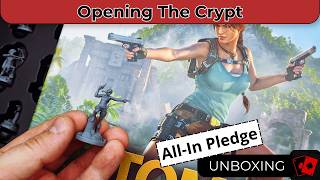
Sir Thecos Unboxing at 0:17 sentiment: positive
video_pk 99453 · mention_pk 276522
Click to watch at 0:17 · YouTube ↗
Overall sentiment (raw)
positive
Pros
- Massive boulder miniature is impressive and unique.
- High attention to detail in components and miniatures.
- Includes content inspired by both old and new Tomb Raider games.
- Offers multiple game modes including campaign and scenario creation.
- Extensive amount of add-ons and exclusives available.
- Player boards have an alternative side for original vs. new character models.
- Includes a Croft Manor epilogue adventure with Winston.
Cons
- Dislikes large rulebooks.
- Worry about the durability of some miniatures (e.g., Centaur).
- Dice wash might have an issue, making them look too metallic.
- Too much plastic is used for components, preferring wood.
Thematic elements
- Tomb Raider exploration and adventure
- the island of Kyros
Comparison games
- Metal Gear Solid the board game
Mechanics (from transcript analysis)
- Campaign play — The game features an island campaign mode with multiple chapters and an additional epilogue adventure in Croft Manor.
- crafting — Mentioned as a mechanic where players can craft weapons, outfits, and abilities.
- Dice Rolling — Dice are used for tests during specific actions and for attack successes.
- Modular Board — The game uses map tiles for different environments, allowing for scenario creation.
- Resource Management — Mentioned implicitly through the 'resources' section in the player board and the presence of resource tokens.
- unlockable content — Players can unlock different outfits and abilities as they progress.
Video topics + discussion points
No key topics recorded for this video.
Quotes (from this video)
- Look at this massive boulder miniature.
- I think I've never seen anything like that in a game.
- it's essentially it's a solo game.
- The reason I got this is first of all, the gameplay really looks good, but also I really like Tomb Raider.
- Wow. Enemy face. There's loads to go through here, but it looks good.
- This is like a box. I don't know what cards you put in here, but this actually is the backpack of Larara Croft.
- I really like that attention to detail.
- All right, so these are like the miniatures here.
- And these look actually really nice. These look cool.
- And then here we have Winston. Look at him. There he is. Very nice. I I like that. Having Winston in here, I think, is amazing.
References (from this video)
No references stored for this video.
Video UVL3mAdnUqw
Sir Thecos Rules Teach at 0:25 sentiment: positive
video_pk 99134 · mention_pk 275835
Click to watch at 0:25 · YouTube ↗
Overall sentiment (raw)
positive
Pros
- Minimal table space required.
- Quick setup and teardown.
- Quick to learn and play.
- Fun gameplay with strategic crafting and dice allocation.
- High attention to detail for Tomb Raider fans.
- Excellent replayability through various modes and expansions.
- Good rulebook structure.
- Adaptable enemy difficulty.
- Thematic integration of outfits and weapons.
- Player agency and meaningful choices.
- Compact and well-designed components.
- Paced introduction to mechanics.
Cons
- Deluxe dice might not be as visible on camera.
- Line of sight rules can feel slightly unthematic.
- Scenarios might become similar over time, though this is not confirmed yet.
- Boss fights have not been experienced yet.
Thematic elements
- Searching for a relic of unimaginable power capable of manipulating time itself, while a corporation also seeks it.
- Mysterious island said to appear only once every two centuries
Comparison games
none
Mechanics (from transcript analysis)
- Action economy — Players manage a limited number of actions or dice per turn to perform various tasks.
- crafting — Players can craft weapons, outfits, and abilities at any time using collected materials, changing their loadout.
- Dice allocation — Players allocate a specific number of dice to an ability, then roll them to perform actions like moving, searching, or attacking.
- Enemy Line of Sight — Enemies have a defined cone or box of vision that dictates what they can see and react to.
- Research — An action that allows players to gain new abilities or advantages.
- Resource Management — Players collect crafting components and use them to create items or enhance their abilities.
- scenario-based play — The game is played through a series of scenarios, forming a campaign with evolving objectives and story elements.
- Stealth — Players can attempt to move and act without being detected by enemies, which is crucial for certain objectives and achievements.
Video topics + discussion points
No key topics recorded for this video.
Quotes (from this video)
- The game has pretty much like endless replay-ability. This is absolutely amazing.
- It's quick to set up, quick to learn, quick to play. I really enjoy this.
- So, yeah, nothing really negative to say about this game. I really enjoyed this.
- The game does have a lot of um of their own ideas.
- I really, really enjoy that. If you would like me to see if you would like to see like another playthrough of this on my channel, I will gladly bring you one somewhere in the future.
References (from this video)
No references stored for this video.
Video CDr1FpEyzy0
Rules Teach at 5:13 sentiment: positive
video_pk 79888 · mention_pk 193481
Click to watch at 5:13 · YouTube ↗
Overall sentiment (raw)
positive
Pros
- Enjoyed the gameplay and found it fun.
- The stealth mechanics and puzzle-solving aspects are engaging.
- The campaign progression and persistent elements add depth.
- Nostalgic outfits are a nice callback to the franchise.
Cons
- The prototype components were noted as brittle.
- The action camera can be volatile.
- Making noise can quickly escalate enemy attention.
- Losing dice permanently in the campaign adds significant difficulty.
Thematic elements
- Lara Croft seeking the Kronos artifact, capable of manipulating time, to prevent the shadowy organization Natlletch from obtaining it.
- Jungle on the island of Chyros
Comparison games
- Metal Gear Solid
- Final Girl
- Kingdom Death Monster
- Shadows of Brimstone
- Warhammer
- Primal the Awakening
- Gloomhaven
- Arkham Horror Third Edition
Mechanics (from transcript analysis)
- action selection — Players choose from six available abilities/actions per turn, using dice to perform them.
- Campaign play — The game features both a story-based mode with pre-set scenarios and a randomized campaign mode, with persistent effects across scenarios.
- Character progression — Players can gain new weapons, outfits, and abilities as they progress through the game.
- Combat (Melee and Ranged) — Players can engage enemies in melee combat or use dual pistols, with damage output influenced by dice rolls and resource spending (ammo).
- Dice Rolling — Actions are resolved by rolling dice, with results like hourglasses determining successes and movement. Players can choose how many dice to commit to an action.
- Enemy AI/Patrol — Enemies have different behaviors based on whether Lara is seen or has made noise, moving towards noise tokens or Lara's last known location.
- Event deck — An event deck drives random occurrences, including enemy spawns and special conditions, with cards sometimes being removed permanently from the deck.
- Health and Damage — Lara has health that can be reduced by enemies and traps, and persistent damage carries over between scenarios.
- Movement — Movement is determined by dice rolls and hourglass results, with different terrain types (low, high, block) affecting movement cost and line of sight.
- Research cards — Players can gain research cards through a research action, which provide benefits like rewinding time or re-rolling dice.
- Resource Management — Players collect resources like 'tools', 'oil', and 'cloth' which can be used to craft items, gain ammo, or purchase special dice.
Video topics + discussion points
No key topics recorded for this video.
Quotes (from this video)
- This is no ordinary expedition. The island is a labyrinth of treacherous terrain, ancient traps, and secrets hidden deep within its heart.
- The dice have been on my side a lot, haven't they?
- I've been quite successfully stealthy so far, which is not usually the way I get to do things.
- Learning how to have baby. I didn't have to have the baby. Learn how to make happy baby.
References (from this video)
No references stored for this video.
Video 5MUKcl62wVQ
Review at 0:01 sentiment: positive
video_pk 79886 · mention_pk 193479
Click to watch at 0:01 · YouTube ↗
Overall sentiment (raw)
positive
Pros
- High replayability due to randomized maps and objectives in the solo experience.
- The campaign mode offers connected missions with a persistent world where early decisions impact later gameplay.
- The dice system is interesting and tight, forcing meaningful risk-reward decisions.
- Nods to the Tomb Raider IP, such as themed outfits, are appreciated.
- The game feels reminiscent of classic adventure video games with its puzzle-like nature.
- Good solo experience, with multiplayer modes being less of a focus.
Cons
- Progression within missions could be improved; enemy difficulty is primarily tied to event cards rather than dynamic mission progression.
- Missions requiring a lot of back-and-forth movement can sometimes slow down the pace.
- Boss encounters are few and far between, especially in the random variant.
Thematic elements
- Laura Croft hunting for the mysterious Kronos artifact, while facing opposition from the organization Natala.
- The island of Kyros, a mysterious Greek island that appears once every 200 years.
Comparison games
none
Mechanics (from transcript analysis)
- action selection — Players choose from a variety of actions each turn, such as moving, attacking, searching, researching, crafting, or hiding, all powered by dice rolls.
- Crafting/Equipping — Players can craft weapons, outfits, and abilities using collected resources, which provide in-game bonuses and affect gameplay.
- Dice Rolling — Actions are performed by rolling dice, with successes determining the outcome of moves, attacks, and other in-game actions. Players choose how many dice to roll for each action.
- event cards — Event cards introduce challenges, enemies, or other effects that players must deal with, influencing the flow of the game.
- Modular Board — The game uses modular tiles to create different map setups for various locations like jungles and tombs.
- push-your-luck — Choosing how many dice to roll involves a risk-reward element, as rolling more dice increases the chance of success but also potentially wastes dice if not needed.
- Resource Management — Players collect resources like gears, cloth, oil, and treasure to craft items, equip outfits, or gain abilities. Some resources are consumable (e.g., bullets), while others are used for crafting.
- Set Collection — Collecting specific sets of resources (e.g., cloth and oil) is required to craft certain items or outfits.
Video topics + discussion points
No key topics recorded for this video.
Quotes (from this video)
- So, with these six dice, is this enough to do everything that you need to do? Uh immediately, no. Not usually.
- The dice system I think is interesting. It's very tight. So it it's always forces these interesting decisions of like, do I do I go for this? Do I hold on to it?
- I like that the decisions that you're making early on are affecting the game later.
- This is primarily a solo game.
- So that I would say is the biggest thing that I would maybe uh suggest to the developers as you're because this is still work in progress. As you are developing out some missions, maybe adding a little bit like that.
References (from this video)
No references stored for this video.
Video 6ftjopC1IHc
Playthrough at 0:07 sentiment: positive
video_pk 79662 · mention_pk 193214
Click to watch at 0:07 · YouTube ↗
Overall sentiment (raw)
Positive
Pros
- Engaging story through adventure book
- Solo-friendly campaign structure
- Satisfying dice mechanics
- Good component quality (especially painted minis)
- Quick setup and playtime per scenario
- Interesting progression system
Cons
- Game can be on the easier side (mitigated by house rules)
- Small resource bag size noted
Thematic elements
- Archaeological adventure, artifact hunting, time manipulation
- Chyros island, jungle, ancient traps, temples, tombs
- Story-driven scenarios
Comparison games
none
Mechanics (from transcript analysis)
- action selection — Lara's turn involves using dice to perform actions such as moving, searching, attacking, researching, hiding, and crafting.
- Campaign play — Health, ammo, and other resources carry over between scenarios, creating a persistent experience.
- Combat — Lara can attack enemies using weapons, which consume ammo and can create noise.
- crafting — Players can spend resources at a craft bench to create new weapons, outfits, abilities, or craft specialty dice.
- Dice Rolling — Players use six dice each round for actions like moving, searching, attacking, and hiding. Dice faces include blanks, successes, double successes, and sacrifices.
- Resource Management — Players collect and spend resources like scrap, cloth, and oil to craft items, weapons, outfits, and abilities.
- scenario-based play — The game features an adventure book with 15 scenarios that can be played sequentially, creating a campaign experience.
- Set Collection — Collecting relics by achieving certain numbers of achievements is part of the game's progression.
- Stealth — Players can choose to hide or become revealed. Being hidden offers advantages, while being revealed can attract enemies.
Video topics + discussion points
No key topics recorded for this video.
Quotes (from this video)
- I love having a challenging game.
- This is a solo only game.
- They are awesome.
- Whenever you attack from a higher level terrain to a lower one, you need one additional success.
- The game is so easy to set up.
- I am feeling like it's relatively easy, but I'm okay with that cuz I just want to explore the different levels.
References (from this video)
No references stored for this video.
Video _dexxxQtNAY
Unboxing at 0:04 sentiment: positive
video_pk 75543 · mention_pk 183800
Click to watch at 0:04 · YouTube ↗
Overall sentiment (raw)
positive
Pros
- Playmat is large and well-designed, showing where to place components.
- Components are shipped in a tube to prevent creases.
- Two distinct ways to play: campaign and island campaign.
- Island campaign offers replayability as it's different each time.
- Choices impact future games, with persistent effects from event cards.
- Ability to craft items and upgrades.
- High quality cardboard for the Laura board.
- Option for different art styles for Lara Croft.
- Nice punch board with clear component identification.
- Upgraded tokens available for Kickstarter backers.
- Thick, good quality cardboard tiles with clear labels.
- Achievements that unlock relics.
- Modular setup using terrain tiles.
- Advanced enemy side offers more challenge and unique abilities.
- Weapons and outfits can be crafted and chosen at the start of scenarios.
- Lara upgrades allow for more actions.
- Save points allow players to continue campaigns without restarting from the beginning.
- Expansion content can fit within the core box.
- Dinosaur enemies expansion recommended for immediate use.
Cons
- Miniature quality is not the greatest, though not terrible.
- Upgraded deluxe Tomb Dice are harder to see symbols on than regular dice.
- The core game might lean on the easier side, requiring the advanced enemy side for a challenge for some players.
- Some mini details are lacking, potentially making them easier to paint for amateurs but less impressive for collectors.
Thematic elements
Comparison games
- Lord of the Rings: Journeys in Middle-earth
Mechanics (from transcript analysis)
- action selection — Players choose from a set of actions, with the possibility of unlocking more as the game progresses.
- Campaign play — The game features both a main campaign with 20 scenarios and an 'island campaign' mode that offers a different experience each time.
- crafting — Players use collected resources to craft weapons, outfits, and ability cards.
- Deck Building/Management — The event deck is used throughout the game, and its contents can impact future sessions. Good event cards can be removed from the deck if their benefit is taken.
- Dice Rolling — Players choose how many dice to roll for actions, with a limit of six dice per round, creating a strategic choice between guaranteeing success and using fewer dice.
- Modular Board — The game uses terrain tiles (jungle, mountain, desert, tomb) that are placed on the board according to the scenario.
- Push Your Luck — Sacrifice symbols on dice require discarding an event card, which speeds up the event deck reshuffling and potentially brings the 'Notla' presence closer.
- Resource Management — Players collect resources such as oil, cloth, scrap, and treasure to use for crafting and other game actions.
- Save Points — The game includes save points, allowing players to resume their campaign from a specific point if they lose all health, and can repopulate good event cards into the deck.
Video topics + discussion points
No key topics recorded for this video.
Quotes (from this video)
- I love playmats that even show you where to place stuff so you know what they're thinking on how to uh utilize this playmat to the best of its abilities.
- This isn't a campaign oneanddone game. You have a full second way of playing the game. [...] It's called the island campaign mode. And this looks really cool, too, because you can play this. And every time you play the campaign mode, it'll be different.
- I got the upgraded, what are these called? Deluxe Tomb Dice. I'm never going to use those. Look at these. They're so much harder to see the symbols on here versus the regular dice.
- I love that. I love when everything fits in one box. When you have so many games that condension is or being able to condense your game is amazing.
References (from this video)
No references stored for this video.
Video mOqGGh-ot08
Review at 0:18 sentiment: positive
video_pk 74844 · mention_pk 181606
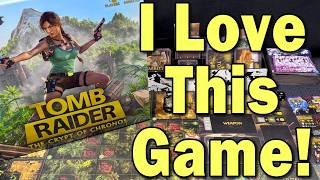
Click to watch at 0:18 · YouTube ↗
Overall sentiment (raw)
positive
Pros
- Love the crafting system and how it integrates with weapons, outfits, and abilities.
- The dice pool system is engaging and offers interesting choices for action allocation.
- The event deck works well as both a timer and a source of random challenges.
- The random quest mode with the overland map is highly enjoyable and scratches many gaming itches.
- Fast setup and play time allows for multiple games in a row.
- The legacy elements and unlockable artifacts add significant replay value.
- Captures the feel of the Tomb Raider video games, particularly the isolation and puzzle-solving.
Cons
- Not a ton of enemy variety, though enough to carry the excitement.
- The two-player mode is rudimentary and not recommended.
Thematic elements
- Exploration and puzzle-solving in tombs and crypts
Comparison games
none
Mechanics (from transcript analysis)
- action selection — Players commit dice to actions such as move, search, melee attack, hide, research, and dodge.
- Campaign play — The game can be played through a 15-level campaign where elements carry over between games, similar to a video game structure.
- crafting — Players can use collected materials at a crafting bench to create weapons, outfits, abilities, ammunition, health packs, and extra dice.
- dice pool — Players roll a pool of D6 dice with various sides (miss, partial success, sacrifice, single success, double success) to activate abilities.
- Event deck — An event deck is used to trigger random occurrences, spawn enemies, create traps, and acts as a timer. It also has an 'invaded' side that becomes active when attention is drawn.
- legacy/campaign progression — Weapons, outfits, abilities, and health carry over between games. Unlocking achievements grants persistent artifacts that modify gameplay.
- Modular Board — The game uses tiles to create different maps and includes random dungeon setups for replayability.
- Random Campaign — A mode where players explore an island, delve into random dungeons to find a map and key, and complete a final dungeon.
- Resource Management — Players collect materials (cloth, gears, oil) and treasures (wild resources) to use for crafting and other game effects.
- Stealth — A mechanic where being hidden grants bonus damage when attacking enemies, and a system for becoming hidden or unhidden.
- tile laying — The game uses tiles to set up different configurations for the map, with different biomes like jungle, tomb, mountains, and desert.
- Variable player powers — Outfits and abilities provide players with different ways to break the rules or gain advantages.
Video topics + discussion points
No key topics recorded for this video.
Quotes (from this video)
- And my god, I love this game. It is so good.
- I actually reached out to Iconic Studios, the publishers of this game, and just and pleaded with them, 'Please don't let this system die, because I think this system could be used for any number of games.'
- Tomb Raider: The Crypt of Chronos takes all of those things that I love about Tomb Raider and puts it into a really cool, fast playing and exciting board game.
- I love that system so much.
- This is awesome. I love this so much and this is definitely the way that I will play the game the most.
- I really love Tomb Raider: The Crypt of Chronos. I think it's fantastic. I love the way it plays. It's so much fun.
References (from this video)
No references stored for this video.
Transcript Navigation
Showing 1–8 of 8