








Mood Swings Deep Dive
What the Community Thinks About Mood Swings
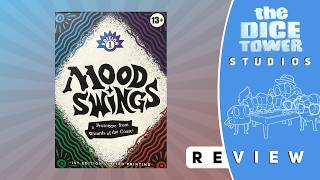
Mood Swings, Mark Rosewater's small card game sold through Wizards of the Coast's Secret Lair, splits its reviewers. One early reviewer, who received an advance copy from Wizards at MagicCon Vegas, calls it a love letter to TCGs and a wonderful way to introduce trading card game logic to board gamers, family and friends. Good Time Society plays it as a lively four-player party of emotions. The Dice Tower is far harsher: Tom Vasel and Zee Garcia find the collectible packaging baffling for a game played from one shared deck, and they see very few meaningful choices. The split comes down to whether the game is judged as a gentle doorway into Magic or as a finished design on its own terms.
Core Mechanics That Define Mood Swings
Playing Moods for the Highest Score
Each box holds 45 cards drawn at random from a pool of 133, with commons, uncommons, rares and mythic rares, as Good Time Society explains. Everyone plays from that one shared deck. On a turn a player puts a card into play, where it becomes a mood with a value, and when the round ends the highest total wins it. Ties go to whoever played first, because, as one reviewer notes, unlike Magic, going later is actually more advantageous. Winning three rounds wins the game, and card abilities twist the math along the way: Chivalry, in Good Time Society's game, flipped from a three to a five because its owner did not go first that round.
Catch-Up Rules
Mood Swings builds in deliberate catch-up rules. Good Time Society lays them out: the round winner goes first next round, which is generally worse, and does not get to draw a card. In three or four player games the player with the lowest score takes the hurt feelings token, which sounds bad but lets them play an additional mood on their next turn. The Dice Tower, otherwise unimpressed, singles out the winner not drawing as the one rule it likes, calling it a little catch-up mechanism.
The Mood Swings Experience
Silly, Fast Card Play
Nobody treats Mood Swings as a heavy strategy game. The Dice Tower describes it as silly and not taking itself seriously, with goofiness and absolutely not a whole lot of strategy, and imagines Magic players pulling it out when they want to do something silly between real games. Good Time Society's table leans into exactly that energy, groaning and laughing as Bitterness and hurt feelings change hands. For groups that want a light, chatty card game, the loose tone is the point.
Emotions as Game Effects
The theme is the hook. Every card is a feeling, and the effects often echo the emotion. The Dice Tower points to Grief, which lets its player put two more moods into play from the discard pile, and jokes that grief dredges up things from the past. The early reviewer reports that Rosewater designed the game with Rosewater's mother in mind, which fits its soft, everyday subject matter.
What Makes Mood Swings Stand Out
A Gateway Into Magic
The strongest case for Mood Swings is as an on-ramp. The early reviewer believes it will be easier for younger or less intense gamers to pick up, and could be a good gateway game to get someone into Magic or a newer Magic player into drafting. The same reviewer suggests curating a deck for shared play to guarantee a more interactive game, and hopes future releases make it easier to get a full set of the cards.
Art From Magic's Past
The card art stands out for Magic fans. Both the early reviewer and The Dice Tower note that the illustrations are sketches of Magic: The Gathering card art, giving longtime players something to linger over while they play.
Potential Drawbacks
Collectible Packaging for a Shared Deck
The Dice Tower's biggest complaint is the delivery system. The game is played from one deck for everyone, so the hosts argue the collectibility makes no sense and that they do not care whether a card is a mythic rare. Buying two boxes left them with roughly six duplicates, and they point out repeated ideas, blank cards, and near-identical commons across colors. Even the early reviewer, far more positive overall, found the randomly pulled deck felt low power and wished for an easier way to get the whole set.
Very Few Real Choices
The Dice Tower also finds little to decide. Some cards offer a choice between two effects, but the hosts describe those choices as very simple, often coming down to counting which color is more common. They acknowledge the game is not meant to be serious, but they are pointed about the result, noting that the design reportedly took 28 years. Players looking for tactical depth will likely agree.
If You Enjoy Mood Swings
The Dice Tower compares Mood Swings to two lighter card games. It calls it basically Flux, a silly, chaotic card game where sometimes the cards matter and sometimes they do not, and likens its one-shared-deck format to Love Letter. Players who enjoy the loose, quick play here should find the same appeal in either. For players who enjoy the card-game logic and want far more of it, Magic: The Gathering is the natural next step, which is exactly the path the early reviewer hopes Mood Swings will open.
What Reviewers Are Saying
"The flavor of the abilities paired to the moods they represent is spot on and creates really fun little mini game of embodying the emotions as you play the cards. Also, the art for all of these cards are sketches for existing magic cards or earlier versions of them."
— Watch Review
"But there's just nothing. If this is what it takes 28 years to design, I don't want to see what you design in a year."
— Tom Vasel, The Dice Tower
"If you took 28 years to make a little 133 card card game, it's one of two things. You suck at it, and you should never do it, or your game is you put in 3 minutes a week."
— Zee Garcia, The Dice Tower