











VNTYPL8S Deep Dive
What the Community Thinks About VNTYPL8S
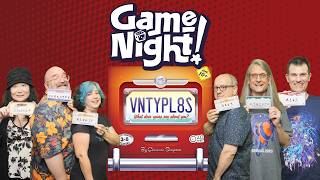
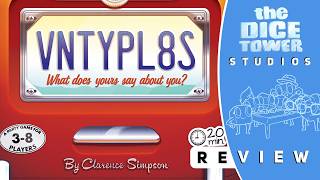
VNTYPL8S, also sold under its spoken name Vanity Plates, is a light party game from 25th Century Games, designed by Clarence Simpson, in which players write custom license plates for secret characters and everyone else races to guess who owns each plate. Reception is warm across the board. Going Analog made it their game pick after an eight player session they called a blast. Chris Yee of The Dice Tower gives it a seven and his seal of approval as a well-made and fun party game. Jamie of Tabletoptiktok likes its clever wordplay, and the players at the BoardGameGeek table came away proud of the plates they managed to write. The reservations are consistent too. The requirement cards can make plates very hard to write, and Chris Yee is clear that it is not the deepest party game and is not trying to be. The overall picture is a quick, clever, easy-to-teach filler with one rule that can frustrate.
Core Mechanics That Define VNTYPL8S
Clue Giving Through Constraint
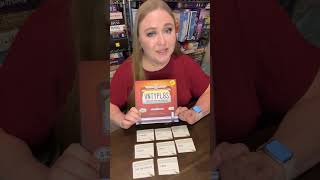
Each player draws an owner card, the character they are writing for, and a requirement card that lists characters their plate must contain. Going Analog describes the goal as something like two letters and one number to work in. The plate itself follows strict rules. As The Dice Tower reads from the rulebook, it allows only numbers and uppercase letters, with no spaces, punctuation or drawings, and the clue cannot use any part of the owner word itself. Plates hold at most eight characters, and there are no vowels at all. The BoardGameGeek table explains the workaround: a three can stand in for an E and a four for an A. Chris Yee demonstrates the idea with a billionaire card, writing a version of "mega rich" with numbers in place of the vowels while fitting in his required characters. Going Analog puts the appeal simply: the restrictions are what make the game really good, because players cannot write anything that comes to mind.
Racing to Guess
Once plates are written, players reveal them one at a time. The owner cards go into the middle of the table along with extra decoys, so the guessing pool includes everyone's characters plus six extras, according to The Dice Tower. Guessing is a free-for-all: the first person to shout out the right owner takes that card as a point. Every player gets only one guess per plate, and Going Analog notes that this keeps things from getting too chaotic, since a player who guesses wrong simply sits out while the rest of the table keeps competing. The writer earns their requirement card as a point only if someone guesses the plate and the requirements were met. Jamie of Tabletoptiktok adds that a game runs three rounds, or more or fewer as the group likes, and whoever holds the most cards wins.
The VNTYPL8S Experience
From Nervous to Proud
The most memorable reaction comes from the BoardGameGeek playthrough, where one player admits to being afraid of the game because of its spelling and letter rules, and expecting never to finish a first plate. That fear faded quickly. Once they got into the rhythm of writing, with an eight sounding like one thing and a seven like another, writing plates became easy, "but then the guessing is a whole other thing." Another player at that table sums up the feeling: the game made them proud that they figured it out. The puzzle is small, but solving it feels good.
Quick, Loud and Social
Coverage agrees that VNTYPL8S moves fast. Grant Lyon lists it as a lightweight party game for three to eight players in about 20 minutes, and Going Analog confirms that an eight player game with three full rounds took roughly that long. Going Analog also remembers a lot of laughter. Jamie calls the game snappy, with quick setup and simultaneous play that keeps everyone involved. The real-time guessing has its own small drama. Chris Yee points out that a wrong first guess eliminates an option for everyone else, and he likes that the game still rewards the player willing to be bold.
What Makes VNTYPL8S Stand Out
Components That Sell the Idea
Chris Yee spends much of his review on the production. The plates are dry erase boards made to look like real license plates, which he recognizes as plates from the 1990s, and he reports that every time people walk past the table and see the Hawaii plate, they say "McLovin." The included markers have erasers and wipe the boards cleanly for the most part, though they can get smudgy, and he advises against wiping with fingers because skin oils mark the boards. He also appreciates that the boards are double-sided, which he says means the game will last twice as long, and that the rulebook credits both the designer and a content designer, Nathan Thornton. His verdict on the concept is that the game almost teaches itself: people see the license plates and immediately understand what to do.
Wordplay Without Performance
For Jamie of Tabletoptiktok, the big draw is that VNTYPL8S delivers clever wordplay without asking anyone to stand up and do something ridiculous, and that it is very easy to get people into it. The BoardGameGeek group notes that the requirements force players to think in different ways about how to give a clue, and one player suggests the requirements could be changed out so kids and adults can play in the same game. Grant Lyon frames the theme as relatable: everyone who writes a vanity plate thinks they are clever, and half the time other drivers have no idea what it means.
Potential Drawbacks
Requirement Cards Can Be Too Hard
The most repeated complaint is the requirement cards. Chris Yee likes them but says they are sometimes really difficult, and in his verdict he names this as the main negative: some players lock up because the required letters are just too hard to match to the character. Sometimes a player writes a strong clue and then tacks the required characters on the end because they cannot fit them in, and he has seen people argue about whether that is in the spirit of the game. He is fine with it, but groups should expect the debate. He also warns that players not used to swapping numbers for letters need that explained up front.
Descriptive Text on the Owner Cards
Each owner card carries a few small description words beneath the main subject. Chris Yee found that those words were often ones he wanted to use in his clue, and after triple-checking the rulebook he concluded that they are allowed, since only the main subject is off limits. He is not sure whether this was done on purpose to guide players, but he calls it a slight negative. He also admits to misplaying the guessing rule at first, taking turns clockwise instead of guessing freely, so groups should read that part of the rules carefully.
If You Enjoy VNTYPL8S
The comparisons in the coverage are few. At the BoardGameGeek table, one player likens the game to the old television game show Bumper Stumpers, calling it the same idea and saying they are glad a board game was made out of it. During Our Family Plays Games' stream, a viewer pointed out a game called Road Tripping that looks a lot like this one, and the hosts noted it came out a number of years ago. Chris Yee's own advice is a useful test: if watching the rules explanation makes you want to play along and come up with clues, VNTYPL8S will live up to that; if not, it might not be your type of party game.
What Reviewers Are Saying
"I like when there's clever word play. I like when I don't have to stand up and do something ridiculous, and I like that it's very easy to get people into it and that it plays quickly."
— Jamie, Tabletoptiktok
"I like the requirement cards, but man are they sometimes really difficult. And sometimes you'll pull off something that was like so clever and good and sometimes it'll kind of direct your clue."
— Chris Yee, The Dice Tower
"And then we ran an eight player game last week and it was a blast. Everyone really really thought it was clever. It was a lot of laughter and it doesn't take long to play like in I think probably 20 minutes or so."
— Going Analog