





Stereo Mind Deep Dive
What the Community Thinks About Stereo Mind
Stereo Mind has struck a chord with board game reviewers across multiple communities. Reviewers consistently praise the game for its audacious concept and cooperative design, though responses split on difficulty and accessibility. The Dice Tower players found genuine joy in the social experience, while kovray players describe surprise and delight at how the game's unique premise executes. One reviewer was "very pleasantly surprised by this game" after playing it multiple times, yet another notes the group frequently argues and often scores zero. This range of reactions reflects Stereo Mind's challenging nature: it demands players interpret music collectively, a task that proves harder than it appears.
Core Mechanics That Define Stereo Mind
Hive Mind Voting
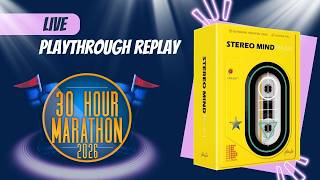
At its heart, Stereo Mind revolves around synchronizing group perception. Each round presents five word, symbol, or color options. Players listen to a brief audio clip, then simultaneously select which option best matches the song's vibe. All players must choose the same answer to score a point. The brilliance lies in the constraint: without seeing what others pick, players rely entirely on shared intuition and emotional interpretation. The game contains seven cards total, making perfect coordination worth celebrating. Reviewers note that scoring even four points feels like a strong performance, revealing how demanding true consensus becomes when reading abstract musical mood.
Pause Mechanic and Teamwork
Stereo Mind adds a twist to cooperative voting through a mutable pause token. On each turn, the active player chooses someone to mute, silencing their vote entirely. This mechanic forces teams to strategize about who might misinterpret a track. Rather than pure guessing, groups deliberate about player tendencies and musical sensibilities before the song plays. The pause adds light social jockeying and mild strategic depth, creating moments where teams joke about who they trust to "get it right." It also scales interestingly as player count increases, making the pause mechanic's value rise with each additional voice at the table.
The Stereo Mind Experience
Abstract Collaborative Bonding
Players repeatedly highlight Stereo Mind's power to create shared emotional moments. The game opens space for group discussion about how music lands, what it evokes, and why interpretations differ. After each round, teams talk through their reasoning: one player heard joblessness in a tune while another caught melancholy. These conversations reveal how each person processes music internally. Reviewers describe it as "an extremely unique" way to "take a look at something and experience it and talk about it" with others. The 15-minute playtime keeps energy high, and players report genuine laughter and connection even during rounds where coordination fails spectacularly.
Frustration Through Ambiguity
Stereo Mind's other side surfaces quickly: the game is "incredibly hard." Multiple reviewers report scoring zero on rounds and argue extensively about what the music represents. One group describes having "argued lots about how we listen to music and what we think the sounds are." The ambiguity that creates bonding can also create conflict if groups lack patience with differing interpretations. A player convinced a track evokes "morning" while others hear "night" leaves someone frustrated. This dynamic demands groups who embrace subjective discussion over right-answer logic. For casual players seeking consensus without friction, Stereo Mind's opacity becomes a feature that frustrates rather than delights.
What Makes Stereo Mind Stand Out
Technology Meets Analog Game Design
Stereo Mind smartly weaves QR code scanning into physical game cards. Players use their phones to unlock a curated playlist of brief instrumental tracks, each designed to evoke specific moods or objects. This tech integration feels natural rather than gimmicky. The randomized playlist ensures players cannot memorize song-to-answer pairs across replays. Reviewers note the QR code mechanic adds "interactivity and tech flavor," lending the 2023 release a modern, accessible feel. The game runs cleanly on smartphones and avoids the technology-first trap; the system simply removes friction between card reveal and audio play.
Unique Collaborative Constraint
Few games demand groups achieve perfect alignment while banning communication during the critical moment. Stereo Mind locks players into silent interpretation, then forces them to compare results blind. This design creates genuine tension: you want alignment but have no way to influence others before voting. The cooperative framework means nobody wins individually; either the table converges or it fails together. Reviewers emphasize how this wavelength requirement feels "another way of kind of taking a look at something," leveraging music as the common language. The constraint is refreshingly abstract, avoiding combat or resource competition, and instead asking players to sync emotionally and intellectually.
Potential Drawbacks
Subjective Interpretation Breeds Conflict
Stereo Mind's greatest strength doubles as its primary weakness. Because the game offers no objectively correct answer, disagreement over interpretations runs rife. One player hears "vacation," another hears "overtime." The game presents them both as valid interpretations, yet for scoring, only unanimous choices succeed. Groups must navigate the awkward moment when someone's musical reading differs from the consensus. For players who prefer games with definitive solutions, Stereo Mind's ambiguity feels unresolved and frustrating rather than rich with possibility.
Difficulty and Misalignment Can Discourage Replay
Reviewers note the game frequently ends with zero points. While a score of four out of seven rounds feels victorious, the possibility of complete failure looms large. Players who enter expecting a party game about music may encounter a surprisingly punishing challenge. Groups that score poorly across multiple plays might not return to the table quickly. The difficulty stems not from rules complexity but from the fundamental challenge of crowd-sourced emotional reading, making it hard to improve strategically. Some players report enjoying the chaos; others see repeated failure as reason to move on to more forgiving games.
If You Enjoy Stereo Mind
Stereo Mind shares DNA with Dixit, a similarly abstract game built on interpreting evocative imagery and predicting group consensus. Both games reward lateral thinking and comfort with ambiguity. Players who relish games where there is no "right answer" and who enjoy discussing how perception differs across the table will find much to love. Stereo Mind appeals to groups that value social interaction and collaborative problem-solving over tactical puzzles or resource optimization. The 15-minute runtime makes it ideal for opening game nights or filling gaps between heavier titles. Households with music lovers and creative thinkers should strongly consider adding it to their shelf.
What Reviewers Are Saying
"We played it numerous times with different people, but the whole premise is there's a card in the middle of the table that has either symbols or words that range from one to five. Then you're going to play a song by scanning a QR code. There's a random playlist of bunch of different songs that lasts 20-30 seconds. You'll play it and then at the same time you're trying to choose the exact same words as the other players without looking at what they're doing."
— kovray
"It's fun because it's so abstract and it's another way of kind of taking a look at something and experiencing it and talking about it and it just felt extremely unique."
— kovray
"This game is incredibly hard. We have not done well. No, but we have argued lots about how we listen to music and what we think the sounds are."
— kovray