



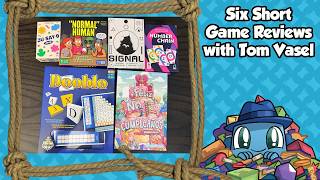



Number Chain Deep Dive
What the Community Thinks About Number Chain
Number Chain has sparked a notably divided reaction within the board gaming community. While some reviewers praise its clever mechanic and portable design as ideal for quick filler play, others have found the game frustrating and tedious. The Dice Tower has been particularly critical in two separate videos, calling it a game that "just goes on and on and on" with minimal strategic engagement. In contrast, other reviewers appreciate the puzzle-like challenge of managing the dual card-chaining system, suggesting it works best as a lightweight option between meatier games. The takeaway: Number Chain is not a consensus hit, but rather a game that resonates strongly with players who enjoy rapid, puzzle-driven card play and leaves others cold.
Core Mechanics That Define Number Chain
Hand Shedding with Dual Rule Systems
At its heart, Number Chain is a card-shedding game published by Arcane Wonders, where players compete to empty their hands across multiple rounds. The core mechanic involves playing cards from the hand onto a central floor card, with the objective to be the first to discard all cards each round. What sets this game apart from traditional shedding games is the presence of two opposing rule sets that flip how players chain their cards: one side of the rule token requires matching the last digit of the previous card, while the other side flips the constraint so that every card played becomes the new target for the next player. This dual mechanism creates moments of tactical decision-making, since flipping the rule token in a player's favor can be powerful but comes with a drawing penalty.
Card Chaining and Consecutive Sequences
Beyond the rule-matching system, players can play consecutive number sequences to override the current rule and create multi-card chains. These sequences are the highlight-reel moments reviewers describe, where a carefully built hand can empty in a satisfying cascade. Wild cards add flexibility to these chains by filling gaps, though they also cost penalty points. However, multiple reviewers note that these dramatic plays happen far less often than the grinding repetition of drawing single cards turn after turn, making the mechanic feel aspirational rather than consistently achievable in typical play.
The Number Chain Experience
Quick Filler Portability
Reviewers consistently praise Number Chain's portability and playtime. The puzzle-piece board assembles compactly, with one reviewer mentioning playing it in the airport while waiting for a flight. At 20 minutes, it fills the niche of a quick game to break up a game night or play while traveling. For players seeking a lightweight, 2-4 player card game that doesn't demand table space or lengthy setup, the game delivers on this practical appeal.
Strategic Puzzle vs. Mechanical Drag
Here is where reactions diverge sharply. Positive reviewers describe a puzzle-like quality: figuring out when to trigger the rule flip, building hands to capitalize on the dual systems, and planning multi-card plays. Critics, however, report that most turns consist of simply drawing a single card because their hand doesn't align with the active rule. The Dice Tower, watching turn after turn of draw-heavy gameplay, concluded the game "drags out" and offers insufficient payoff for the ruleset's complexity. The experience, then, depends heavily on the hand drawn and the luck of the active rule, a dependency that, for some, undermines the promise of clever play.
What Makes Number Chain Stand Out
The Dual Rule Flip Mechanic
The defining innovation is the ability to switch between two card-chaining rule sets mid-game. This twist differentiates Number Chain from standard card-shedding games like Uno. It introduces a layer of tactical control: knowing when to sacrifice cards to flip the rule can disrupt opponents' hands or set a player up for a powerful chain. Reviewers consistently identify this mechanic as the game's most interesting aspect, even those who ultimately disliked the overall experience.
Lightweight and Social Appeal
Number Chain requires minimal setup and teaches quickly. Its 20-minute runtime makes it accessible for casual game nights, travel play, or as a palate cleanser between heavier strategy games. The straightforward turn structure keeps cognitive load low, allowing social conversation during play rather than intense concentration, which appealed to reviewers looking for exactly that kind of puzzly quick-playing card game.
Potential Drawbacks
Excessive Downtime and Lack of Meaningful Decisions
The most consistent criticism is that gameplay becomes repetitive. Since players can only play cards matching the current rule or must draw, many hands leave players with no legal plays. The Dice Tower emphasized that most turns amount to drawing a card, drawing a card, and that flipping the rule by taking extra cards often feels like a losing proposition since it adds to an already constrained hand. This structure means rounds can feel like they drag, with players waiting for someone to finally empty their hand and end the round.
Limited Strategic Depth and Reliance on Luck
While the dual-rule system promises tactical play, reviewers report that strategy often yields to luck. The cards in hand determine options more than planning or decision-making. Reviewers noted that the impressive multi-card chains that make the mechanic sound exciting rarely materialize unless a player gets fortunate wild draws. Without sufficient opportunities to chain cards or meaningfully leverage the rule flip, the experience can shrink to simply discarding cards, a process that feels hollow despite the complex-sounding rules, and one Dice Tower reviewer stated plainly that the game offered "no strategy" and was "not particularly fun."
If You Enjoy Number Chain
If Number Chain clicks, consider exploring other quick card-shedding games with twists. Uno remains the category baseline, offering simplicity and accessibility without the rule complexity. Phase 10, another classic shedding game, uses phases instead of dual rules but shares a similar turn structure and playtime. The Mind offers a radically different shedding experience, cooperative rather than competitive, where players lay cards in ascending order with no communication, creating an entirely different puzzle. For those specifically drawn to Number Chain's puzzly qualities and quick playtime, these games serve as natural explorations of the genre's variations.
What Reviewers Are Saying
"I think this game is super clever. I love a card game. This is a great one. Super portable."
— Watch Review
"Oh, I hate this game. I really do. This game just goes on and on and on. There's no strategy. You just get rid of cards. It's not particularly fun."
— The Dice Tower
"If you like a puzzly quick playing card game, this is a card game that plays in 20 minutes."
— Grant Lyon