




Mini Rogue: The Council Deep Dive
What the Community Thinks About Mini Rogue: The Council
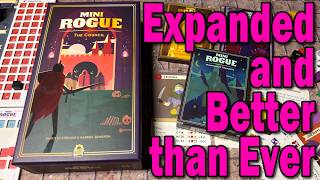
Mini Rogue: The Council represents a significant moment for the beloved small-box dungeon crawler series. As a standalone expansion released in 2024, it builds directly on the foundation that made the original Mini Rogue a favorite among board game reviewers: accessibility, charm, and pure, uncluttered fun. The Council doesn't reinvent the formula, it enhances it, giving both newcomers and series veterans exactly what they've been looking for in a rogue-like dungeon experience. Reviewers consistently frame the game as the best entry point for the series while simultaneously celebrating it as an evolution that might be the strongest iteration yet.
Core Mechanics That Define Mini Rogue: The Council
Dice-Driven Exploration and Resource Management
At its heart, Mini Rogue: The Council relies on a straightforward dice pool system that keeps turns moving without requiring players to memorize complex rules. Players roll white hero dice for their actions, looking for fives and sixes as successes, while the black dungeon die determines what happens in each room. As you progress and gain experience points, you add more white dice to your pool, creating a tangible sense of character progression. This simplicity is intentional and powerful: reviewers praise the game for delivering everything essential to the dungeon crawler experience without the overhead. The system extends to resource management through food (consumed at the end of each level), gold (spent at shrines and merchants), experience (for upgrades), and potions (for healing and special effects). Every decision feels meaningful without paralyzing players with options.
Procedurally Generated Dungeons and the Overlord Mode
Each level is laid out as a three-by-three grid of randomly drawn room cards, ensuring that no two runs feel identical. Players navigate these alleyways from top-left to boss encounter, making meaningful choices about which path to take and which encounters to face. This is where Mini Rogue: The Council introduces its most significant innovation: the Overlord mode. One player becomes the antagonist, controlling the King's Avatar and manipulating the dungeon using Omen points and hand-drawn room cards. The Overlord gains reinforcement points throughout the game, making the final confrontation progressively more dangerous. This feature works equally well as a solo automata mode, where the Overlord acts according to card triggers, or as a competitive one-versus-many experience when combined with the base game, opening new ways to experience the core loop.
The Mini Rogue: The Council Experience
Simplicity as Strength: A Manageable Dungeon Crawl
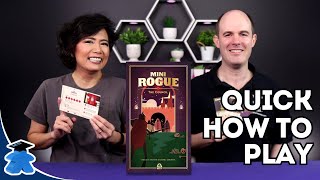
Reviewers repeatedly emphasize what sets Mini Rogue: The Council apart from heavier dungeon crawlers: it respects your time and mental bandwidth. Playing takes approximately 45 minutes, and there are no carryover effects or bookkeeping burdens between games. The rulebook is straightforward, the iconography is intuitive, and setup takes minutes. This accessibility doesn't come at the cost of depth; the game offers meaningful strategic choices in which rooms to explore, when to spend resources, and how to build your character. The experience feels like pure, simple fun, a sentiment that recurs in reviewer commentary. The cute, thematic illustrations reinforce a warm, inviting atmosphere that invites players back for run after run.
Variety and Replayability Through Modular Expansions
The Council ships with modularity built into its DNA. The Mountain of Torments expansion pack introduces seven distinct modules, including Delving cards, Tormented Rooms, and the new character the Condemned, each flagged with difficulty adjustments so players can customize their experience. Some modules significantly increase difficulty, others provide accessibility features like Cursed Jewelry, which grants powerful abilities at the cost of resource upkeep. Reviewers highlight this approach as ideal: you choose exactly which twists to add, avoiding a bloated base game while still providing endless replayability. Beyond the Portal adds cosmetic variants of existing characters alongside new heroes with redesigned art and abilities.
What Makes Mini Rogue: The Council Stand Out
Capturing the Essence of Dungeon Crawling in a Small Box
Critics emphasize that Mini Rogue: The Council achieves something rare: it delivers everything that makes dungeon crawlers compelling, random generation, character progression, meaningful encounters, atmospheric storytelling, without the table footprint or rules burden of heavier games. The original Mini Rogue already accomplished this, but the Council refines and extends the concept. New enemy types like Savage foes, who deal increased damage on high rolls, Decaying enemies, who spoil your food, Ranged attackers, who strike before you can respond, and enemy swarms, which require multiple hits, introduce tactical decision-making. New locations add thematic flavor and meaningful choices, since different hero classes benefit from different locations, so exploration routes matter.
The Overlord Mode as a Competitive Gateway
Mini Rogue's original loop was cooperative or solo. The Overlord mode solves a real problem: what if players want conflict and roleplay at the table? The mode transforms the final boss into a player-controlled antagonist, creating asymmetrical play where one person controls the corrupted King while others are adventurers trying to defeat it. The Overlord wields meaningful levers of control, hand-drawn room cards to block efficient paths, Omen-point-triggered powers that escalate mid-dungeon, and reinforcements that strengthen the Avatar before the final battle. This feature works seamlessly in solo mode via automata rules while remaining engaging in competitive play, opening the game to players who want agency for the opposing side, something rarely seen in dungeon crawlers.
Potential Drawbacks
Storage and Component Integration
A minor but recurring observation: the Council ships in its own box, and while it integrates fully with the base game, storing both boxes together becomes cumbersome. Reviewers note a wish for a slightly larger box that could hold everything in one place. The modular expansion model means future content is likely, so a unified storage solution would be impractical, but this remains a practical concern for collectors who want seamless integration.
Incremental Innovation
While the Overlord mode is genuinely new, the core expansion content delivers more of the same experience players already know from the base game. For some, this is exactly right, framed as something the series actually needs, emphasizing that incremental content expansion suits the game's tight design. For others seeking wholesale mechanical innovation in expansions, the modular approach may feel conservative. The game is deliberately designed not to add complexity, which means expansions work within that philosophy rather than radically reinventing play patterns.
If You Enjoy Mini Rogue: The Council
If Mini Rogue: The Council has captured your attention, you'll want to experience the original Mini Rogue itself, since the Council is fully compatible and gains strategic depth when combined. The Mountain of Torments expansion will feel like a natural next step, adding challenge and atmosphere without bloating the system. Beyond the Portal is ideal if you want more character variety and redesigned artwork. For fans of compact, thematic dungeon crawlers with high replay value, the series represents the gold standard: games that honor the roguelike video game aesthetic while delivering physical tabletop joy. The campaign mode included in the Council offers narrative progression without requiring commitment to an ongoing saga, appealing equally to casual explorers and story-focused players.
What Reviewers Are Saying
"It does such a great job of capturing everything I love about dungeon crawls in a small package. Well, I guess now it's two small packages, but it's just so much fun. It's so much fun to randomly set up a little dungeon and go through it."
— The Dungeon Dive
"Easily top 10 for me of all time. I think this is probably the best of this style of game. This small box kind of rogue style dungeon crawl."
— The Dungeon Dive
"Mini Rogue: The Council continues Mini Rogue's place as an easy, top fun to experience dungeon crawling game for solitaire or cooperative players who love the theme but also simplicity in the system."
— Meeple University