


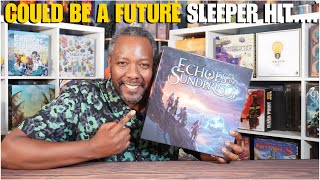


Echoes of the Sundering Deep Dive
What the Community Thinks About Echoes of the Sundering
Echoes of the Sundering has captivated reviewers with its blend of tactical combat, narrative depth, and collaborative gameplay. Across multiple playthroughs and previews, the community recognizes a game with genuine ambition, combining adventure game structure with strategic deck construction in ways that feel fresh and engaging. While some balance concerns emerged from early prototypes, reviewers have noted the developers are actively incorporating feedback to refine the experience. The consensus is that this game delivers memorable encounters wrapped in an evocative fantasy setting.
Core Mechanics That Define Echoes of the Sundering
Deck Construction and Character Building
Character creation is one of the game's standout systems. Each adventurer is built by combining two colors, which determine their class and starting deck. These color combinations are thematic and mechanically meaningful, creating unique playstyles. Reviewers praise how players can shape their character through origin and background choices that add cards to their starting deck, giving the experience narrative weight beyond pure mechanics. As players progress through the adventure, they unlock additional cards and upgrade existing ones, similar to deckbuilding games like Slay the Spire, allowing for meaningful character progression across the campaign.
Encounter-Based Combat System
Combat in Echoes of the Sundering plays out through a sequence of cards that evolve as players complete objectives. Each enemy encounter is composed of multiple encounter cards that activate in sequence, changing attack patterns, introducing special conditions, and advancing the narrative of the fight. Players draw cards, spend stamina to play abilities, and coordinate through a freeform hero phase where multiple characters can act in any order. This system emphasizes communication and combo opportunities, particularly among the different color classes which synergize through keywords like support, attack, defend, and contain. The mechanic creates dynamic tactical puzzles that require players to think both about immediate damage and long-term positioning.
The Echoes of the Sundering Experience
Narrative Integration Within Combat
A defining feature is how combat tells a story. Each fight is not simply about reducing an enemy's health to zero. Instead, encounters present conditions that must be met, keywords that must be triggered, or special events that unfold during the battle. What makes this particularly compelling is that narrative choices made during exploration can directly influence how combat encounters play out, creating a sense that player decisions matter beyond simply determining which encounters occur.
Collaborative Exploration and Discovery
The game guides players through a valley depicted in illustrated maps, with choice-driven narrative branches. Players move between locations, triggering events and making decisions that unlock keywords and alter their path through the story. The design supports flexible player counts by allowing solo play with companion characters alongside full-party configurations. This flexibility means the game accommodates different group sizes without overwhelming anyone at the table with administrative overhead.
What Makes Echoes of the Sundering Stand Out
Deep Character Customization Through Color Combinations
The color-based classes represent thoughtfully designed combinations where each pairing tells a distinct story and provides a different mechanical toolkit. Reviewers consistently highlighted how clever these combinations are and how they encourage multiple plays with different character concepts. The system ensures that even returning to the same narrative, a different color combination creates substantially different decision points and tactical situations.
Multi-Use Card Design and Deck Depth
Cards serve multiple functions, allowing players to either play them for their abilities or discard them for a resource bonus. Many cards feature keywords that interact with class abilities and player powers, creating layers of synergy. As players progress, they can upgrade cards or add new cards through purchases, keeping deck size manageable while offering satisfying progression.
Potential Drawbacks
Keyword Density and Learning Curve
The game relies heavily on keywords like support, attack, defend, and contain. Each carries specific mechanical meaning and interacts with class abilities and special card effects. Reviewers noted that tracking all keywords and their interactions requires attention, particularly for new players. Some found that if a character's deck doesn't naturally include certain keywords, skill checks requiring those keywords become nearly impossible.
Table Talk and Pacing Considerations
The freeform hero phase, where players can act in any order, encourages extensive discussion about optimal plays. While this collaborative spirit enriches the experience for many, it can lead to alpha player dynamics where one person dominates decision-making. The sheer amount of text in the storybook and the need to coordinate multiple character turns means that turns can become lengthy, particularly during early plays when players are still learning card effects.
If You Enjoy Echoes of the Sundering
The game draws comparisons to Role Player Adventures and Sleeping Gods, capturing that same blend of exploration, narrative choices, and tactical encounters. For those who enjoyed the deck construction progression of Slay the Spire or the collaborative card play of Magic the Gathering, Echoes of the Sundering offers familiar territory reimagined as a campaign adventure.
What Reviewers Are Saying
"it's not a fight. It's a it's a a story quest inside of a fight because it can go many different ways based on different events that may have happened before the fight or a specific weapon that you have going into the fight or a choice that you made."
— Man vs Meeple
"I really liked the character creation. It was really fun. Like, I really enjoyed just kind of figuring out what I wanted to make, and I really like that each combo of colors specifically went with a different kind of character. And that was very, very clever."
— Hungry Gamer
"This game is going to come with over 350 different character cards and adventure cards that you're going to be used to help construct your deck. very similar to something like Magic the Gathering."
— Meet Me at the Table