




Take Cover Deep Dive
What the Community Thinks About Take Cover
Take Cover has found genuine enthusiasm among reviewers seeking a rare combination: tactical depth wrapped in a package that plays in 30 minutes or less. The consensus is decidedly positive. Zilla Blitz, who has covered the game multiple times, consistently praises it as a gateway into wargaming that doesn't sacrifice strategic play for speed. The Discriminating Gamer highlights its elegant simplicity and component quality. The striking point across these reviews is that Take Cover delivers the tension and decision-making of a tactical wargame while remaining accessible enough to teach and play in a single sitting. Reviewers see it as filling a valuable niche: a two-player skirmish that doesn't demand hours or a rulebook the size of a novel.
Core Mechanics That Define Take Cover
Card-Driven Squad Building and Combat
Take Cover operates entirely through cards. Players manage two squads each, represented as German and Russian forces locked in tactical combat. The flow is simple but layered: on each turn, a player plays one card from their hand of five, then draws a replacement. These cards accomplish everything. Some enhance a squad's attack capability or defensive position. Others enable special actions like the critical fire action that initiates combat. This constraint (always playing just one card) creates momentum and forces constant decisions about what to play, when, and against which squad. The card pool includes weapons (light and heavy machine guns), terrain modifiers (woods, brush, buildings), leaders that boost attack, and tactical tricks like grenades and dig-in cards. Reviewers note this architecture creates a blend of luck and strategy where player choice matters, even though dice determine individual attack outcomes.
Attack Modifier Stacking and Colored Dot Synergy
Combat revolves around accumulating numerical modifiers. Each card carries a value that adds to or subtracts from your attack pool. The core system is straightforward: sum your squad's base strength plus weapons and abilities, subtract the defender's terrain and defensive cards, roll a ten-sided die, and succeed on a roll equal to or below the final number. Where Take Cover reveals its tactical depth is in the colored dot system. Every card in the game bears either a black or white dot. If all three cards enhancing a single squad match in color, that squad gains a permanent plus-two attack bonus. Building toward this colored-dot alignment becomes a strategic puzzle: planning several moves ahead to synchronize your position bonus while disrupting your opponent's efforts to do the same. Reviewers highlight how this mechanic transforms the game from pure luck into a game where positioning and planning create real meaningful choices.
The Take Cover Experience
Fast-Paced Intensity Without Time Pressure
The overarching feel reviewers describe is "fast and furious." Cards flow back and forth between players at a tempo that keeps momentum alive. Because each turn consists of playing a single card, decision time is bounded, and play moves with energy. Yet this quickness never feels rushed or frenetic. One reviewer notes the game achieves a tactical feel specifically because of this pace, creating the sensation of being in an actual firefight with stakes and urgency but without the stress of racing a clock. Squads need three hits to eliminate, and the potential for a fifty-percent medic roll to heal damage means the outcome stays uncertain until the final moment. That combination of speed and tension creates engagement that neither drags nor overwhelms.
Accessible Tactical Decision-Making
A second defining experience is accessibility without dumbing down. Reviewers consistently emphasize how quickly they learned the game despite having zero prior experience. The rulebook spans roughly 10-12 pages. Setup takes minutes. One reviewer and a non-wargamer friend sat down, read the rules, and were meaningfully playing within 15 minutes. By the second game, they fully grasped strategy. This accessibility doesn't come at the cost of depth. The game teaches fundamental wargaming concepts (attack modifiers, defensive positioning, the benefits of terrain, the importance of sequencing) in a form that feels natural and intuitive rather than pedagogical. Reviewers describe Take Cover as "Upfront Light," referencing the classic tactical card game from Avalon Hill, but made deliberately easier to enter. That makes it an ideal teaching tool for introducing new players to wargaming without overwhelming them, or a perfect quick game for evenings when you have limited time.
What Makes Take Cover Stand Out
A Complete Wargaming Experience in 30 Minutes
Take Cover solves a genuine problem in the hobby: most tactical wargames demand substantial time investment. Reviewers value this game specifically for fitting multiple complete games into a lunch hour or a gap between other activities. It plays in under 30 minutes without sacrificing meaningful decisions or rewarding careful play. This isn't a light filler game; it's a compressed, full-featured skirmish system. The card-based approach eliminates the setup and admin overhead that bogs down traditional hex-based tactical games. You shuffle decks, place four squads, and start playing. Multiple reviewers brought Take Cover to gaming conferences specifically for this purpose, knowing they could offer a satisfying complete game experience to someone with only 20-30 minutes available. That combination of brevity and substance is rare and valuable.
Sharp Design and Component Quality
Reviewers specifically praise the aesthetic and production values. The card art is described as appealing and sharp. The cards are double-sided so both players can read information across the table. Components are high quality, and the overall presentation signals that this is a serious, well-considered design rather than a hasty cash-grab. For a game at this price point, reviewers note the production feels premium. One reviewer remarked on the appealing cover art alone. This quality extends beyond aesthetics to functionality: the card design makes game state immediately legible, and the tokens and markers are clear and easy to track. It's the kind of attention to detail that makes playing smoother and more enjoyable, turning what could have been a purely mechanical game into one that feels crafted with care.
Potential Drawbacks
Two-Player Only and Luck Variance
Take Cover is strictly a two-player game. There is no solo variant and no way to adapt it for larger groups. If you're seeking a four-player wargaming experience or enjoy playing alone, this game will not serve that need. Additionally, while reviewers note the blend of strategy and luck works well overall, individual dice rolls can determine outcomes. Sometimes superior positioning gets negated by unlucky rolls, or victory favors the player who rolled better. One reviewer mentioned losing despite building a well-coordinated position, beaten by an opponent who happened to roll better die results. This can frustrate players who prefer games where superior strategy guarantees victory, though most reviewers frame this as appropriate for a quick-play game that needs to finish decisively in 30 minutes.
Potential Quality Control and Physical Fit Issues
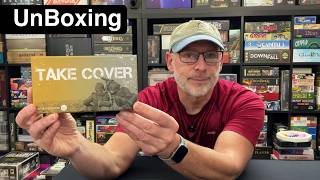
One reviewer noted possible duplication or mispackaging of cards during their unboxing. While this appears to be an isolated quality control issue rather than a design flaw, it's worth noting when purchasing. Additionally, there was mention of the rulebook lid fitting poorly in the box, creating gaps that could allow components to shift during storage or transport. These are minor issues that don't affect gameplay but may inconvenience players who expect flawless production at this price point or who plan to travel with the game frequently.
If You Enjoy Take Cover
Players drawn to Take Cover's speed and tactical elegance may find kindred spirits in other accessible wargames. Those who love the card-driven squad focus and WWII setting should explore other quick-playing tactical offerings. The comparison game most frequently mentioned by reviewers is Upfront, the classic Avalon Hill design from the 1980s that inspired Take Cover's designer. If Take Cover's streamlined approach appeals to you, Upfront offers deeper complexity for those ready to invest more time. For players seeking the two-player skirmish format but open to other historical periods, Blood of Lions delivers a solo-focused WWI experience, while Guns of August offers WWI operational depth in a compact box. Reviewers also suggest exploring other Worthington Publishing games in this format for similar design sensibilities and quick playtime.
What Reviewers Are Saying
"First up, this is fast and furious. The games go quick. You've got five cards. Oftentimes, you've got three cards stacked up and you know what you're going to do. And so, it's bang, you play a card, your opponent plays a card, bang, you attack, you're moving forward."
— Zilla Blitz
"The rule book is just a few pages, right? It's I'm going to say 10 or 12 pages. Not much text. It's pretty quick to learn how to play. Literally 15 minutes after starting up, we were playing the game. And my friend isn't a war gamer. And he really liked it."
— Zilla Blitz
"It's just a deck of cards. You're just kind of playing those cards out. You're just kind of adding to your squads and you got to go in, you just got to attack each other and just whoever comes out victorious. It's a fast game."
— The Discriminating Gamer