



My Book Nook: Cozy Word Building Game Deep Dive
What the Community Thinks About My Book Nook: Cozy Word Building Game
My Book Nook has struck a surprisingly strong chord with reviewers across multiple channels. The consensus is clear: this is a charming, elegantly designed word-building game that delivers on both aesthetics and gameplay. BoardGameCo came away enjoying it far more than expected, citing the game's ability to balance simplicity with genuine strategic interest. The Hungry Gamer found it endearingly cute and compelling enough to place directly on a bookshelf rather than in the game collection. Meanwhile, Gaming with Edo & Jessica sees it as an exciting addition to book-themed board games, reminiscent of classic titles like Ex Libris. Where reviewers diverge is slightly on the question of long-term staying power: some wonder if the streamlined design will maintain its appeal over many months of play, though all agree it excels at what it sets out to do right now.
Core Mechanics That Define My Book Nook: Cozy Word Building Game
Word Spelling and Card Drafting
The foundation of My Book Nook is elegant simplicity. On each turn, players choose to either draft two letter cards from an open display or play a word from their hand. The letters themselves come printed on illustrated book cards, each showing a different genre: fantasy, mystery, science fiction, nature, romance, and horror. Players arrange these letter cards to spell valid words, placing them on the table as part of their growing bookshelf. When a player completes their fourth word, everyone gets one more turn to place a final word before the game ends. This means the game can last between four and five rounds per player, keeping it compact and focused. Kingdom of Threads designed this with impressive restraint: despite being a word game, it never feels like it's asking players to agonize endlessly over letter combinations.
Tableau Building with Decorative Scoring Conditions
What elevates My Book Nook beyond a simple spelling exercise is the ambience card system. Each word a player places nets them a scoring card with points tied to the word's length, ranging from just one point for a three-letter word up to 25 points for a nine or ten-letter word. These ambience cards also act as decorations, adorning the completed bookshelf with visual flair. More importantly, players can strategically rearrange these decorations at the end of the game to maximize scoring bonuses. Each decoration has its own condition: some reward a player if their bookshelf contains the most books of a particular genre, others give bonus points for specific letter values. This adds a second layer of planning; players must think not just about which words to spell, but how those words will support their collection strategy.
The My Book Nook Experience
Relaxing and Cozy
Reviewers consistently return to the word "cozy" when describing how My Book Nook feels to play. The game's charming artwork, clever integration of letters into book illustrations, and the satisfaction of building a literal bookshelf create an inviting, low-stress experience. The production quality reinforces this: the box itself opens like a book, and the overall presentation suggests a game designed for people who love books and want a gentle, pleasant time at the table. There's no cutthroat competition or tense decision-making. Instead, players are invited to enjoy the simple pleasure of forming words and watching their collection grow.
Satisfying and Clever Despite Its Simplicity
While cozy, My Book Nook is not brain-dead. Reviewers noted that the game offers surprising tactical depth. The decision to pursue high-value nine or ten-letter words versus chasing smaller five or six-letter words creates genuine strategy. Smaller words are quicker to place and cycle more cards into a player's hand, while larger words provide more points but take longer to construct. This tension gives players meaningful choices that align with their own spelling strengths, making the game accessible to players of different skill levels. The interplay between letter acquisition, word construction, and end-game decoration placement creates the kind of satisfying puzzle that keeps the game moving without overstaying its welcome.
What Makes My Book Nook Stand Out
Exceptional Art and Production Design
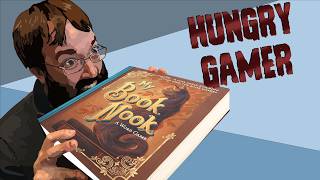
My Book Nook's visual presentation immediately sets it apart. Reviewers were effusive about the artwork, particularly the way the game integrates letter cards into illustrated book spines. As words are built vertically on the table, they literally form a bookshelf, complete with colorful genre indicators and small decorative trinkets that vary by book category. The ambience cards feature their own lovely artwork that enhances the theme. The physical box itself adds to the charm: it's designed to look and open like a book, making it as much an object of beauty as a functional game container. This kind of thoughtful, cohesive design elevates the entire experience and explains why reviewers found themselves displaying My Book Nook on actual bookshelves rather than burying it in a game closet.
Elegant Game Length and Pacing
A significant strength highlighted across reviews is how fast My Book Nook moves despite being a word game. Typically, spelling games can suffer from analysis paralysis as players agonize over the perfect word choice. My Book Nook avoids this trap through its structure: the game ends when someone places their fourth word, with everyone else getting one final turn. This hard cap on rounds keeps the experience snappy. Additionally, reviewers found that even with multiple players, downtime is minimal because players can plan their words while others take their turns. The result is a game that plays to completion in around 30 minutes without feeling rushed or sacrificing meaningful decision-making.
Potential Drawbacks
Uncertainty About Long-Term Replayability
One reviewer voiced a thoughtful concern: My Book Nook does fundamentally one thing, and does it very well. The question is whether that one thing remains engaging after dozens of plays. Since the core loop is always drafting letters and building words with genre-based scoring conditions, there is limited variation in what the game asks of players. The simplicity that makes it charming and accessible also means there is not a ton of mechanical variety to discover over time. For some players, particularly those who embrace quick filler games, this won't matter. For others who seek games with deeper strategic variation, it's a fair consideration before committing.
Card Management and Table Space Issues
Reviewers noted a couple of practical quibbles with the physical design. The game's letter cards and ambience cards are different sizes, which causes the tableau to sprawl across the table more than ideal. Additionally, there is no rule for clearing stagnant card rows when the central display becomes clogged with unwanted cards, leading to occasional frustration with locked displays. One reviewer mentioned employing a house rule to clear rows when duplicates accumulate. While the game is short enough that this rarely becomes a major issue, it is a design gap that some groups feel the need to patch. Finally, the box itself, despite its charming book-like appearance, proved annoying to open for some reviewers who struggled extracting cards cleanly.
If You Enjoy My Book Nook
Players drawn to My Book Nook should explore related games that share its gentle spirit and accessible design. Ex Libris offers a similar book-themed experience, inviting players to build and curate their own library through card play. Like My Book Nook, it rewards clever spatial thinking and rewards players for the decisions they make. For those who want more strategic depth and don't mind a heavier ruleset, Ticket to Ride provides a satisfying tableau-building experience, though in a transportation context rather than books. Both games reward players for completing sets and working toward collection goals, much like My Book Nook's genre-tracking and decoration placement system.
What Reviewers Are Saying
"The art is gorgeous. The art is like very fun to build your words. The way you build a bookshelf over here, like sure, it's a word but it kind of comes across as a bookshelf with little trinkets in the books themselves. Those bookends to close them off, all of that's amazing."
— BoardGameCo
"It's super cute. What a cute little box, little magnet box, it looks like a book. I particularly like the art on the ambiance cards and the decorations. Very, very cute, just a lovely little production. Next thing I'll say, as far as the game goes, it's very easy to learn how to play, it's very quick to play."
— Hungry Gamer
"It looks like a really neat sort of game about creating bookshelves and lining up books. The artwork lines up so as you stack cards, you sort of create this shelf of books with letters and it looks neat. It reminded me very very vaguely of Ex Libris from way back when."
— Gaming with Edo & Jessica