











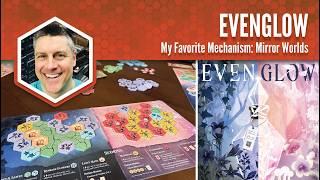











Evenglow Deep Dive
What the Community Thinks About Evenglow
Evenglow arrived in 2026 to widespread enthusiasm from the board game community. Reviewers consistently describe it as a deeply satisfying and beautiful puzzle experience. The game's elegant mirrored garden mechanic creates a fresh strategic challenge that keeps players engaged while maintaining accessibility. The reviewers who shared opinions praised both the physical components and the thoughtful design from publisher The Op. It is worth knowing that much of the early coverage comes from teaches and playthroughs that The Op sponsored, including those from Before You Play, Watch It Played and Kovray, so fully independent verdicts are still few and the picture may shift as more reviews arrive.
Core Mechanics That Define Evenglow
Mirrored Tile Placement
The foundation of Evenglow is its constraint that every tile placed on one garden side must appear in the matching numbered space on the opposite side. This creates the central puzzle of the game. Players select which tile goes into which garden, and the orientation of tiles becomes crucial for scoring. The mechanic forces constant calculation as players weigh immediate benefits against future possibilities. Reviewers noted that the mirroring mechanism occasionally challenges players to think in unconventional ways, but this complexity becomes rewarding once mastered.
Multi-Condition Scoring Systems
Each of the six plant types scores points differently. Vines and leaves form connected groups for linear point totals; henbane flowers demand exactness in pairs; lion's manes require triangular arrangements to unlock potions; mandrakes form straight lines; and elderberries need sets of five. This variety ensures that players cannot simply pursue one strategy. Instead, reviewers describe constant tension between specializing in familiar scoring paths and pivoting to adapt to the tiles available each round.
The Evenglow Experience
Satisfying Tactile Gameplay
Reviewers frequently praise the physical experience of playing Evenglow. The game ships with light, squishy plant tiles that feel pleasant to handle, creating a meditative quality during play. The visual beauty of the gardens gradually filling with color and shape appeals to players who value the sensory aspect of board gaming. One reviewer noted that the tiles themselves invite careful placement and consideration, making each turn feel deliberate rather than rushed.
Brain-Breaking Spatial Puzzles
The mirrored board mechanic generates the central tension reviewers describe. As gardens fill, spatial constraints mount. Players must balance completing scoring formations on one side while maintaining flexibility on the opposite garden. Reviewers describe moments where the geometry breaks their intuition, requiring them to visualize placements before committing tiles. The potions that allow tile swaps and replacements provide rescue valves when placements lock players into suboptimal configurations.
What Makes Evenglow Stand Out
Beautiful Game Design Meeting Elegant Mechanics
Reviewers consistently cite Evenglow's visual presentation as a distinguishing feature. The board layout, tile artwork, and component quality create an aesthetic experience that matches the puzzle depth. The game does not sacrifice form for function; instead, the beauty enhances engagement by rewarding careful observation and deliberate placement. Reviewers noted that the game demands attention to detail both mechanically and visually.
Strategic Depth Through Shared Card Selection
The draft board system creates novel strategy vectors. On your turn, you decide which plant types you collect by rotating the card to face your preferred tiles away. Simultaneously, this decision determines what every other player receives. Reviewers observed that the best turns often involve subtle manipulation of the card orientation to gift opponents tiles that seem useful but actually block their own scoring paths. This creates interactive tension that extends beyond simple tile placement into psychological gameplay.
Potential Drawbacks
Mirroring Mechanic Demands Constant Vigilance
While reviewers praise the mirroring rule, several noted it requires sustained mental effort. Mistakes in placement are irrevocable without potion use, making the margin for error thin. Reviewers describe moments where players lose focus and accidentally violate the mirroring constraint, requiring rule clarification mid-turn. The game's tempo can stall when players deliberate over which garden should receive which tile type, as the consequences of each choice cascade across future turns.
Scoring Precision Penalizes Careless Planning
Reviewers pointed out that many plant types require exact tile counts to score. A formation of four mandrakes scores zero if you later add a fifth adjacent tile. A pair of henbane flowers becomes worthless if a third connects to them. This exactness creates tension but also generates frustration when a late-game tile placement inadvertently ruins previously solid scoring formations. One reviewer remarked that the tincture of transmutation potion becomes almost mandatory for surviving these spatial traps rather than a tactical choice.
If You Enjoy Evenglow
Players drawn to Evenglow's puzzle-focused tile placement will find kinship in Fountains, which shares the light, squishy tile aesthetic and similarly demands careful spatial planning. The mirrored garden mechanic's unique constraint system has no direct parallel, making Evenglow a singular experience. For those who appreciate the botanical theming alongside the puzzle elements, the garden-building satisfaction will resonate with other cultivation-themed games that reward deliberate, long-term planning.
What Reviewers Are Saying
"I saw and immediately I was like, I am going to enjoy this one because I just know I love this type of game. Uh it's a tile placement game and it is so incredibly satisfying to me. And oh my goodness, I love this very satisfying tile placement game."
— The Board Game Garden
"One is Even Glow. This is a tile placement game that I played in Edmonton that I really enjoyed."
— The Board Game Garden
"Every turn, the active player chooses the orientation of the plant card in their hand, determining which plant tiles both they and every other player must add to their gardens. Every placement is mirrored between your two gardens, creating a satisfying puzzle as you try to make the most out of every tile."
— Kovray