












FlipToons: Season 2 Deep Dive
What the Community Thinks About FlipToons: Season 2
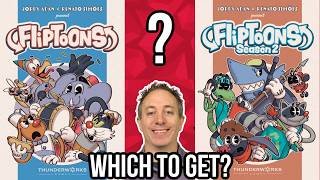
Reviewers across the board are enthusiastic about FlipToons: Season 2. The consensus is clear: this is a strong standalone sequel that builds on an already beloved original without losing the magic that made the first season special. TheGameBoyGeek, who included Season 1 in their top five card games of the year, calls Season 2 "awesome" and recommends it as "a no-brainer" for anyone who already owns the original. Grant Lyon, another prominent voice in the community, echoes this sentiment, describing it as "one of my favorite card games of all time" and praising how well Thunderworks Games executed the sequel. Across different playstyles and player counts, the game earns consistent praise for maintaining the core experience while introducing fresh strategic layers through new card abilities and mechanics.
Core Mechanics That Define FlipToons: Season 2
Fish Set Collection
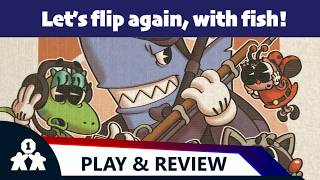
The fish card type is the marquee addition to Season 2. Fish cards create their own set collection system within the larger game, rewarding players who build around them. Cards like the goldfish are worth one point plus one for every other fish in the grid, creating cascading value as you accumulate aquatic characters. The swordfish stands as the flagship of this mechanic, worth eight fame and capable of flipping both the previously placed card and the next revealed card, setting up dramatic moments when the timing aligns. The starfish and clownfish fill supporting roles, each offering unique synergies. Reviewers note that the fish strategy becomes especially potent in solo play, sometimes making victory easier than in Season 1, but in multiplayer, opponents can draft fish cards to prevent any single player from monopolizing the ocean-themed combos.
The Return Mechanic
Return is the other major innovation, allowing players to place a card at the bottom of their deck and reveal a new card in its place. Cards like the coyote, salamander, and zebra use this ability to refresh your grid, either strategically removing low-value cards or triggering cascading effects. The salamander's version of return is particularly elegant: if the next revealed card is rank one or lower (a starter card), it automatically returns to your deck, acting as a natural cleanup system early in the game. Reviewers appreciate return as a tactical tool that adds depth without overwhelming the game's streamlined design. However, one reviewer notes it's "fine but not amazing and exciting," suggesting it's a solid addition rather than a game-changer.
The FlipToons: Season 2 Experience
Speed and Immediacy
FlipToons: Season 2 moves fast. The entire game completes in 15 to 30 minutes, with simultaneous card flipping keeping downtime minimal. This speed creates a particular feeling: you're constantly rotating through small, manageable decisions (hire, dismiss, or leave your deck as-is) followed by the uncertainty of the flip. Even with careful deck-building, you cannot control what cards come out or in what order they land on the grid. This unpredictability is celebrated by reviewers. One reviewer describes loving games "that have strategy and interesting choices, but also just fun, exciting, unknown moments," and notes that even with optimal deck-building, players eventually reach a moment where "you're just like, 'I hope these come out the way I need them to come out.'" That tension between agency and chance defines the experience.
Rewarding Exploration and Experimentation
The card roster in Season 2 encourages players to try different strategies. The mole, which stacks on previously placed cards when pulled from the bottom of the grid, opens up stacking-focused builds. The possum rewards keeping pairs of identical dismissed cards, incentivizing a collecting mindset. The panther lets you dismiss a face-up card for free when hired, creating tempo swings. The fox grants bonus fame if a hen or rooster exists anywhere in the marketplace or another player's grid, sometimes making it worth hiring just for that bonus. Reviewers consistently express joy in discovering how cards interact: "I definitely excited to try more of the strategies," one reviewer says, "the fish one is my favorite so far... I also really like the moles. I like the hen..." This sense of combinatorial discovery runs throughout every playthrough, with new cards reshuffling what works.
What Makes FlipToons: Season 2 Stand Out
New Starter Cards and Asymmetric Play
Season 2 ships with an entirely new set of starter cards different from Season 1. The grasshopper gains fame for each card above it; the ladybug reduces adjacent card dismissal costs to three instead of five; the firefly grants a comeback mechanic by awarding two bonus fame to whoever has the least fame after the counting phase. If you own both seasons, two players can each start with completely different starter decks, creating more varied early-game experiences. TheGameBoyGeek, who wanted more asymmetric starter cards in general, calls this a meaningful improvement: "That's kind of cool." While not a complete overhaul of the game, these new starters meaningfully shift early-game strategy and create differentiation.
Scalability to Eight Players
When combined with Season 1, FlipToons: Season 2 supports up to eight players. Rather than slowing the game down, Thunderworks Games addressed the scaling problem by expanding the market from five cards to seven (by adding a second three and a second fifteen rank position) and providing more character options overall. Because the core mechanic is simultaneous (everyone flips cards at the same time), adding players doesn't proportionally add downtime. Reviewers note this is genuinely impressive: "the game is so fast, and most of it is sort of simultaneous where you're putting your cards doing this... it doesn't add that much time to it." This makes Season 2 a rare sequel that actually improves on its predecessor's player count scalability.
Potential Drawbacks
Fish Dominance in Solo Play
The fish mechanic, while inventive, has a balance issue in solo play. One reviewer notes that "it can kind of go out of control as you can sort of see here. Especially in solo if you get lucky and a lot of fish come out because there's nobody to compete with you." In multiplayer, opponents can draft away fish cards to limit any single player's collection, but a solo player faces no such competition. This same reviewer recommends Season 1 for solo players specifically because of this concern, suggesting Season 2 is "stronger overall" but "a bit stronger" in ways that favor the lucky pull. The return mechanic compounds this slightly: cards that return low-rank cards to your deck make fish combos even more consistent.
Final Flip Unpredictability
The game ends when someone triggers the end condition by reaching 30 fame, but the actual winner is determined by one final flip of cards. Reviewers describe this as occasionally "brutal and unpredictable." Even if you set up a powerful board position, a terrible final flip can derail you, while a lucky opponent might steal victory on that final round. One reviewer documents a close game where both players ended up with approximately 23-24 fame mid-game, leading to tense decision-making about whether to push for 30 or consolidate. The final flip then delivered poor cards to both players, leaving victory to whoever had slightly better scaling from their existing board. While this creates drama, it also means skill takes a backseat to luck in the decisive moment for some games, frustrating players who want their careful builds to guarantee victory.
If You Enjoy FlipToons: Season 2
If you love FlipToons: Season 2, the most obvious recommendation is FlipToons: Season 1, the original deck-building card game that inspired Season 2. Both games share the same core engine (shuffle your entire deck, flip six cards into a grid, buy or dismiss based on the fame generated), but Season 1 emphasizes thinning your deck and removing weak cards, while Season 2 rewards adding powerful new cards. The comparison games Thunderworks Games mentions, Challengers, is faster-paced simultaneous deck-building that shares the "auto battler in very quick fashion" feel, though Flip Tunes is even quicker. For fans seeking another set-collection card game with tight decision-making and card synergies, Dominion or other classic deck-builders deliver deeper strategy, though at the cost of playtime. For those drawn to the rapid-fire excitement and the "fun, exciting, unknown moments" of FlipToons, look for other light card games with flipping or push-your-luck mechanics, where revealing cards creates cascading consequences you cannot fully control.
What Reviewers Are Saying
"It's a deck builder match with an auto battler in very quick fashion. It's like Challengers except even faster to play. The core experience is still great."
— One Stop Co-op Shop
"I think this game is fantastic. It is just fantastic for a very light game and it's one that I foresee playing a lot over the coming years. Easy to teach, fast to play, great looking art, interesting stuff, always a surprise."
— Hungry Gamer
"There also fish cards that combo well together. There's just a lot of cool stuff. If you like deck building, if you like card games, if you like fun, check out Flip Tunes season 2."
— Grant Lyon