













Yonder Deep Dive
What the Community Thinks About Yonder
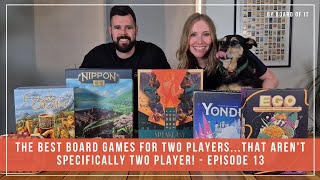
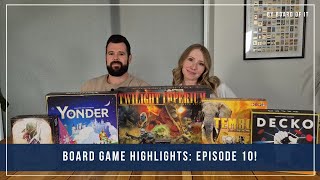
Yonder is a fantasy worker placement game for one to four players from Sinister Fish, the publisher behind Villagers, Moon and Streets. Quackalope named it on a list of most anticipated games before release, noting that it would be crowdfunded on BackerKit and that it comes from the designer of those three earlier games. Since release, opinion has split along a clear line. Board Of It calls it absolutely brilliant, expects it to land in their top 10 of the year, and ranks it among the best games they have played recently. Get into games finds it fascinating, tough and ruthless under a cute exterior. The Broken Meeple, reviewing a copy provided by Sinister Fish, is cooler: a six out of 10, a game the reviewer likes but does not love, held back by player count scaling, weak side tracks and a runaway leader problem. The shared ground is that the five worker types give a familiar genre a real twist.
Core Mechanics That Define Yonder
Five Workers, Five Rule Sets
Every reviewer starts with the workers, because that is where Yonder differs from standard worker placement. Goblins have no special ability; The Broken Meeple calls them cheap, easy labor. Skeletons are also plain workers, but they never need feeding. Dwarves take a discount when placed on trade or building spaces, so actions cost one less resource. Elves break the usual rule that an occupied space is closed: they can join a space held by another worker, as long as that worker is not also an elf. Ogres collect double resources on the spaces marked for them, but they eat twice as much. Get into games stresses that any worker can go to any space; the marked spaces simply reward the right creature.
Players also do not truly own their workers. As Get into games explains, workers left on the main board at the end of a round leave for good. Workers left on buildings in your own settlement stay only if you feed them, and each unfed worker costs three points.
Settlements, Contracts and Boats
Each player starts with a headquarters card that offers a build action, then adds building cards to an open tableau. Those buildings hold worker spaces that anyone can use, and this is where Yonder gets interactive. A worker that ends the round on an opponent's building becomes theirs, which means they must feed it or lose points. Board Of It describes how this lets a player play offensively, taking a rival's space and saddling them with a hungry ogre. Resources are tight, so, as Board Of It puts it, it is usually a struggle to feed everyone.
Contracts, which The Broken Meeple calls envoys, are the main source of points. Once taken, a contract must be fulfilled every round for the rest of the game, and each missed delivery costs five points. The Broken Meeple adds that envoy points drop as the game goes on, so early deliveries pay more but are harder to pull off. At the end of a round, players take a boat that brings new workers, a resource and a special ability that triggers when fulfilling contracts. Boats arrive only in the first three rounds. In rounds four and five, players must live on the workers they have kept and fed.
The Yonder Experience
Cute on the Outside, Cutthroat Underneath
Get into games describes the box as looking cozy, like a nice little jaunt, and warns that a whole lot is going on beneath it. The rules are simple to learn and easy to teach, but the strategy is deep. That channel shared a game in which they led comfortably into round four, then had only two workers for four contracts and lost 15 points to missed deliveries. The lesson it draws is that the engine must be built early, with food production and your own worker spaces, or the final two rounds become brutal. The same channel admits that players who dislike take-that play, or having a planned space stolen, may not enjoy this game.
A Game That Slows as It Grows
Board Of It notes that the early rounds are snappy, but turns lengthen as players gain workers and buildings and start mathing out chains of conversions. At two players they report a steady 90 minutes. The Broken Meeple, citing the 60 to 120 minute box time, says a four-player game can run to two hours and would have preferred a 60 to 90 minute game. Board Of It also describes building cards shifting over the game, from gaining resources early to combos and ongoing powers in the middle, then to endgame scoring.
What Makes Yonder Stand Out
Planning Around the Missing Boats
The Broken Meeple singles out the game arc as a highlight: after three rounds of fresh boats, the last rounds force players to ration their workers, so Yonder does not play the same way in every round. The worker types also keep choices interesting. Putting an ogre on a hay building might double the yield, but the reviewer then has to find two food to keep it. Get into games adds that the boat abilities deserve thought, because a one-time bonus of two coins may help less than an ability that makes a recurring contract easier.
Humor and a Distinctive Look
The art style uses the same bright, striking look as Villagers, Streets and Moon. The Broken Meeple enjoys cards that mix fantasy tropes, such as skeleton peasants, ogre monks and dwarven witches. That reviewer also calls the eyes-only meeples probably the creepiest they have ever seen, which makes the game look unique on the table. Board Of It points to a Goblin Brewery and a skeleton maker that turns an unfed worker into a skeleton plus food, which they call quite dark but quite funny. They argue that the thread of humor, including the boats' funny names, elevates everything. They also say that visiting opponents' buildings works better here than in most games, because the cards are big and readable across the table.
Potential Drawbacks
No Player Count Scaling
The Broken Meeple's biggest complaint is that Yonder has no player count scaling: the decks and the board do not change with the number of players. At two, that review found the spaces too plentiful, and the two players mostly did their own thing. At four, it found the game very cutthroat and punishing. The Broken Meeple now prefers to play solo or at three. Board Of It disagrees about two players and prefers that count. They found the board filling up even with two, and said more players would make the game more reactive and longer. Both channels agree the board does not scale; they differ on which count suits it best. The solo mode, per The Broken Meeple, is a fair attempt, but the game misses having other settlements to visit.
Punishing Penalties and a Runaway Leader
Five points for a missed envoy and three for an unfed worker weigh heavily, and The Broken Meeple says a player will struggle to break 100 points. That review describes a snowball effect: a strong start, especially with discounts on envoys, is very hard to catch. It also calls the Arcana and favor tracks not interesting enough to be worth pursuing, and says some iconography sends players searching the rulebook.
If You Enjoy Yonder
Quackalope points to the designer's earlier Sinister Fish games, Villagers, Moon and Streets, as worker placement and engine building titles in the same vein, and The Broken Meeple notes that Yonder's art closely recalls them. Board Of It says Yonder shares a designer with Deco, a poker-inspired board game they praised in the same episode, so fans of one may want to try the other.
What Reviewers Are Saying
"I find Yonder fascinating. It is tough. It is cutthroat. It is ruthless and it doesn't look like it should be."
— Get into games
"I do like it overall, but it does fall a bit shy from a Seal Worthy rating. I'm giving this one overall a decent six out of 10."
— The Broken Meeple
"So that's Yonder. It's absolutely brilliant. Also, another game that's for sure going to be in my top 10."
— Board Of It