The Best Board Games for Two Players...That Aren't Specifically Two Player! - Episode 13




Transcript
Hello everyone. I'm Tally, this is Farrell, and we're Board of It, and welcome to episode 13 of our series best board games for two players and not specifically designed for two players.
Yes. So, this is our long-running series, and in this series what we do is we look at the games we've been playing over the last half year, let's say, and we pick out the best ones for two players, but these aren't games specifically for two players. They have higher player counts. And the reason we do this is because while it can be very easy to find two player specific games or lists of the best two player specific games, it's a lot harder if you mostly play two player, which a lot of people do, to know if a game that goes up to four, five, six is going to be any good at two players. So, we've got some really great games in this list that we would really recommend for people who like board games, not specifically for two players, but what we're going to do is we're going to talk about them, and then we're going to talk about why they are particularly good for two players.
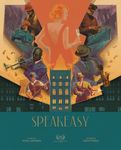
So, we'll start with our first game, which is probably our heaviest game on this list, and that is Speakeasy. Speakeasy is a game for one to four players. It's big heavy Euro about the Prohibition era in New York, and essentially everyone's going to be playing as gangsters, and you're trying to get your illegal distilling business up and running, sell that illegal alcohol to nightclubs and casinos and things like that, and turn a profit. Uh so, it's I guess in a sense the core is worker placement.
Yeah.
Um where you you'll put your capos out to take actions, and the kind of certain actions are paired with other actions, and a lot of the game is about navigating, cuz it's always very tight and you're always very limited on time, money, resources, whatever. And it's about navigating these actions in the best order with your limited number of actions per turn to get as much money as possible basically. And it does something that I really like, which is that the money is victory points, but to do anything you have to spend money. So you're kind of trying to get an engine going that will give you enough money back to win at the end of the game. So in terms of uh us enjoying it, it's uh a big heavy Euro from Vital Lacerda, and I think the theme and the gameplay it is something we really really enjoyed.
Uh it all came together really well. I think it's maybe his favorite game I've played potentially. Uh or my favorite game by him. Uh so we really recommend it anyway, but why don't you say a bit about why it's good at two players?
Yeah, just to add I think with this game why we why I enjoy it so much, it's just so because it is so tight, it's just so addictive.
Yes. So addictive. You get to the end of the game and you just really want to have another go even if it can be a bit frustrating. You didn't make the right move and it's so limited. You just get to the end and think, "I could have done that differently. I'm going to try that next time." Just want to go again. But yeah, the reason why we think this works really well at two players is it is a big heavy Euro like you said. We did play it with one more player one time and it does increase the length of the game. And it's so tight and thinky that it can be a long time before it gets back round to your turn.
Yeah.
So we just prefer playing it with two people to kind of minimize the downtime. And also the way the game works is you have these um non-player faction, which is like another group of mobsters, and they kind of take over the spaces on the board in Manhattan. So, there's kind of always someone to take the spaces, no matter if it's a third or fourth player or these kind of non-player mobsters.
There's no or there's minimal direct interaction between the players except for someone could go and take a space that you wanted, but that could happen in a two-player game because the mobsters from the neutral faction come and take it.
Yeah, or I could come and take it and
Exactly, yeah. So, it doesn't really matter whether it's them or the third person. That that feeling is still the same, basically.
Yeah, it's just it's it's always like no matter what you play at, you have this neutral faction, you could say, who come and attack and they they occupy space and eventually they either like will have started in or will try to take over every space on the board. So, at the end of the game the only spaces that aren't controlled by them will be controlled by the players. So, it always really feels like you have one more player than you're playing with. So, at two players it feels like you have three and there is area control elements, but they're factored into that as well.
Yeah.
So, then again, even though there's area control and that can maybe be a bit loose at two players sometimes or a bit underwhelming, here it's the same thing because they're in it from the start in the area control.
Yeah, I guess there's maybe one more player to take a worker placement space that you were maybe going to take.
they have the
to be an issue and there's the space where you can do another action anyway, so
think there's even two spaces. So, there's a space like or two spaces that let you copy.
Yeah.
Cuz I also thought this and then it's like because you can copy and you have so few actions per round, like it's barely been a problem.
Yeah, exactly. Yeah, and there's always something to do anyway, so if someone's on the space, you can copy or just do something else because
there's always going to be something that you need to do. Of course, it's about doing it in the right order, but yeah, there's you're never short of options, so it's not really a problem.
Yeah, it's just such a cool game. It's a big sandbox. There's lots of different things to do and play around with. And in summary, it's just that if you play it two, you can play the game in a shorter time.
Yeah.
And you're not really gaining anything by playing with more in the sense that because there's these neutral factions occupying all the spaces, it doesn't really change the puzzle or the area control. So, I think it works really well.
We played with our friend, didn't we, and introduced that third player and he nearly lost his mind. It just added so much time to the game because he had his head in his hands like,
It is very complex, but it is very good. So, yeah. So, that's Speakeasy, and we'll go on to our next game.
Next, we have selected A Feast for Odin. So, funnily enough, last video we did in this series, someone actually asked in the comments what we thought about this at two players, and we had it on our shelf to try at that time, and now we've tried it, and we'll see we're including it in this video. So, A Feast for Odin is the kind of classic sprawling work placement game for one to four players, where you basically uh have a little Viking village, I guess you could say,
Yeah.
and you kind of
Settlement.
settlement, and you you kind of tell the story of that settlement and how they interact with the world and what they do to survive and become profitable and eat and all things like that. And the game's famous because it has, I can't even remember, like 60-plus worker placement actions or something, uh that are are similar in some ways, but different. It's just a big sprawling sandbox of a worker placement game. Uh there are a lot of different routes to go down, a lot of different strategies, a lot to explore. Uh and to be honest, we we really enjoyed it. I think there's something very cozy about it and very explorative because of all these different things you can do. And at the core of it is a polyomino puzzle where you're trying to fill out your player board with these tiles you gather and you're kind of trying to fit them together cuz it gives you more income and also will give you points and things like that.
Uh it's just a very very nice uh example of worker placement in terms that the game's not too complex in what you're doing, but the complexity comes from and the interest comes from the wide expansion of things you can do and options at your disposal.
Yeah, for sure. So, the reason why we think this works particularly well at two players is simply because the worker placement uh scales with the player count. So, the more players, the more worker placement spaces there are. So, when you're playing with two players, it can feel equally as tight. I don't want to say tight because there's so many actions I feel like it never feels tight. But there's an equal kind of chance of someone taking the space if you're playing with two as you were playing with more players when there's even more spaces to choose from basically. So, the same feeling when choosing a worker placement is still there basically.
Yeah, and I think Yeah, so in the base game, the board is double-sided so it scales with the player count and there are obviously more actions and more options at three or four players. So, you could also argue as well that if you feel if like you might be a bit overwhelmed by this many actions, then if you play it two players because the number of actions is scaled down, it's more manageable when you're trying to get into it. So, I think that's another bonus of playing it at two.
Yeah.
And then if you play with the Norwegians expansion, which I think most people recommend cuz they say it kind of makes the game perfect essentially. This kind of has a very specialized, you know, boards and spaces for player counts. So that's really tailoring it to the player count. So that's why it comes in great. And then because well, worker placement is interactive. Like you say, there's so many spaces that
Yeah.
you can tend to know very easily what kind of things players are going into and it's in your interest to avoid that and make your own path in a sense. Like sometimes you will have to fight over spaces in particular, but you really don't want to be doing the same thing because you're going to get locked out very fast and it's going to be very frustrating. So then that's the other thing that it is quite a solo game at times anyway.
Yeah. The core of it is obviously taking the worker placement which are shared, but really you're trying to fill out your Yeah.
Yeah. Exactly.
best as possible and that really has nothing to do with any of the other players and it's your own puzzle to do. So yeah, they just we don't feel like we'd be getting any benefit from playing with more players.
Yeah. So I'd also argue that you're not getting that much more in this game by playing it with more players because the only extra you're going to get is this interaction for worker placement spaces which is scaled. So and because the game takes so long to play, it's probably a little better to play it at less players as well. Unless everyone, you know, really wants to play it basically.
are fast player and kind of snappy snappy actions.
Yeah. So that is A Feast for Odin and we'll go to our next game. Next up is one of my personal favorite games I've played this year so far, which is is Gingham. And this is a game where you play as ants or competing ant colonies uh competing for food on a picnic blanket. And it's a it's a little bit abstract.
Yeah.
Uh it's very like a positional abstract game where you're sending ants out to make chains between like types of sweets and then you get them. They're kind of two different strategies of scoring for really long lines between sweets or capturing the sweets and kind of scoring end game points for having them uh as well as in game points. So yeah, very positional abstract uh very tactical uh Tally was very frustrated by it.
Listen, it's a good game. It's objectively a good game. And now that we've got it sat there, I don't mind giving it another crack, but every time I played it I just got so frustrated.
Yeah.
Cuz you beat me every time, basically.
Pretty much, yeah.
So, why we think this good for two people is firstly again the map is scaling for two players, but mostly because like you said it is abstract, it's um yeah, positional placement optimization.
[snorts]
It becomes like a chess game. So it just sits in this really nice space where if you want like a two player head-to-head game, this is what it becomes at two players. And I think for us that's what we enjoy it for. I probably can't imagine having people over to play Gingham.
Yeah.
So for us it's just like sitting down having a 30-minute game of something very chess-like where we can be really head-to-head, focused on trying to kind of outdo each other rather than it becoming very chaotic with more players. You can actually kind of execute on a bit more of a strategy with only two because you're just kind of push pulling. And I just think this is where this game like sits very nicely. I think there's probably other better games that you could get out to play with more people. That doesn't wouldn't become a head-to-head with two if that makes sense.
I think it's one of those games where and there's been a few of them. I think that we discussed before. I can't remember any off the top of my head now, but where some games you play at two and it almost feels like there shouldn't be more players.
Yeah, exactly. I have to say when you brought this one up because we were going to feature it. I was like, "Oh yeah, you could play with more." It honestly I forgot because it just feels like such a great two-player game head-to-head.
Yeah, I think it's very sharp at two because one of the things is that so there's kind of like a corner and you go in turn order from who's closer to this corner. So it could be that it's like me, you, me, you or you, you, me, me or like variations, right? So that's part of the tactility of it that you have to do. But obviously when you expand that out to a bigger blanket of more players and there's more queens which are what you're using to show which row and column you're going in becomes more chaotic and it loses that head-to-head kind of
ability to kind of really deploy each movement as part of your strategy I would say because yeah, like you said uh yeah, whoever's closest to the corner is the one to go first the next time. So you could just place your queen there, not necessarily because you want to place an ant in that row, but because you want to be the one to go first next time and you can just do it a lot more deliberately with two players.
Yeah, there's more control. So overall I think it's a really terrific game with two players. I think it's terrific game overall. I think there's so many little elements I really like in the design. It's very sharp. Uh I think there's some really smart things. The scoring in game versus scoring at the end of the game because your score's hidden. It also triggers the end of the game. So, it's really it can be really fun cuz I've seen it go both ways where, you know, the end game score
Yeah, someone seems really behind in game and then they get a bunch of end game points. So, it's quite tense is not maybe the right word cuz the score's hidden, but it's like dramatic at the end.
Yeah, exactly. Things can turn around. So, yeah, a little one there, but I mean if we didn't say it goes up to four players, but one we really recommend if you like these head-to-head abstracty, very tense, tight games. [singing]
Next up, we have Yonder, which has been one of our favorite games of the last month. We've really been enamored with this game. It's a fantasy work placement game for one to four players. And in this game, you will essentially be building a settlement with fantasy worker pieces, but the twist is that each worker piece has a different special ability. So, ogres get you twice as many resources, but you have to uh pay twice as much to feed them because a lot of the workers will need feeding, where skeletons don't need feeding at all. Uh you have elves which let you go to spaces which are occupied by other players. And all these things um and it's a bit of um an engine building game because you're building up a tableau in front of you of your own buildings as well as a shared board with work placement spaces on it.
And you will kind of be generating and converting resources to fulfill contracts and get points other ways. And then the contracts will give you resources which you can feed into other contracts and it's about building up this engine. And one of the interesting things is that you can always use other players' buildings at any time as a worker placement space. But, the trick is that if the workers end the round on your spaces, they're yours. They end on your opponents', they're theirs. And if they end on the board, they go back to the supply. So, you also have to keep management on the level of your workers because you don't want to be caught short the next round.
Mhm.
Exactly. And I think the main reason why we've really been enjoying this with two players because for us, the fun is in that core engine building and spinning things out and converting this resource into that resource which then gets you this.
Yeah. So, I should just say that one of the highlights of this game is that the cards are really interesting.
Yeah. Yeah.
a variety of them that you build these different engines and you have these different powers every time. And that's part of the fascination building why it's so fun to do those.
Exactly. Yeah. So, you could have a building that produces meat or something which is worth two food. So, then you can go more into having ogres which then get you more resources and you can keep more of them back cuz you can feed more of them. And then that decision of like whether you put them on your building and you can feed them or send them out onto the board. Yeah, that's the the core of the fun and the satisfaction in this game for us is building that up and spinning it all out and putting this into that into that and getting you that which when you would have more players, it would become more reactive because the board doesn't scale to player count in this in this game. And actually the board can get filled out pretty easily. We've had games where even with two of us, there's no real worker placement spaces left.
Yeah, you get
kind of depends because it depends what you're building out on your tableau because you can put them there or on the board.
Yeah.
You want to say something?
Yeah, I was just going to say because as the game goes on, you tend to get more workers than you start with and you often get ways to generate workers
Yeah.
as well as obtaining them at the end of the round. So then we've had situations like you say where there's just not really any good spaces left
Exactly.
in our tableau or on the board but you still have workers.
So then with more players just is subject to having to go just where there's space or you know, using up other people's buildings and then for them it just then it becomes more reactive and you have to pivot and work with what you have. And of course there's games where that is really fun where it's kind of pivoting in the moment but for us that takes away a bit of what we really love about this game which is trying these different strategies, moving more into like kind of resource production over food production or whatever it might be. So that's why we kind of prefer mainly to play it at two because that's the the core and the crux of where the fun is. And then secondly, this is a game where in the beginning the actions can be quite snappy.
Yeah.
But then as time goes on you've got more workers there can be some long turns here where you're really mathing out if I go here I can get that which gets me that and it can be a bit thinky towards the end. So the more the time goes on the length of the game goes on exponentially like per round.
So with more players it just becomes overly long for the type of game it is. We just much prefer to play with two and it kind of fills a nice, what would you say, hour and a half?
Yeah, exactly. It comes in like I think a solid 90 minutes. It's a game that like you say it feels like the first round of two is going to end within like 45 an hour.
really quickly and then suddenly it slows right down and gets longer because yeah, you just have more to do per round but also the thinking time.
Yeah, there's more workers, you have more buildings in front of you that you've put out into play so you can just generally do more and then like yeah, you've got to map out the best way and it just it always uh almost takes us by surprise, but it does come in at a very like regular 90 minutes for us at two.
Yes.
And then with more players, that's going to happen and I think yeah, the bottom line is with more, it's more chaotic, it's more reactive. Um so, it depends what you want. If you want something very silly, uh and you know, you're you're having to twist and turn, then play with more. If you want something to enjoy the core of it, then play with two. I think also one thing is that with more players, you're going to very much need to have some sort of availability for elves.
Yeah.
To to be able to go to spaces when they're taken up, but then you lose them and I think it's going to be very tricky. It's like another consideration you wouldn't have at two players.
Yeah, exactly. There was one game where even with the two players, right towards the end, I was trying to figure out how to maximize some scoring condition I had and you ended up taking the dog out
Yeah.
because it was taking so long. So, imagine That's my bad. But uh it is just that type of game towards the end because you can eke out a few more points somehow and you obviously want to optimize. So, yeah, I think it's just it's like you said, one of the best games we've played recently, if not probably this year. But for me, if you want to play something silly and chaotic, then I don't want it to take 2 hours, 3 hours plus.
Yeah.
So, it fills a nice space for me with the two players.
Yeah. So, that is Yonder, a game we fully fully recommend, but now we'll move on to our next game.
Now, we're going to talk about Ego, a game for two to five players. And to be honest, this is one of those games that you wouldn't expect at all to work at two players. And we were really, really impressed by how much we enjoyed that too. So, this is the re-implementation of the Reiner Knizia classic Beowulf. And what you're doing in this one is you can say in the story you're intergalactic ambassadors from Earth and you're meeting all these different planets and peoples and races uh that are aliens and you're kind of trying to one-up the other players uh in in negotiating with them essentially. And how this is manufactured is you kind of have the ship that moves through all of these different spaces and in those spaces something's going to happen. Players will be asked to make a choice or there'll be an auction or um you'll have a blind bid and there'll kind of other types of auctions as well uh as you move through.
So, it's very interactive because you know, a lot of it is is bidding or is auctions uh and that's one of the reasons why you wouldn't expect it to work. But, why don't you say why why weirdly it does work at two? Why we really enjoyed it?
Yeah, I I guess part of it is because not everything you're doing is about auction and bidding. It's part of every round, but you basically have these cards that have different symbols [clears throat] on them which can be used for the bidding and also the the way the bidding works is kind of it shows you the rewards on a a circle split into wedges and you cover
Yeah.
some of them if you have a a two-player game. So, not everything's available. So, kind of limits what is what you're kind of going for. What's what's there. But, it's not all about that because the point is like I said you have these cards with symbols and you might do at the beginning of the round a negotia- um a bidding or an auction, but then it might ask you if you want to give up three cards with um I can't remember the symbol I symbol on it or something like that in order to gain five points or something like that. Or to get money which in further rounds and in different spaces you can give that up to get something else. So actually there's a lot of
[snorts]
So I don't know if I call it like it's almost like resource conversion as you go through in order to get points through the medium of having these cards with symbols on. And it's still just as tense. We we played this with Do we have a five player
We had a four or five player game for sure. I think we did it twice. Yeah, we had a couple of games at four or five and then we played it a few more times with two.
Yeah, and that crux of the conversion and being smart with what you give up and when and managing your hand is pretty much the same if you're having [clears throat] two players or five players.
Yeah, I think that's what is quite great. So I think the first thing is that with the main ones are like a kind of round robin auction and blind bidding. And the thing is those still both work and have tension at two because it's when is someone going to back out. You know, I think this is why Ra for example you can play at two but it's not the best because it's kind of you know, I like I bid this or you bid that. Am I going to go up? Yes or no? Okay, it's over. Whereas this can keep going and keep going or a blind bid is you still have to play.
You have no idea what the person's going to play.
This is bad as playing five people because you know, you don't know what they're going to go for and knowing that they have a 50% chance of getting the the best prize, right? But then because there's all this other stuff like you say, you're constantly making decisions beyond the auctions. So if it was an auction only game then it probably wouldn't be that great but because you're like, do I want to spend these three cards on this flying bed when if I spend them in this section over here, I could actually get these tokens which then I actually have a bunch of them and if I get a bunch of them, I can turn them in for this. And it it just keeps you going with all these interesting decisions.
100% yeah. This is uh a really great game actually. I didn't I didn't have any expectations when we first got it out on the table and I think I was particularly enamored with it, but it's really interesting.
genuinely surprised by how much I enjoyed it.
Yeah.
Yeah, both at uh four players and at two as well.
Yeah.
So yeah, it's one that we've we've kept because we want to go back to it with more, with just us two. So I think this is one of the good ones that whereas some of the others, you know, we've kind of said, I would actually maybe prefer to keep it at two.
Mhm.
This is one that's perfect for you if you want something that, you know, if you have friends over, you can get it out or if you're staying in for the night, it's just you two.
Yeah.
Uh just you and your housemate or something, then this is the one that will do both and it'll be great in both scenarios.
Yeah, totally agree. A good all-rounder.
Exactly. So on to our last game.
Finally today, we have Nippon which is a game we reviewed a little while back. This is another heavy Euro. Uh although I would say more in the medium heavy range for one to four players and this has been I'd say one of the critical darlings of the year. I think it's gone over very well for its production and its gameplay and we were very positive about it.
Yes.
Uh and in this game what you're doing is in many ways you're doing kind of basic industrialist actions in Japan. You're building factories, you're manufacturing goods, you're having trains and boats and things. Uh the actions that you do are actually somewhat basic, but the core and all of the fun in the game comes from this system where you essentially will take a worker from above and uh action space, and then you're going to put that worker on your player board, and then you can take one of the actions from kind of the the uh column where you took that worker from. But, the trick is all these workers are different colors, and what you really want is almost all the workers that you take to be the same color, because the more different colors of worker, the more you have to pay them for some reason. And basically, you get a lot less income when you kind of do your reset round and send them all back.
Uh and there's also a trick here of balancing, you know, how much you'll end up paying first taking a lot of workers first navigating the actions you need to do, because having more workers when you reset lets you get kind of better end game scoring,
Mhm.
uh which you decide to put yourself in for certain things. And navigating this back and forth kind of um actions to workers to money, it's it's really really engaging, and it's a really fun puzzle. And on top of that, it's quite interactive for a Euro, because there's this area control game, which is worth a lot of points where you will essentially uh at the start be doing this against uh kind of computer controlled player or neutral player, but they they don't change throughout the game. They're just set up there, and then you'll eventually overtake them, and then the other players.
Yeah, exactly. So, why we think this works super well at two is because of the kind of worker action selection kind of with the colors
Yeah.
system, um as you were mentioning, because the number of workers in the kind of initial pool that are placed above each action doesn't change, because it's more about trying to get the optimal um, pattern. I don't know how else to say it of colors that you need. Because there's um, what's the thing is it should also be you kind of want to minimize the colors to say two different colors. You don't have to pay so much because the top and the bottom one
should be a different color.
Yeah, cuz you get like income based on the color of the top and the bottom worker.
Yeah, so they're the same.
don't want them to be the same because then you only get it once. So
Yeah, exactly.
Yeah, another little wrench in there.
Exactly. That whole decision space around Okay, I really need to do this action in this round, but then I'm introducing a new color of worker into my player board, which means I'm going to have to pay more, and can I afford to pay them at the end? Is it going to cost me the next round? That puzzle, it just doesn't change according to the player count because it's on you to kind of optimize. And of course there's uh, yeah, other people could take the color that you need according to the action that you were trying to do, but that can happen in a two-player game anyway because it's the same Yeah, definitely does. Because it's the same amount of workers are available. The only thing that changes is there's like a reserve pool. So at a certain point when the workers start depleting, you fill them back up, and then once those are gone that triggers the end of the round. There's more of them with more players.
Yeah.
But the crux of it still doesn't change that you're trying to optimize the colors that you're taking. And also because of the area control that you mentioned, the neutral
Yeah.
factories.
Yeah, they're a kind of representing I think foreign kind of goods that have taken hold in Japan that are saturating your marketplace as you start, basically.
Yeah, so they they're no matter the player count. So, it makes the area control competitive even in a two-player game from the beginning because you still have something to go against. Yeah. You still have to work up to uh getting more area control in the different areas versus them. And then it becomes more about kind of going against the other player or players, but that's also the same and it's not like the area control element is completely open at the beginning. You can't One player can't just kind of run away with it in a two-player.
Yeah.
That's there. So, that again feeling of trying to work towards should I go into the area control? Ah, there's already neutral player there. I'm not going to be able to overtake them is pretty much the same according to the player count.
Yeah, exactly. So, the basic fact is that playing at two then feels like playing at three already and then also if you play at three, it feels like playing at four. So, you're not losing too much in that in that area, essentially. So, it's it's definitely a game that we would recommend at two. I think it has a lot going for it.
It's great.
Uh and of course, you know, the main point of interaction besides the area controls is poaching of workers. But, you know, it's it's not something that is is so interactive that it's changing the game at three or four players because there are always three workers to begin with above their reactions. So,
Yeah.
um that doesn't change. So, we'd really recommend this at two or more if you want to play it at more, but this is a really really top Euro. Uh please check out our review if you want to know more in detail about what we think and how to play and all that. But, with that, that will be our last game of this episode and we'll be back in the future to bring you more. Already got a few shortlisted, but we want to [snorts] get a couple more than that to round out the next video. Uh, so please consider subscribing if you have not already. It'll really help us as a channel. Please consider joining our YouTube membership program where you can get special perks such as early access to videos or special shorts and things like that where we go over what we're playing in the moment at the moment.
And finally, just big thank you for watching. We hope this was helpful. Ask us any questions you might have about these games and we'll see you next time.