Game Info
Players
1-2
Playtime
90 min
Complexity
0/5
Collection
Your Tier
Loading…
Mechanic profile
Not enough video data yet
Vibe profile
Not enough video data yet
Description
An asymmetric strategy game pitting an alien invasion force using psionics and cloning against a coordinated Earth defense
Featured Videos

Ask a Rules Question
Images

GID0458070.jpg

GID0458070_thumb.jpg
All mentions
Browse transcript mentions, sentiments, pros/cons, mechanics, topics, quotes, and references.
Total mentions: 3
This page: 3
Sentiment:
pos 3 ·
mix 0 ·
neu 0 ·
neg 0
Showing 1–3 of 3
Video MK1fv-6dN3k
BoardGameCo Playthrough at 0:19 sentiment: positive
video_pk 38823 · mention_pk 116997
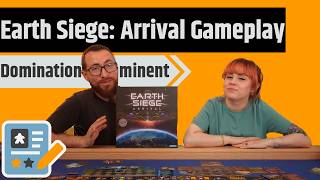
Click to watch at 0:19 · YouTube ↗
Overall sentiment (raw)
positive
Pros
- Strong asymmetric design creates meaningful tension between alien domination and human resistance.
- Escalating threat, crisis events, and regional funding yield high-stakes decision-making and replay variety.
- Mobility and placement of bases adds tactical depth and dynamic board states.
- Presence mechanics and resource management produce recognizable strategic curves across rounds.
- Thematic coherence with aliens, domination, and global resistance provides a strong narrative through-line.
Cons
- Prototype status introduces missing components and proxy tokens, which can obscure final design intent.
- Rule complexity and dense card interactions may be challenging for new players to quickly absorb.
- Deck management and timing around crises can lead to potential analysis paralysis in early rounds.
- Initial domination surges can feel unbalanced if not tuned in production, potentially skewing early momentum.
- Hidden-base mechanic adds uncertainty in combat, which can complicate planning for newer players.
Thematic elements
- asymmetric conflict between aggressive alien forces and human resistance; geopolitical maneuvering; regional domination, funding, and crisis-driven chaos.
- Earth, across continents, in a near-future invasion scenario where aliens attempt global domination and humans organize a resistance while managing political pressure and resource allocation.
- live, in-media-res commentary with banter and playful humor between hosts; asymmetry and hidden-information dynamics drive tension.
Comparison games
none
Mechanics (from transcript analysis)
- Bases and mobility — bases can be placed and, in some cases, moved or relocated under certain conditions, introducing dynamic positioning and strategic planning.
- Combat resolution and bases — combat resolves between alien and human forces; bases contribute strengths and may be destroyed, affecting long-term capabilities and morale.
- Crisis deck and crisis resolution — crisis events present disruptive, scenario-shaping effects that can dramatically alter the board state and force players to adapt strategies on the fly.
- Deck-building-like hand management — players cycle through action decks and may purge or upgrade cards, affecting future options and shaping long-term strategy.
- Dominance tokens — tokens placed on regions to signal control and progress toward alien victory; the accumulation of tokens speeds up the game for the alien player and increases strategic pressure on the human side.
- Events — crisis events present disruptive, scenario-shaping effects that can dramatically alter the board state and force players to adapt strategies on the fly.
- Funding cards and regional funding — players fund specific regions to gain dollars, bonuses, extra actions, or unit improvements; presence in a region determines the rewards and strengthens regional influence.
- Resource Management — resources and salvage flow through the game via fund actions and card effects, enabling upgrades and strategic cycling of hands.
- Resource sequencing and salvage — resources and salvage flow through the game via fund actions and card effects, enabling upgrades and strategic cycling of hands.
- Threat levels and delegations — global and regional threat tracks interact with delegations; threat escalation influences available actions and can trigger crises and event resolution, creating urgency.
Video topics + discussion points
No key topics recorded for this video.
Quotes (from this video)
- the game is actually pretty straightforward and simple, but there's a lot going on
- this is going to be an instantaneous victory
- that was fast and brutal
- the threat would increase, but it can't even
- the game is fast and brutal
- it's fast and brutal—about the pacing and escalation
References (from this video)
No references stored for this video.
Video gcc2xiKrzVk
BoardGameCo Discussion at 0:34 sentiment: positive
video_pk 36845 · mention_pk 110646
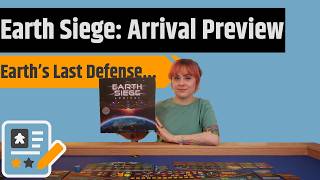
Click to watch at 0:34 · YouTube ↗
Overall sentiment (raw)
positive
Pros
- strong thematic cohesion with a clear alien-vs-human dynamic
- deep asymmetric design that creates divergent strategic lanes for each faction
- versatile use of tokens (dominance, threat, delegates) to shape tension and decision points
- integrated systems (bases, tech, funding, salvage) that support thematic storytelling and strategic depth
- prototype-friendly design that promises a robust gameplay loop in a full release
Cons
- prototype copy shown in the video means some rules and tokens may change in final production
- some tokens and art shown may not perfectly match final components
- combat chart in the video was noted as not perfectly accurate; expectations may shift after release
- the complexity and multitude of interacting systems could present a learning curve for new players
Thematic elements
- alien invasion vs human resistance with an explicit clock and three-turn structure
- Earth with a global map spanning continents and orbital space (including Moon and orbit paths) under imminent alien invasion
- thematic, asymmetrical confrontation driven by crisis events, dominance tokens, and regional funding
Comparison games
none
Mechanics (from transcript analysis)
- Area Control — aliens place dominance tokens on regions to threaten global control; reaching thresholds yields immediate or delayed victory depending on quantity.
- Asymmetric Player Powers — two distinct factions (aliens and humans) operate with different units, buffs, and victory conditions, creating divergent paths to victory.
- asymmetric player roles — two distinct factions (aliens and humans) operate with different units, buffs, and victory conditions, creating divergent paths to victory.
- bases, technology, and unlocks — aliens can place bases and access technology tiles that unlock new abilities and buffs; humans similarly leverage tech and regional upgrades.
- combat resolution — combat uses combat cards and unit strengths; simultaneous reveal and potential retreat or reallocation influence outcomes; leaders and elites modify strength.
- deck-based actions — each player has an action deck and a combat deck; players hold four action cards and four combat cards per turn, and use action cards to move, add units, or affect regions.
- dominance tokens and area control — aliens place dominance tokens on regions to threaten global control; reaching thresholds yields immediate or delayed victory depending on quantity.
- Events — crisis events from a dedicated deck trigger as tokens are placed, altering board state and threatening the human defense or giving the alien player bonuses.
- origins and modifiers — each side starts with an origin that shapes starting bonuses and ongoing modifiers throughout the game.
- Resource Management — humans manage resources via a funding system and salvage tiles; salvage can be banked or sold for value, influencing economy and timing.
- resources, funding, and salvaging — humans manage resources via a funding system and salvage tiles; salvage can be banked or sold for value, influencing economy and timing.
- Tech Trees — aliens can place bases and access technology tiles that unlock new abilities and buffs; humans similarly leverage tech and regional upgrades.
- threat track and delegation — a global threat track increases with play; delegate tokens in regions raise local threat, influencing available actions and risk.
- three-turn game clock — the game runs across three turns (rounds) with end-of-turn checks and funding sequences to determine when the game ends.
- token-driven crisis/events — crisis events from a dedicated deck trigger as tokens are placed, altering board state and threatening the human defense or giving the alien player bonuses.
- Unique Player Powers — each side starts with an origin that shapes starting bonuses and ongoing modifiers throughout the game.
Video topics + discussion points
No key topics recorded for this video.
Quotes (from this video)
- Earth Siege Arrival is going to be extremely asymmetric.
- three turns, three main sections of the game that you're going to play through.
- You're playing as these two different groups. You're the aliens versus the humans.
- Earth Siege Arrival is going to be very thematic as well as very asymmetric.
- Not only trying to shoot out and take out these different aliens, but they're also going to be trying to remove the dominance tokens that are placed out on the board with the threat.
- There will be a gameplay on the channel between Alex and I, so you can see exactly how this game will play out.
- This is also a prototype copy in front of me, so all rules, components, and things like that are subject to change.
- The humans have their bank available to them because they are going to be paying for these different researches and upgrading their defenses.
- The pacing is going to be the alien players trying to spread out, place out these different dominance tokens, and then the human players trying to deal with it.
- Earth Siege Arrival is going to feel thematically rich and mechanically dense, with a clear two-player dynamic.
References (from this video)
No references stored for this video.
Video mLKlBoM-ZXc
The Dice Tower Discussion at 36:09 sentiment: positive
video_pk 28990 · mention_pk 85191

Click to watch at 36:09 · YouTube ↗
Overall sentiment (raw)
positive
Pros
- tight tension and clear two-player design
- dramatic thematic premise
Cons
- solo and scalability aspects uncertain from promo
Thematic elements
- alien invasion vs planetary defenses
- two-player asymmetric sci-fi duel
- fast, tense escalation with crisis management
Comparison games
none
Mechanics (from transcript analysis)
- asymmetric roles — one side invader, one side human defenders
- Asymmetric Teams — one side invader, one side human defenders
- hidden bases and crisis management — managing threats while advancing strategic objectives
Video topics + discussion points
No key topics recorded for this video.
Quotes (from this video)
- In 1348, everything is worse.
- This is a chance for you to jump into it.
- It's own game. This is not a small version of Core Discovery. Yeah, it is a different game from Core Discovery and I think that's good.
- This is a great entry point, but I do feel like there's a big barrier coming from the first edition.
- Three parachutes, four desperate hijackers.
- The combos of all these different really funky people like there's a cannibal and just wild stuff.
- This is another big minis game.
- Every card is a hard decision. Every action escalates the crisis.
References (from this video)
No references stored for this video.
Transcript Navigation
Showing 1–3 of 3