

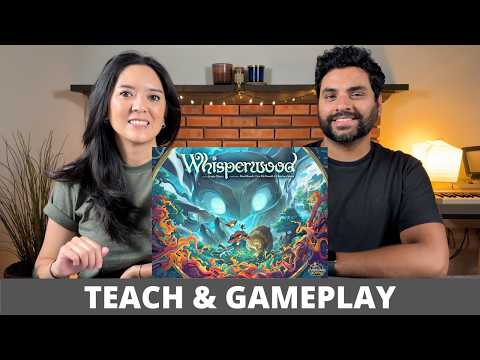














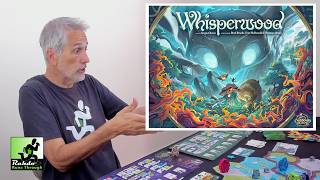









Whisperwood Deep Dive
What the Community Thinks About Whisperwood
Reviewers across YouTube's board gaming channels are nearly unanimous in their enthusiasm for Whisperwood. The consensus emerges as cautiously optimistic to genuinely excited, with a shared recognition that this is an ambitious, meaty game designed for players who want depth alongside theme. Rahdo Runs Through praises its architectural ambition, while Before You Play highlights how the mechanics reward focused strategy. Tim Chuon emphasizes the escalating complexity and meaningful choices. BoardGameBollocks appreciates the novel application of familiar mechanics, and Board Stupid sees a game with impressive production value and engaging systems. Notably, where reviewers diverge is primarily on playtime concerns and the sheer cognitive load of options available each turn, not on whether the game delivers on its premise.
Core Mechanics That Define Whisperwood
Bag Building
Whisperwood sits squarely in the bag-building tradition, but with a thematic twist that integrates beautifully with its forest-restoration narrative. Players accumulate elemental tokens into personal bags, then draw a subset each round. The draw determines what actions are available that turn, making token composition a critical long-term decision. Over the course of seven rounds, players shape their bag contents by acquiring new tokens and removing weak ones, gradually improving the quality of draws and broadening available actions. The corruption mechanic (players start with corruption tokens mixed into their bags) creates meaningful tension as players must decide whether to purify these tokens into harmony or accept the deck-clogging effect. This mechanic transforms a classic system into something thematically coherent: the druids literally carry corruption from the forest battle within themselves, and must work to cleanse it.
Elemental Spell System
The spell system operates like a currency converter, requiring specific elemental pairings to accomplish different actions. Transmute spells let players exchange tokens, Cleanse spells purify corruption, and Restore spells place restoration tiles on the forest board to score points. Each spell can be upgraded to become more efficient or powerful, and the progression feels meaningful rather than rote. The beauty of this design is that it creates constant decision-making: players must weigh spending resources now for efficiency gains against using those tokens immediately for actions. Advanced spells grant additional effects: upgraded Transmute lets players deploy tokens immediately; upgraded Soar grants free restoration actions. This layering of systems means that even experienced players find new synergies game-to-game, depending on which spells they upgrade and which familiars or allies they recruit.
The Whisperwood Experience
Brain-Burning Strategic Depth
Whisperwood demands engagement. Multiple reviewers note that turns can grow lengthy as players evaluate options, because the number of meaningful choices expands as the game progresses. This is not a flaw in reviewers' eyes; it is the cost of ambition. Tim Chuon describes the gameplay as engaging but occasionally brain-burning. The sheer number of ways to spend tokens creates a "analysis paralysis" risk for some groups, though reviewers who embrace optimization find this intellectually satisfying. For groups comfortable with crunch, this is a feature, not a bug.
Thematic Immersion Through Mechanical Coherence
The theme of restoring a corrupted forest is not merely window dressing. Every mechanic reinforces the narrative. Moving through corrupted zones inflicts corruption on druids. Talking to golems (ancient forest protectors) requires traveling to them. Recruiting animals and fairy creatures builds a coalition to help restore specific terrain types. Even the bag-building core feels thematic: the spell tokens in your bag represent the magical knowledge you carry. Reviewers consistently note this integration; BoardGameBollocks remarks on how the mechanics work together cohesively rather than feeling bolted-on, and Board Stupid observes how whispering to golems, managing corruption, and building toward enchantments create a layered narrative of restoration.
What Makes Whisperwood Stand Out
Gorgeous Production and Component Quality
The physical presentation elevates Whisperwood above many contemporaries. The miniature golems with light-up LED bases make an immediate visual impact, and the wooden tokens replace early cardboard placeholders with satisfying heft. The deluxe pledge includes washed miniatures and premium runestone tokens, demonstrating attention to tactile experience. Even the standard pledge features multi-layered player boards and substantial cardboard work. Board Gaymes James notes the stark visual improvement from prototype to final version, and multiple reviewers comment positively on the sheer amount of wooden components and the design of the cards. This is a game that feels premium during play, which matters for a three-hour experience.
Modular Replayability Through Randomization and Asymmetry
The board configuration changes every game, built modularly by players during setup. Scoring objectives rotate, and players draft familiars and enchantments differently each session. BoardGameBollocks highlights the variety in scoring cards as a standout feature; multiple reviewers praise how the combination of variable familiars, randomized board layouts, and different enchantments available creates a game where no two campaigns feel identical. Andromeda's Edge and similar titles prove that Cardboard Alchemy understands variable setup mechanics; Whisperwood extends this philosophy to scoring conditions, ensuring that the optimal strategy shifts based on what objectives are in play.
Potential Drawbacks
Substantial Playtime and Table Space Requirements
Whisperwood is not a light filler. Most reviewers cite a playtime range between 2.5 and 5 hours depending on player count and experience. Experienced players might land near three hours for a two-player game, but new players should expect longer. The board expands significantly by mid-game, requiring ample table real estate. For groups with limited time or space, this presents a logistical challenge. Before You Play mentions that corruption can create bottlenecks if poorly managed, and Tim Chuon notes the game can feel "busy" with many moving parts to track.
Learning Curve and Rules Density
The rulebook complexity matches the game's depth. Whisperwood has a significant cognitive load on first play; there are multiple spell types, special abilities, golem powers, and enchantments to internalize simultaneously. Hungry Gamer notes that even a thorough walkthrough takes meaningful time to absorb. Players accustomed to medium-weight euros may feel overextended on the first go. However, reviewers universally note that the complexity pays off; it is the source of the game's replayability and strategic depth, not a design flaw.
If You Enjoy Whisperwood
Fans of Andromeda's Edge will find familiar DNA here: both games from Cardboard Alchemy feature modular boards, tile-placement elements, and a focus on spatial decision-making. Players drawn to Cascadia and Harmonies for their polyomino placement will appreciate Whisperwood's geometric constraints, though Whisperwood layers much greater complexity. Those who love Orléans for its bag-building core will recognize the system, but Whisperwood adds thematic depth and a restoration scoring layer absent from the Delhaize classic. Enthusiasts of Ark Nova will appreciate the engine-building arc and the satisfaction of upgrade chains. Players who enjoyed Flamecraft (Cardboard Alchemy's earlier success) will welcome a return to the publisher's design philosophy: gorgeous production, thematic coherence, and strategic meat.
What Reviewers Are Saying
"Even with only five tokens, there are so many different ways you could strategize. And later on the game, when you've got tons of extra cards and all kinds of cool special tokens, oh man, this game gets deep."
— Rahdo Runs Through
"The novel use of the Tetris mechanic. So you're going to get an option. You're not just going to be told which shape to make. You're going to be able to take one or two or maybe more if you use your cap, right?"
— BoardGameBollocks
"It's quite of a complex game. It's a larger game. It's not Andromeda's Edge, but you get that DNA. There is tracks to go up. There is boats to be upgraded. You're trying to go around and cleanse the bad things in the forest to be the mega druid, as we call it."
— Board Stupid